
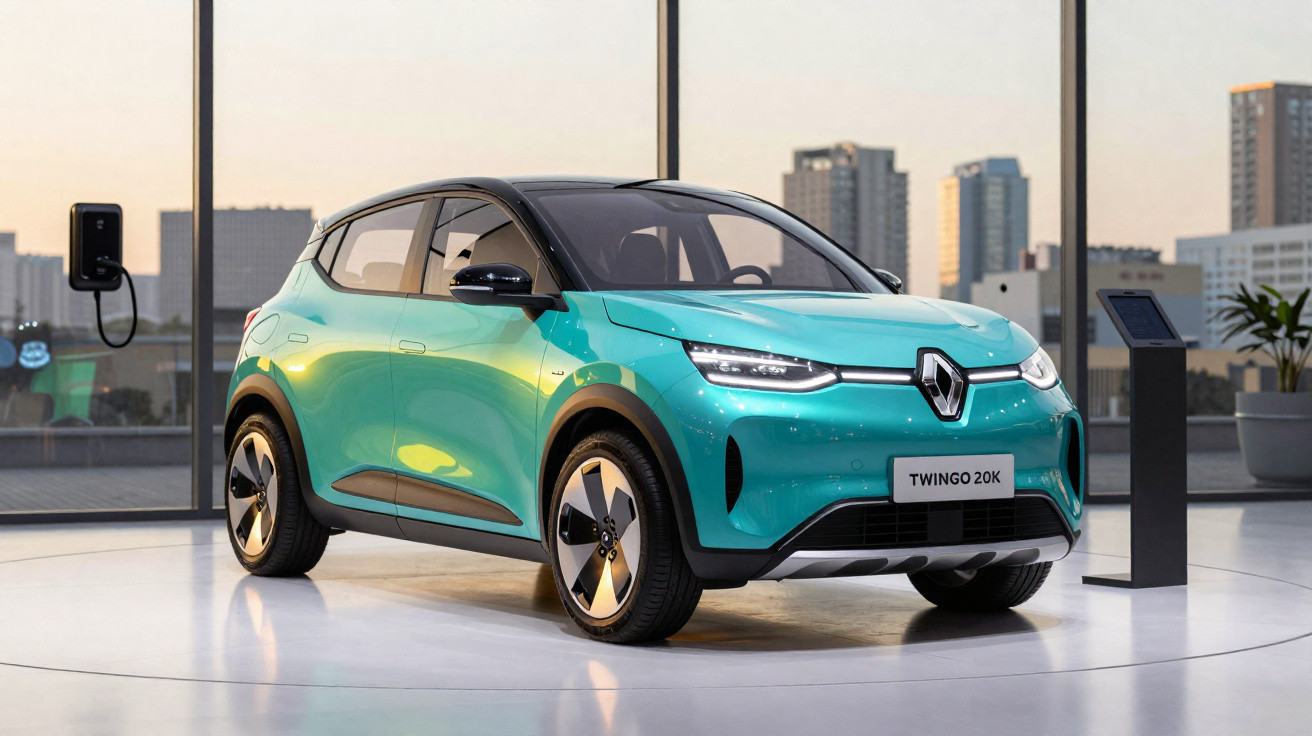
It’s official: the Renault Twingo is coming back. Not that it ever truly vanished, but the model that won people over in the 1990s is returning to its original recipe with a clear purpose: to show there’s still room (and appetite) for compact, affordable and cheeky cars.
It’s due to reach the market at the end of the first half of 2026, with pricing set below €20,000. The big question is whether it has what it takes to feel like a genuine breath of fresh air in the European car market.
We went to Paris to see it in person and explain everything in this video:
Return of an icon
When it launched in 1992, it’s fair to say the Twingo rewrote the rules. In a market full of grey, conservative cars, Renault took a gamble with a colourful model, rounded shapes and a one-of-a-kind personality.
It was a bold move, unquestionably-one fully backed by Patrick Le Quément, Renault’s head of design until the early 2000s. And it paid off.
More than 30 years on, the Twingo’s irreverent spirit is back-this time as a 100% electric car-joining the trio of past-inspired Renault models: the R5, R4 and Twingo.
So why bring it back now, when small city cars are close to extinction? Renault’s view is that the A-segment isn’t fading because customers stopped caring, but because there hasn’t been enough choice. The new Twingo is Renault’s direct answer.
Faithful to its roots
After a third generation that, in my opinion, didn’t respect the original’s DNA at all, this new Twingo looks like it puts things right. It stays close to the prototype that previewed it (shown in 2023) and to the values that made the model what it is-and that comes across the moment you see it.
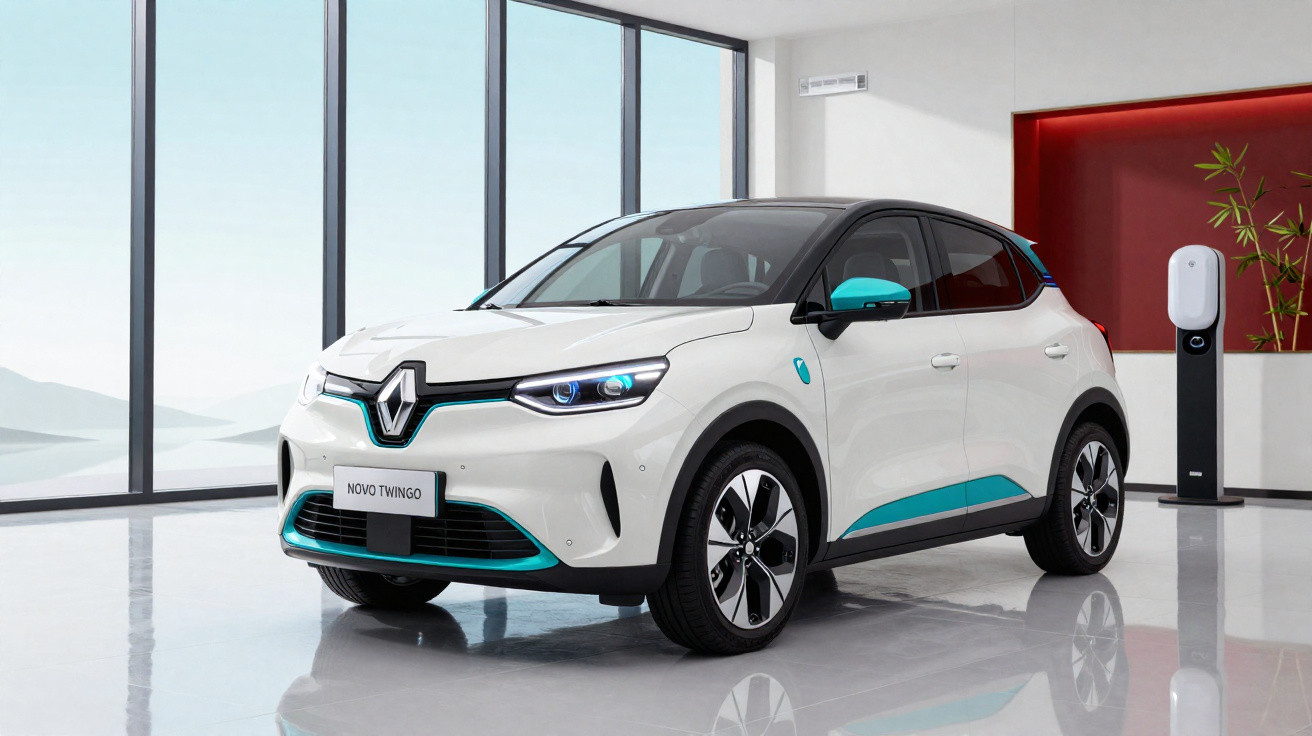
Up front, it’s instantly recognisable, with a friendly, youthful expression-almost as if it’s a character with a face (the lower grille) and two eyes (the headlamps). That was a defining trait of the original car, and it’s reassuring that Renault chose to preserve it.
There are other nods worth calling out too: the three faux air intakes at the top of the bonnet, the rounded headlights, and the short, sloping bonnet that emphasises its compact stance.
From the side, beyond the prominent wheel arches that add a sense of width, two points stand out. First, the door handles: unfortunately Renault didn’t keep the circular handle design of the original model (and the prototype). Second, unlike the original Twingo, this new one is a five-door.
As for the wheels, production versions will come with 16-inch wheel trims, with optional 18-inch alloys available. Honestly, the smaller wheels look like the better match for this little city car’s profile-and, predictably, they should be more comfortable too.
At the rear, besides the very rounded lighting signature, the most eye-catching detail is the boot window: unlike on the original Twingo, it can’t be opened independently.
Small outside, big inside
Alright, maybe that’s pushing it: the Twingo isn’t big. Still, the cabin space it delivers is genuinely surprising. Even though it’s 13 cm shorter than the Renault 5 (it measures 3.79 metres in length), it can offer more room in the rear seats, for example.
It sounds odd, but there’s a reason. The Twingo’s rear seats (separate units) sit on a 17 cm rail, letting them slide forwards or backwards depending on whether you need more passenger space or more boot space.
That flexibility is one of the best ways to describe the Twingo’s interior-and here too it stays true to the 1992 model. In fact, with the front passenger seatback folded down and one of the rear seats folded, you can carry objects up to 2 metres long.
Boot capacity also underlines the point. It can reach a maximum of 360 litres (with the rear seats pushed forwards, and already including around 50 litres hidden under the boot floor), and it grows to 1000 litres with the rear seats folded down.
Space and versatility aren’t the whole story, though. The new Twingo also brings a cabin that’s straightforward, modern and packed with technology-especially considering the price bracket Renault is targeting.
It runs the OpenR Link system seen in the brand’s latest models, with built-in Google and a dual-screen layout: a 7-inch display for the instruments and a 10-inch touchscreen for infotainment, including Google Maps, Google Assistant and access to over 100 apps via the Play Store.
On top of that, there’s the Reno virtual assistant-already familiar from the Renault 5 and 4-which integrates ChatGPT and can help with tasks as simple as adjusting the cabin temperature or switching between the various driving modes.
Even with all that, I wish Renault had been bolder with interior colours-after all, a more playful tone has always been part of the Twingo’s identity. That said, it may be offset by the broad accessories range the brand has developed for this model.
Is this range enough?
Built on the same platform that underpins the Renault 5, the new Twingo uses an electric setup with a front-mounted motor producing 60 KW (82 hp) and 175 Nm of maximum torque. That might not sound like much, but it’s worth remembering this is a city car weighing around 1200 kg.
For that reason, Renault says the new Twingo will sprint from 0 to 50 km/h in 3.85s and reach 100 km/h in 12.1s, with a top speed of 130 km/h.
To keep the price in check, Renault is using an LFP-chemistry battery pack for the first time. Usable capacity is 27.5 kWh, delivering up to 263 kilometres of range (with the 16-inch wheel setup).
It may not be a headline-grabbing figure, but when most European customers drive less than 50 km a day, it’s hard to imagine this being an issue-provided they’re not planning long trips.
Even so, it would be interesting to see the line-up expand in future with a 40 kWh battery version. If it doesn’t happen, it won’t be because this platform lacks the space.
Charging-wise, the Twingo will support up to 6.6 kW on AC, which is enough to go from 10 to 100% in around 4h15min (a Mode 3 cable is included).
Optionally, with the Advanced Charge Pack (still without a price), AC capability rises to 11 kW (a full charge in 2h35min) and DC charging reaches 50 kW, enabling a 10 to 80% top-up in 30 minutes.
Price is a major advantage
With arrival in Portugal scheduled for the end of the first half of 2026, the Renault Twingo will start at under €20,000-and that will be one of its biggest selling points.
What remains to be seen is how this small city car behaves on the road, something we’ll only find out in the first months of next year, when we drive it for the first time.
Judging by what Renault achieved with the 5 and the 4, we can expect an electric car that’s pleasant to drive, efficient, and sprinkled with a bit of fun.
Even so, there’s one key difference to keep in mind: in the name of cost control, Renault hasn’t used the R5’s multi-link rear suspension, choosing instead a torsion beam taken from the Captur.
How that will translate on the road is something we’ll only know once we’ve driven it. For now, looking at this Twingo, I can only say one thing: Good job, Renault!
Comments
No comments yet. Be the first to comment!
Leave a Comment