
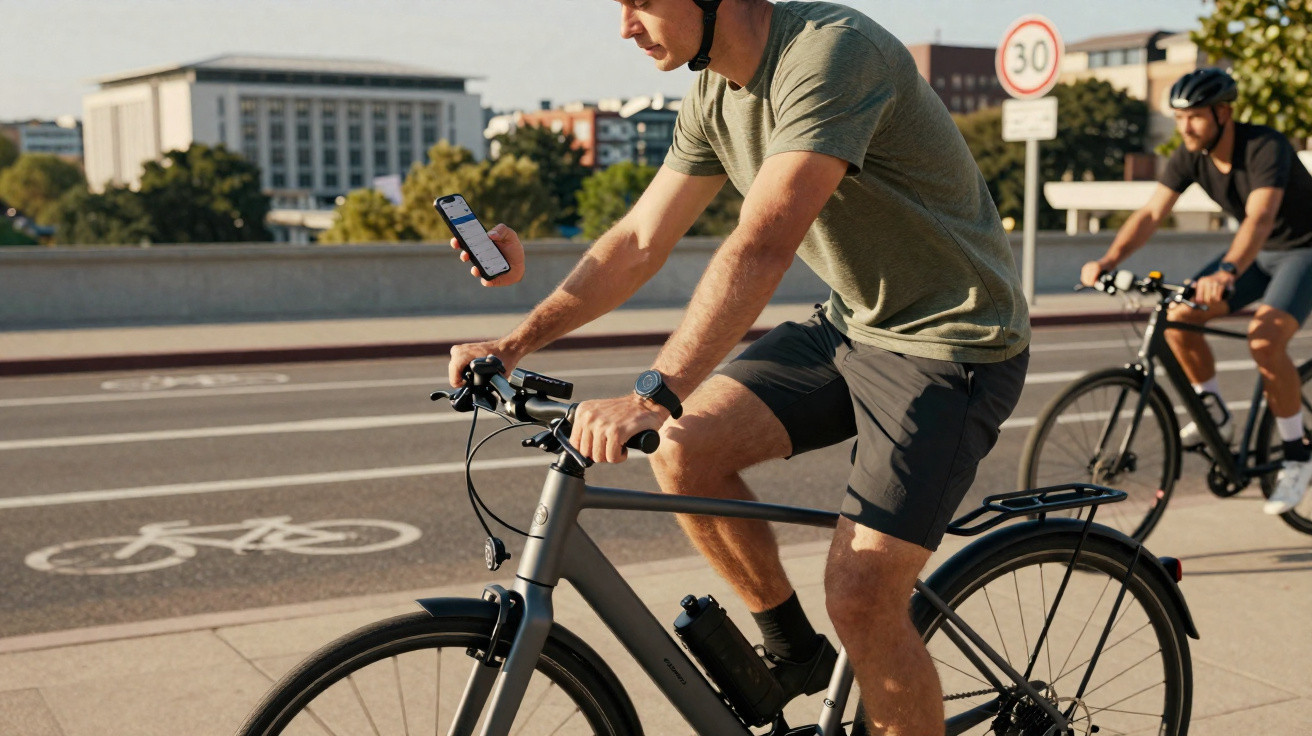
Riders insist their bikes don’t feel the same after updates. The outcry is intense - and it’s not fading.
At sunrise I watched a commuter roll smoothly along the River Spree, with a light mist lifting off the water. His speed ticked up to 26 km/h and, right on cue, the motor’s push softened - as if an unseen hand at his back had suddenly let go. He glanced at his display, puzzled, then looked ahead again and started working a touch harder through the pedals.
Later, sat in a café, his phone vibrated with a service alert: new firmware available for his mid-drive unit. He shrugged, tapped install, and on the ride home the next incline felt just slightly more demanding. By mid-afternoon, his group chat was buzzing. “Silent nerf?” one message read. “Limp mode?” came another. Accounts like these keep accumulating around the same name: Bosch eBike Systems. So what’s different?
Riders smell a limit - and a German giant feels the heat
Across Europe and the US, e-bike owners are comparing experiences and describing small but noticeable reductions in assistance. The timing feels particularly sharp: cities are actively encouraging cycling, and people paid for performance with their own money. Bosch is at the centre of the discussion because its motors sit in a huge number of higher-end bikes, from nimble commuters to heavy-duty cargo machines.
On the record, the company frames the changes as aligning with existing regulations and improving safety features. Off the record - at least in riders’ interpretations - it looks like a gradual move towards firmer ceilings on speed, torque, or boost.
A courier in Munich told me his usual route became “stickier” after what should have been routine servicing, when the shop connected his bike to the Smart System for a security patch. He didn’t log power figures; he simply felt that beyond 25 km/h the easy roll turned into a slog, and short rises demanded one more gear than before. That same tone runs through social media, with thousands of comments spread across Reddit threads and Facebook groups. Some riders share before-and-after times on familiar climbs - just a few seconds, but enough to dull the fun. Others post screenshots of firmware notes that talk about safety, not speed.
The reasoning isn’t hard to trace. In the EU, assistance is capped at 25 km/h and a 250 W continuous rating, and manufacturers are scrutinised for anything that resembles tuning. As e-bike numbers climb, insurers, urban planners and safety bodies are asking tougher questions. In that climate, a firmware tweak that tapers torque sooner - or a thermal strategy designed to protect battery packs - fits the times. There’s no need for a conspiracy: it can be plain risk control plus test-bench reality. But when that reality collides with a favourite hill, emotions run hot.
How to keep your ride lively while the rules tighten
Begin by understanding what your bike is actually doing. Look up your display’s firmware version, read the release notes carefully, and get familiar with the cadence “sweet spot” in each assist mode. Many Bosch set-ups feel most energetic at roughly 70–95 rpm, so on climbs it can help to spin a little quicker rather than grinding a big gear.
Keep the drivetrain clean and running freely, set your tyres to a pressure that suits your load, and do a quick torque-sensor calibration if your model supports it. Small maintenance and riding habits add up - and can make the bike feel crisp even if the software behaviour has shifted.
Avoid sketchy dongles and so-called “de-restrictors”. Newer motors can detect tampering and respond with reduced support that can persist for subsequent rides, and the system may also generate service flags your dealer can see. We’ve all felt that moment when a tailwind used to seem magical and now it’s just… fine. If you’re sensing a change, you’re not alone - and you’re not necessarily imagining it. Speak to your shop before updating if you regularly ride right at the edge of the limit and you depend on a particular feel.
Many retailers are already, quietly, guiding customers through the shift, and some are candid about what’s legal versus what simply feels best.
“We don’t push updates that cut performance beyond the legal limit,” a Bosch spokesperson told me. “Recent releases focus on safety, battery longevity, and tuning detection.”
- Read update notes and ask what changes in torque, cadence windows, and thermal behaviour.
- Ride each mode on the same loop, note average speeds and perceived effort.
- If your bike feels off, log it: temperature, wind, tyre pressure, cargo weight.
- Know your region’s legal limit and how your display signals the threshold.
- Ask your dealer about any over-the-air update timing and rollback policy.
Where this is heading next
Policy shifts more slowly than a bicycle - but it is shifting. Cities are pushing for quieter streets, fewer collisions, and machines with predictable behaviour moving alongside pedestrians and scooters. Brands are chasing fewer warranty claims and steadier battery health through hot summers and icy winters. Riders, meanwhile, still want that punchy assistance.
That push-and-pull suggests a near future of clearer labels, optional “class” systems closer to the US model, and perhaps geofenced limits for shared fleets rather than privately owned bikes. If the biggest player in Germany keeps edging towards durability and compliance, competitors are likely to follow. It doesn’t have to drain the enjoyment. Transparent notes, real-world testing, and open conversations with shops can keep trust intact. The next update won’t merely reshape a torque curve - it will influence the culture of how we ride together.
| Key point | Detail | Why it matters to you |
|---|---|---|
| What’s actually changing | Firmware shifts torque curves, thermal protection, and anti-tuning triggers | Understand why your bike can feel different after service |
| Why German brands are cautious | Compliance with EN 15194, insurer pressure, battery longevity, warranty risk | See the incentives shaping your riding experience |
| How to keep it lively | Cadence awareness, drivetrain care, mode testing, dealer dialogue | Practical steps that preserve that zippy feel without breaking rules |
FAQ:
- Are e-bike motors about to be limited by new law? No new EU cap has arrived this season, but enforcement and testing are becoming stricter, and some updates may be shaped by that reality.
- Did Bosch push an update that slows my bike? Bosch says its releases focus on safety, durability and compliance. Some riders report less support close to the limit, which can come across as a slowdown.
- Will a tuning dongle fix the issue? Tuning can trigger limp modes, error codes, void warranties and create legal problems. In practice, it often causes more trouble than speed.
- Can my dealer roll back firmware? It depends on the shop. Some won’t for liability reasons, and older versions may be blocked. Ask before you update.
- How do I know if my bike is in a reduced-support state? Watch for warning symbols, error codes, or sustained cut-backs after high-load riding. If needed, your dealer can check the logs.
Comments
No comments yet. Be the first to comment!
Leave a Comment