
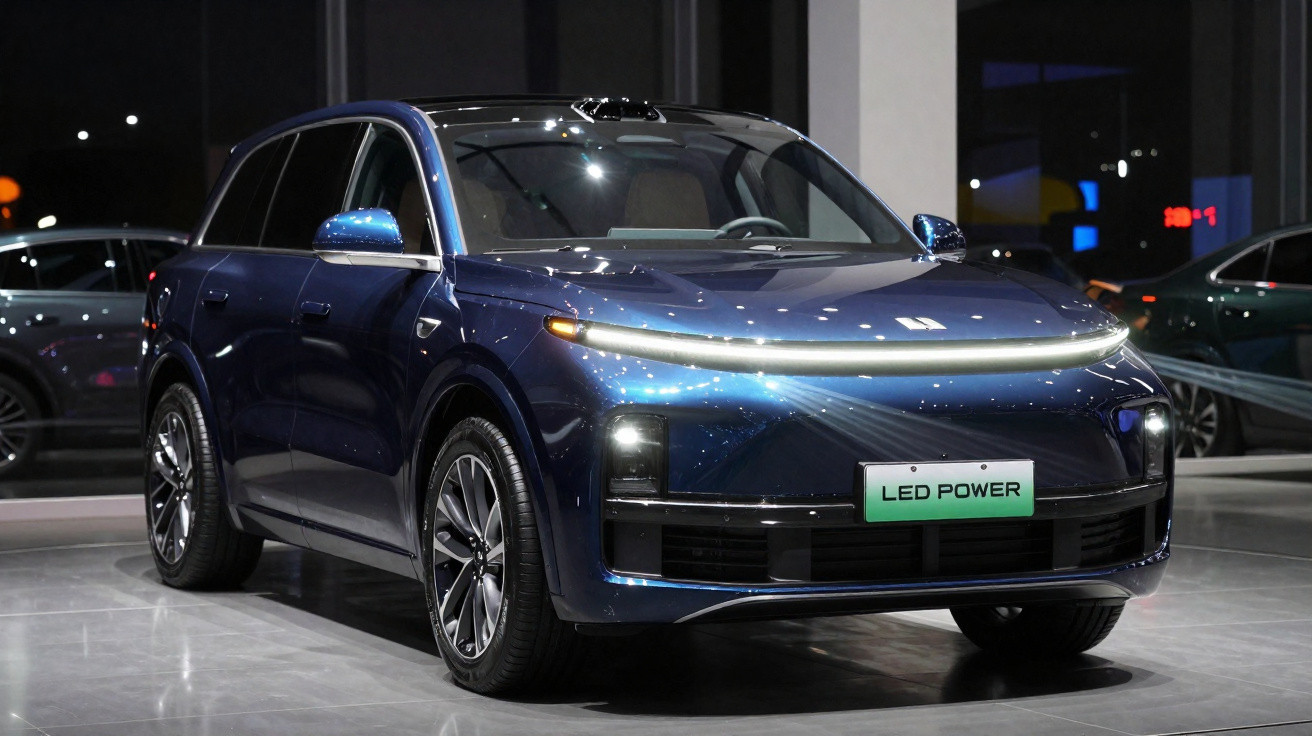
You’re heading home along an unlit two‑lane road. There’s a light drizzle, a trace of fog, and that familiar section where the white edge line seems to melt into the darkness. You’re already on edge, hands clamped to the steering wheel, thoughts drifting to tomorrow’s meeting. Then it happens: the bend, an oncoming car… and your view detonates into white light. You narrow your eyes and lift off the accelerator; for a second or two you’re practically blind. When your sight comes back, your pulse is racing and you say what so many drivers say: “Those damn LEDs are going to cause an accident one day.”
A research team has now put laboratory measurements and real numbers to that exact moment.
And the verdict matches what your eyes have been telling you for years.
LED headlights: when “seeing better” blinds everyone else
In theory, LED headlights tick every box. They’re brighter and whiter, they draw less power, and they cut through night driving like a stadium floodlight - giving the comforting sense of daylight spilling over the road. Car manufacturers market them as a safety improvement, a desirable option, even a small premium touch. Try them once on a rural road and it makes sense: detail looks crisper, signs stand out, and road markings seem to reappear.
But for everyone outside your car, the experience can be very different.
Researchers working across several European road‑safety laboratories recently reviewed hundreds of real‑world pass‑bys involving vehicles fitted with LED headlights and drivers coming the other way. They assessed light intensity, glare angles, pupil response times, and even how long it took drivers to place the car back neatly in lane after being dazzled. Their finding was blunt: the beams that improve visibility for the LED‑equipped driver substantially increase discomfort - and partial, temporary blindness - for oncoming road users.
That familiar “I can’t see anything for a second” isn’t just a feeling. It shows up in measurements.
From a technical standpoint, LEDs don’t necessarily output more total light than older halogen systems. What shifts is the light spectrum, the beam pattern, and the mounting height - especially with today’s SUVs and crossovers sending that beam straight into traffic. The whiter, more bluish light scatters differently inside the eye and behaves badly in rain, fog, or on wet tarmac. The result is harsher contrast and stronger reflections, which the visual system struggles to process quickly.
Put simply: our retinas weren’t built for oncoming mini‑suns positioned at eye height.
What the study really says… and what you can actually do
The team began with a straightforward scenario: two cars passing each other at night, each travelling at roughly 80 km/h. They modelled different headlamp types, mounting heights, beam shapes, and varying levels of grime on the lenses. They then recorded the distance at which the oncoming driver reported discomfort, and the distance at which their visual performance began to deteriorate. One repeated, unsettling outcome was how little time it takes: 1–2 seconds of reduced vision is common, and 3–4 seconds is not unusual.
At 80 km/h, that can mean well over 50 metres of driving while “half‑blind”.
Most drivers recognise the worst version of it: meeting an SUV with ultra‑white lights on a wet road, when the whole scene turns into a fluorescent blur. The study captures this precisely. On wet surfaces, LED glare spikes because the road effectively becomes a wide reflective sheet. In driver‑view footage, the tarmac no longer appears deep black; instead it looks like a washed‑out grey plane where lane markings fade away. In one test, a participant even removed his hands from the wheel for a fraction of a second to shield his eyes instinctively.
That reflex, repeated by thousands of people night after night, is what genuinely alarms road‑safety specialists.
The researchers also underline a factor that tends to be overlooked: age. As we get older, the eyes take longer to adjust to sudden changes in brightness. Under controlled conditions, drivers over 60 needed nearly twice as long to regain full contrast sensitivity after intense LED glare. That isn’t about being a “worse driver”; it’s biology quietly raising the risk. Put a 25‑year‑old in a low sports car facing tall SUV LEDs and you’ve basically created a reflex test.
On real roads - with tiredness, rain and stress layered on top - it becomes a familiar and dangerous mix.
How to survive the age of dazzling LEDs
The report doesn’t just blame manufacturers or regulations. It also points to small, practical actions that can significantly reduce risk for everyone. First: headlamp aim. Many modern cars include a simple dial that lets you lower the beam when the boot is loaded or when there are passengers in the rear seats. In reality, most people don’t adjust it day to day. Yet the testing suggests that dropping the setting by just one notch can dramatically reduce perceived glare for oncoming drivers while barely affecting your own usable visibility.
Any seconds you “lose” in range, someone else gains back as actual eyesight.
Another useful habit is where you place your gaze when you’re dazzled. Instead of fixing on the oncoming lights, look slightly left‑of‑them from your perspective (towards the nearside edge): aim your focus towards the left edge line or the verge rather than staring into the glare. It’s not courtesy; it’s self‑protection. In the study, drivers who practised this held their lane more accurately and reported lower stress levels. It also helps to avoid wiping the inside of your windscreen with a sleeve or any random cloth: fine smears and greasy films turn each oncoming LED into a starburst.
It sounds obvious, but these small details are often what separates “irritating” from “genuinely dangerous”.
The researchers also emphasise something rarely mentioned in adverts: our eyes need recovery time. Long night journeys with repeated LED glare erode concentration far more than many of us admit. One author summed it up plainly in the report:
“We have improved how much the driver of one car can see, but we have worsened how safe everyone else feels sharing the road with them.”
They suggest several practical habits:
- Clean headlights and windscreen regularly, inside and out
- Lower your beam when carrying passengers or heavy luggage
- Slow slightly when an oncoming car clearly blinds you
- Ask your mechanic to check headlight alignment once a year
- Prefer dipped beams in lit urban areas instead of full auto mode
None of this is heroic. It’s everyday, human‑scale adjustment in a world where lighting technology has outpaced our night vision.
When progress feels too bright for comfort
In many ways, LED headlights are a modern‑mobility parable. We chased efficiency, sharp styling, and a premium light signature that makes each model instantly recognisable. We got all of that - and in many situations, genuinely improved visibility for the driver behind the wheel. At the same time, we introduced new discomfort, new fatigue, and a quiet flash‑for‑flash conflict in which each driver suspects the other of “not dipping”.
The study doesn’t claim LEDs are inherently bad. It argues they are powerful tools, and that roads, rules and driver habits haven’t fully caught up.
Some countries are already tightening limits on permissible glare, and trialling adaptive matrix systems that shape the beam to avoid shining directly into oncoming eyes. These systems are smart and encouraging, but they remain uncommon and costly. For now, most people drive through a patchwork of older halogens, aggressive aftermarket LED conversions, and factory lighting that’s sometimes aimed a touch too high. The laboratory findings simply back up what night‑time drivers have been moaning about on forums and around dinner tables for years.
Sometimes progress doesn’t arrive as a smooth curve. It lands as a series of little shocks we learn to tolerate.
This research quietly poses a straightforward question: how much shared comfort are we prepared to trade for individual “visibility”? And are we willing to admit the safest night road may be the one where everyone sees “well enough”, rather than a few seeing perfectly while others flinch and blink behind them? If you’ve ever reached home after a night drive with aching eyes and a clenched jaw, you already know the answer - long before any scientist measured it.
The headlights changed. Our eyes didn’t.
| Key point | Detail | Value for the reader |
|---|---|---|
| LED glare is measurable | Studies show 1–4 seconds of degraded vision after crossing bright LEDs | Helps drivers understand their discomfort is real, not “in their head” |
| Small adjustments matter | Lowering headlight aim and cleaning glass can significantly cut glare | Offers easy actions to feel safer at night with any car |
| Age and conditions amplify risk | Older eyes and wet roads increase dazzle and recovery time | Encourages adapted speed, breaks and more empathy between drivers |
FAQ:
- Are LED headlights actually more dangerous than halogens? They’re not inherently more dangerous, but their whiter spectrum, beam shape and mounting height can create stronger glare for oncoming drivers, especially on wet roads or in SUVs.
- Can I dim my factory LED headlights? No, there’s no “brightness wheel”, but you can adjust their vertical aim, use the manual height dial when loaded, and avoid unnecessary high beams or poorly set aftermarket bulbs.
- Do yellow‑tinted glasses help against LED glare? They can slightly improve contrast for some people, yet they don’t remove the core glare and may reduce overall light reaching the eye, which isn’t ideal in very dark conditions.
- Is it worth upgrading my old halogens to LED bulbs? Only if the headlamp unit is designed for LEDs and approved for road use; cheap retrofit kits often increase glare and may even be illegal, despite looking brighter from the driver’s seat.
- What’s the safest reaction when I’m suddenly dazzled? Ease off the accelerator, keep your lane by focusing toward the right edge of the road, avoid staring at the light source and wait a second or two before accelerating again.



Comments
No comments yet. Be the first to comment!
Leave a Comment