
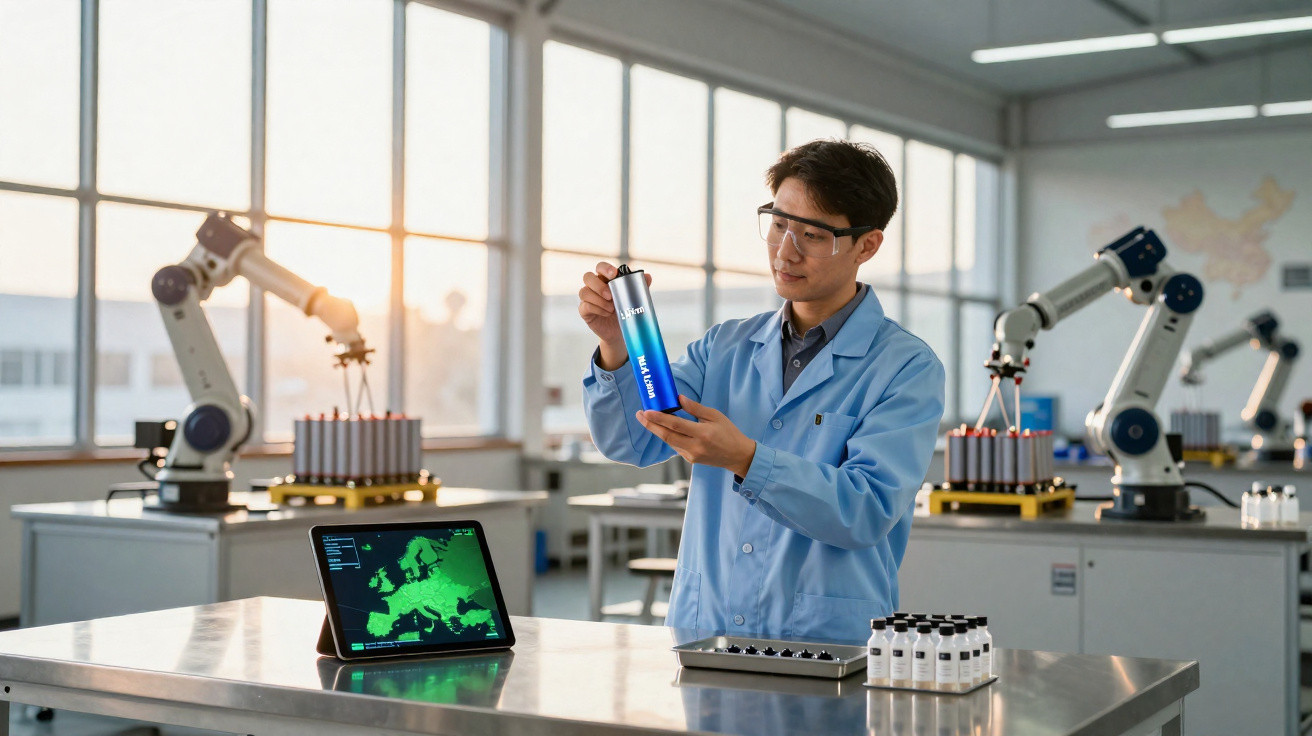
The nation that for decades made nuclear power its defining energy choice is now placing an equally serious wager on batteries built at home. From French gigafactories to sodium-ion start-ups, a new direction is emerging: reduce reliance on Chinese supply chains, strengthen European energy autonomy, and reshape who controls the future of electric mobility.
France’s battery gamble and why China is paying attention
For a long time, China has led the battery industry end to end, spanning raw materials, refining, and the finished cells themselves. For European carmakers, sourcing from Asian heavyweights was largely unavoidable. As electric vehicle demand accelerates and geopolitical frictions intensify, that dependency is increasingly viewed as a strategic vulnerability.
Against this backdrop, the French-backed Automotive Cells Company (ACC) has become a cornerstone of Europe’s response. This joint venture-bringing together Stellantis, Mercedes-Benz and the French energy group TotalEnergies-is scaling up output of batteries manufactured entirely within Europe.
ACC’s battery cells made in France are aimed directly at China’s core advantage: cost-effective, large-scale cell production.
Asian competitors still outpace Europe on sheer volume, but the appearance of a credible European manufacturer alters the balance of power. Carmakers in France, Germany and Italy can now secure a portion of supply closer to home, with greater influence over standards, pricing and how technology is shared.
What is Automotive Cells Company actually building?
ACC’s first industrial facility, located in the former coal-mining area of Hauts-de-France, is being developed as a gigafactory focused on lithium-ion batteries for electric vehicles. The goal is industrial-scale manufacturing rather than small-batch laboratory development.
The plan centres on three priorities:
- High-performance battery cells designed for mass-market electric cars
- European-based supply chains to cut dependence on imports
- A smaller carbon footprint than many Asian competitors, supported by cleaner electricity and shorter transport distances
From an industrial policy perspective, the signal is straightforward: batteries are being treated as strategic infrastructure, on a par with semiconductors or telecommunications networks. By situating the plant in a region badly affected by deindustrialisation, the scheme also serves as a high-profile example of reindustrialisation and job creation.
The gigafactory is about more than technology; it is also about sovereignty, employment and political influence.
How this shifts Europe’s energy autonomy
Energy autonomy goes beyond generating electricity. It also requires the capacity to store power, move it, and deploy it without heavy reliance on overseas suppliers-needs that batteries sit at the centre of.
Through ACC and similar initiatives, France is seeking to:
- Ensure a reliable supply of batteries for its domestic EV market
- Back European carmakers facing growing pressure from Chinese and American rivals
- Retain a larger share of the value chain within the European Union
This rebalancing matters as both the US and China deploy subsidies, tariffs and industrial strategies to support their own champions. Europe, often criticised for slow action, is now attempting to close the gap through targeted battery alliances and state-supported investment programmes.
Tiamat and the sodium-ion wildcard
French battery ambition is not confined to ACC’s lithium-ion cells. Another player attracting attention is Tiamat, a start-up founded by CNRS researchers, which is developing sodium-ion technology.
Where lithium-ion dominates today’s car market, sodium-ion batteries rely on sodium-an element that is abundant and widely available in salt. That difference has significant consequences for raw-material security and long-term cost.
Tiamat’s first commercial sodium-ion battery has already been integrated into a product, with industrialisation targeted from 2025.
Key potential benefits of sodium-ion include:
- Reduced reliance on lithium, cobalt and nickel, which can be subject to sharp price swings
- Lower manufacturing costs in principle, particularly once produced at scale
- Safer thermal behaviour in certain designs, which can reduce fire risk
These batteries are not yet positioned to power long-range electric cars at scale. However, they could prove competitive for urban vehicles, stationary storage, and applications where durability and affordability matter more than maximum range.
Why sodium-ion matters for global competition
China is also investing heavily in sodium-ion, with multiple large firms unveiling prototypes and pilot production lines. France joining this contest through companies such as Tiamat sends a clear message: Europe does not want to remain a perpetual follower on next-generation battery chemistries.
If sodium-ion becomes common in grid storage or in lower-cost electric models, a domestic manufacturing base could prevent billions in imports and reduce exposure to supply shocks.
Implications for electric mobility and carmakers
For motorists, the earliest impact is likely to be felt in affordability and availability. Batteries produced in Europe give local brands more room to negotiate on price and manage supply risk. That flexibility could help lower the cost of entry-level EVs-a segment in which Chinese manufacturers are already highly competitive.
Carmakers also benefit when battery suppliers work closely with vehicle engineering teams. With development and production nearby, responses to safety concerns, performance refinements or software updates can be faster.
For carmakers, control of batteries is gradually becoming as strategically important as control of engines once was.
The shift also influences planning for charging networks and electricity grids. If France and neighbouring countries can depend on a steady stream of locally produced batteries, large-scale storage tied to solar and wind projects becomes easier to schedule and finance-helping to stabilise power systems as fossil fuels are phased down.
Jobs, skills and regional impact
A single gigafactory can create thousands of direct roles, plus many more across subcontracting, logistics and supporting services. The skills in demand span chemistry and robotics engineering through to maintenance, quality assurance and digital systems.
Regions hosting these plants frequently invest in training centres, apprenticeships and technical colleges, aiming to avoid a repeat of past patterns in which advanced factories had to import much of their expertise from abroad.
| Aspect | Traditional car industry | Battery-centred industry |
|---|---|---|
| Core component | Combustion engine | Battery pack and software |
| Key skills | Mechanical engineering | Chemistry, electronics, data |
| Energy link | Oil supply chains | Electric grids and renewables |
| Geopolitical risk | Oil-producing countries | Battery materials and factories |
Risks, uncertainties and the Chinese response
France’s battery drive comes with real obstacles. Gigafactories require vast capital investment, and commercial success depends on reaching high output quickly. If global demand weakens or trade rules change, some projects may be slowed or postponed.
Raw materials remain another major constraint. Even with factories in Europe, the region still imports much of its lithium, nickel and other metals. Recycling, diversifying mining sources and pursuing alternatives such as sodium-ion are all part of the answer, but each takes time to scale.
China is also unlikely to be passive. With a substantial lead already, it could respond by cutting prices, accelerating exports of lower-cost models to Europe, or restricting access to certain processed materials-moves that could squeeze new French and European entrants before they fully mature.
The battery race is won less by a single breakthrough than by building a robust ecosystem over decades.
Scenarios for the next decade
Several paths could unfold. In one outcome, European and French-backed initiatives such as ACC reach full capacity, sodium-ion establishes a viable niche, and Europe captures a meaningful share of global battery manufacturing. China would still dominate volumes, but the gap would narrow and dependence would decline.
In a less positive outcome, cost pressures and regulatory delays hinder EU developments. Chinese and US firms further consolidate control over patents, supply chains and the digital platforms tied to battery systems. European factories would remain active, but largely as junior partners in a market shaped elsewhere.
A third, mixed picture is also possible, with regional specialisation: Europe concentrates on premium batteries and tight vehicle integration, China retains its position as the low-cost powerhouse, and countries such as India or Indonesia move up the value chain through raw-material processing.
Key terms and practical angles for readers
Two concepts recur in these discussions and are worth defining:
- Energy sovereignty: the ability of a country or region to power its economy without excessive reliance on a small number of foreign suppliers.
- Gigafactory: an industrial site capable of producing several gigawatt-hours of batteries each year-enough to equip hundreds of thousands of vehicles.
For households and small firms, these strategic moves may soon show up in everyday ways. Increasing local battery output can help steady EV pricing, broaden second-hand supply, and enable new services such as neighbourhood storage paired with rooftop solar.
More broadly, France’s battery bet is also a bet against time. The country is working to shift from buying technologies designed elsewhere to helping set standards, patents and industrial rules. Whether that ultimately reshapes global power is uncertain, but the opening moves are already under way.


Comments
No comments yet. Be the first to comment!
Leave a Comment