
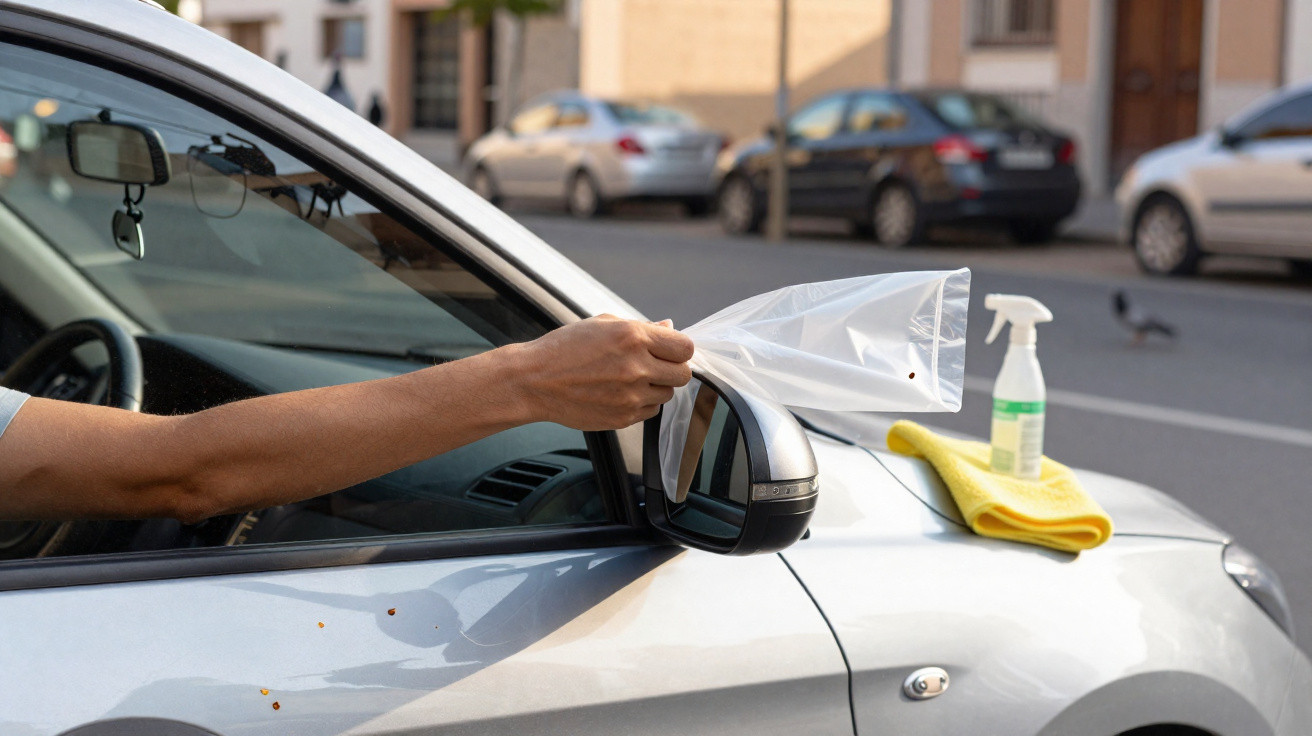
A curious trend is suddenly showing up in many car parks: wing mirrors wrapped in simple plastic bags.
If you drive through rural areas or on the outskirts of towns, you may have spotted it already: an otherwise ordinary car, but both wing mirrors are stuffed into crinkly bags. At first glance it can look like carelessness, or as if someone has improvised mid-house move. In reality, this odd-looking fix is aimed at a very specific problem - and it is surprisingly effective.
Why plastic bags end up on wing mirrors
The main culprit is an opponent many drivers underestimate: birds. Particularly during the breeding season, they can become territorial and highly reactive. In many places, the glossy mirrors on modern cars end up as repeated targets.
Spring is when some males ramp up the behaviour to the point that they interpret their own reflection as a rival. They then go for the “intruder”, pecking at the glass, flapping against it, and leaving obvious marks behind.
"Reflective wing mirrors can look like a foreign intruder to some birds - and they are attacked without mercy."
When you return to the car a few hours later, the surprise is often unpleasant: fine scratches around the mirror, loose feathers, and in the worst case a lot of droppings across the mirror housing and door.
When bird droppings damage the paintwork
The frustration is not limited to cosmetic mess. Bird droppings contain acids that can attack a car’s clear coat. In warmer conditions, the contamination can effectively “burn” into the paint. The longer it is left, the more likely lasting damage becomes.
Anyone who regularly parks outside will recognise the pattern: repeat soiling in the same areas, gradual paint deterioration over time, and potentially an expensive professional detail. The area around wing mirrors is one of the zones most at risk.
What birds find so interesting about wing mirrors
- Highly reflective surface: they pick up movement and shapes in it.
- Movement from wind: even slight vibrations can resemble a living opponent.
- At eye level for many species: mirrors often sit around the flight height of smaller birds.
- Quiet car parks: in rural areas the birds have time to “let off steam”.
For the animals, it is a territorial fight; for the owner, it is a scratched mirror and acidic residue.
The simple trick: cover the mirror and the problem fades
This is exactly where the plastic-bag approach comes in. The principle is straightforward: remove the reflective surface and you remove the trigger. Without a “rival” to see, birds tend to move on to other objects - ideally trees, shrubs, or natural features.
"If you make the mirror surface invisible, you remove the trigger for the attack."
Most drivers use whatever is available: everyday shopping bags, small bin liners, or packaging bags. They simply pull one over each wing mirror and tie it loosely. Some people use reusable protective covers; others make do with old fabric bags.
How drivers put the protection into practice
- Park the car and switch off the engine.
- Pull a plastic bag or cover over each wing mirror.
- Tie it lightly around the mirror housing or secure it with an elastic band.
- Remove the bags before driving and store them inside the vehicle.
The key is simply to disguise the shiny surface. Even a towel or a piece of cardboard can work, as long as it is secure and will not blow away.
A trend from the countryside spreading into towns
At first, this trick was mainly seen in villages, along farm tracks, or in mountain regions. Cars there are often left exposed for long periods - outside farms, guesthouses, or at walking trail car parks. Lately, however, wrapped mirrors have been appearing more and more in residential streets as well.
In some urban neighbourhoods with lots of trees or parks, birds can be just as aggressive as they are in the countryside. On top of that, curious crows or magpies often perch on shiny surfaces. In that context, the simple DIY method becomes a quiet form of self-defence for local residents.
"What started as an improvised countryside fix has become a visibly growing everyday trick on city streets too."
Owners of vehicles with particularly large wing mirrors - such as those fitted to some hatchbacks or SUVs - often report clear improvements: fewer scratches, less mess, and therefore less ongoing cleaning effort.
What alternatives to plastic bags exist
Anyone who would rather avoid single-use bags can choose other options, because the basic idea remains the same: cover the mirror surface and remove the attraction.
- Textile covers: reusable fabric sleeves that slip over the mirror.
- Rubberised hoods: purpose-made covers in rubber or neoprene, often water-repellent.
- DIY covers: old socks, cut-off sleeves, or fabric scraps secured with elastic.
- Folded cardboard: a short-term fix wedged between the mirror and housing.
Many people now try to minimise extra waste. Longer-lasting covers that can stay in the car are an obvious choice. The only requirement is that they fit firmly enough and do not become a hazard to other road users in windy conditions.
Which car colours are affected most often
Beyond the mirrors themselves, certain paint colours seem to attract more attention. Light shades - especially very vivid or high-gloss finishes - appear to draw birds more strongly. They reflect more light and stand out more to the animals.
If you live in an area with lots of birds and are planning a new car purchase, it is worth keeping in mind. A very bright finish can look smart, but in day-to-day use it may be targeted by droppings more often. More subdued colours with less shine tend, statistically, to be noticed less.
Practical care tips to prevent damage
You can never avoid contact with birds entirely. However, a few habits can greatly reduce the risk of permanent marks:
- Remove paint contamination as soon as possible, ideally the same day.
- Check more frequently in spring, especially around mirrors and roof edges.
- Keep a soft microfibre cloth and a gentle cleaner in the boot.
- Consider a paint sealant or wax for longer-term protection.
If you are on the road regularly, carrying a small care kit also helps. It allows you to remove fresh residue quickly before it has time to etch in.
Why the trick works so well
Birds rely heavily on visual cues and movement. A clean, shiny wing mirror offers both: it reflects surrounding motion and also shows the bird its own image. Once that visual feedback is removed, the chain reaction stops - no reflection means no perceived rival.
From a behavioural point of view, the method makes sense because it does not attempt to change the animal, only the environment. That is why many people say the attacks and soiling drop off noticeably after just a few days.
"With a simple everyday item, an annoying and expensive nuisance can be significantly reduced."
So the next time you see a car with plastic bags over its wing mirrors, it is unlikely to be pure scruffiness. It is a small, practical shield against claws, beaks, and corrosive mess - and, for many owners, far preferable to paying repeatedly to put paint damage right.






Comments
No comments yet. Be the first to comment!
Leave a Comment