
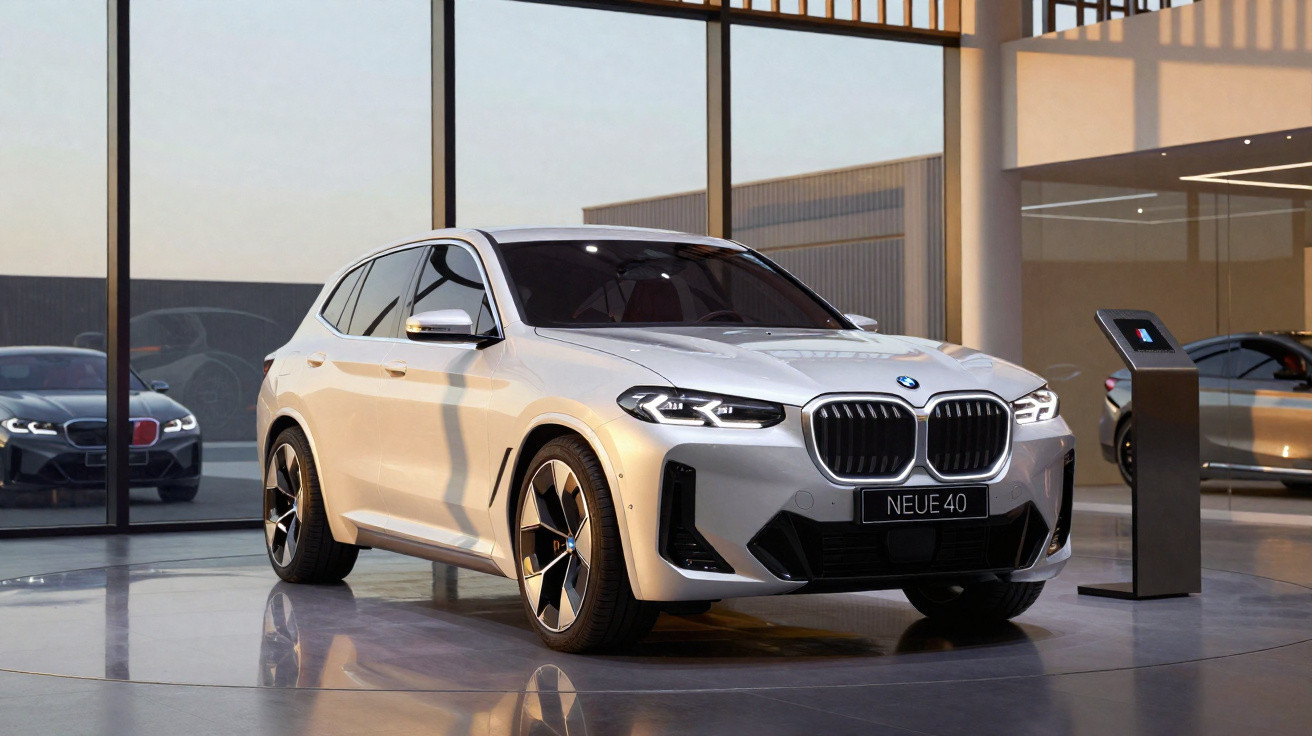
BMW is gearing up for one of the biggest product offensives in its history. By the end of 2027, the Bavarian manufacturer plans to introduce around 40 new models or heavily updated versions of existing ones.
At the heart of this shift is the Neue Klasse, BMW’s next generation of electric models. It is more than a new platform and an 800 V electrical architecture: it marks a fundamental change in how the brand develops cars, with its first truly “software-defined vehicles”. The rollout began with the new BMW iX3, but the schedule for this year stretches well beyond that SUV.
During 2026, several of the most important pieces of this strategy are set to appear. The most emblematic will be the new BMW i3 - the electric version of the 3 Series, not a second-generation revival of the small electric city car. Even so, Munich has more than just that in store.
Neue Klasse begins with iX3, but it’s the i3 that will grab the headlines
The new BMW iX3 has already been widely discussed, so by now you will likely know what it brings. This electric SUV is genuinely all-new: alongside the technology debuts mentioned above, it also ushers in a fresh exterior design language and a more radical interior layout.
Deliveries in Portugal start this March, with prices from 72 900 euros, giving access to the only version available for the moment: the xDrive50. More variants are on the way, both below it (rear-wheel drive and a smaller battery) and above it (an iX3 M is on the agenda). The xDrive50 pairs two motors producing 345 kW (469 cv), a 108,7 kWh usable battery, and a range of up to 805 km (WLTP combined cycle). Our verdict on the new iX3? Read our first drive report.
Directly derived from the iX3 will be the new BMW iX4, which will share almost everything with one major difference: its silhouette. The iX4 will keep the “SUV-Coupé” positioning, with a more steeply sloping roofline. It will take over from the combustion-engined X4, which ceased production last year. The unveil is expected in the summer, although production is scheduled to start later, in November, with deliveries only beginning in early 2027.
Even so, while the iX3 opens the Neue Klasse chapter, the car that may truly come to represent this new era for BMW is the BMW i3. This is not a new generation of the electric city car launched in 2013; instead, it is a family saloon placed squarely at the core of BMW’s line-up. It will be the first all-electric 3 Series - and the 3 Series has defined BMW’s DNA for five decades.
For fans of the combustion-powered 3 Series, there is no need to worry. The electric model will not replace it. In fact, next year the current 3 Series (G20/G21) is expected to be succeeded by a new generation based on an evolution of the current platform (CLAR), still with combustion engines, but styled in line with the new i3.
The BMW i3, however, will use the iX3’s Neue Klasse underpinnings. That means the same technologies, electric motors and batteries will be shared between the two. And if the iX3 reaches 805 km with 108,7 kWh, the lower, sleeker electric 3 Series is expected to surpass that figure comfortably.
Its reveal is set for 18 March, but the market launch may take longer, only arriving in 2027.
New BMW X5 generation will also debut with an electric version
While Neue Klasse models outline the brand’s longer-term future, BMW is also preparing to replace one of its range’s cornerstones. That model is the BMW X5, which is heading into its fifth generation.
Known internally as the G65, it will not be based on the Neue Klasse platform. Even so, the headline change will be the arrival of a fully electric derivative, the BMW iX5. Although it will continue to sit on CLAR in an evolved form, the iX5 is expected to adopt many of the technologies first introduced by the iX3, as well as a design aligned with BMW’s new family look.
Although the iX5 is set to attract most attention, the X5 will continue to be offered with a broad spread of powertrains, including combustion and plug-in hybrid options. Production is planned to begin in August, with sales expected to start closer to the end of the year.
In addition to the battery-electric iX5, BMW is also preparing an iX5 powered by a hydrogen fuel cell, using technology developed in partnership with Toyota. That version, however, is only expected to launch in 2028.
Updates are also part of the offensive
Not every upcoming BMW will be a completely new model. A key part of the plan also involves refreshing the current range through the usual mid-cycle updates.
Among the cars expected to receive these evolutions are the BMW 5 Series and BMW 7 Series. Both should move visually closer to the Neue Klasse style and adopt some of the solutions first seen on those newer models. See the gallery below for a closer look.
Anticipated changes include a revised front end with a new lighting signature, a seemingly more restrained “double kidney” grille treatment, and the introduction of Panoramic iDrive, defined by a digital interface that runs along the full base of the windscreen. Mechanically, no major changes are expected. In other words, the updated 5 Series and 7 Series should remain available with combustion-only versions, plug-in hybrids and fully electric variants.
Finally, and no less interesting, BMW M also has updates planned. One of them was inadvertently (or perhaps intentionally) previewed by the brand itself on its website: the BMW M2 will become available with xDrive all-wheel drive, a first in the coupé’s history.
These are only some of the announcements expected for this year. Others will arrive as new variants or further updates to existing models. After all, BMW has signalled 40 new developments by the end of 2027.

Comments
No comments yet. Be the first to comment!
Leave a Comment