
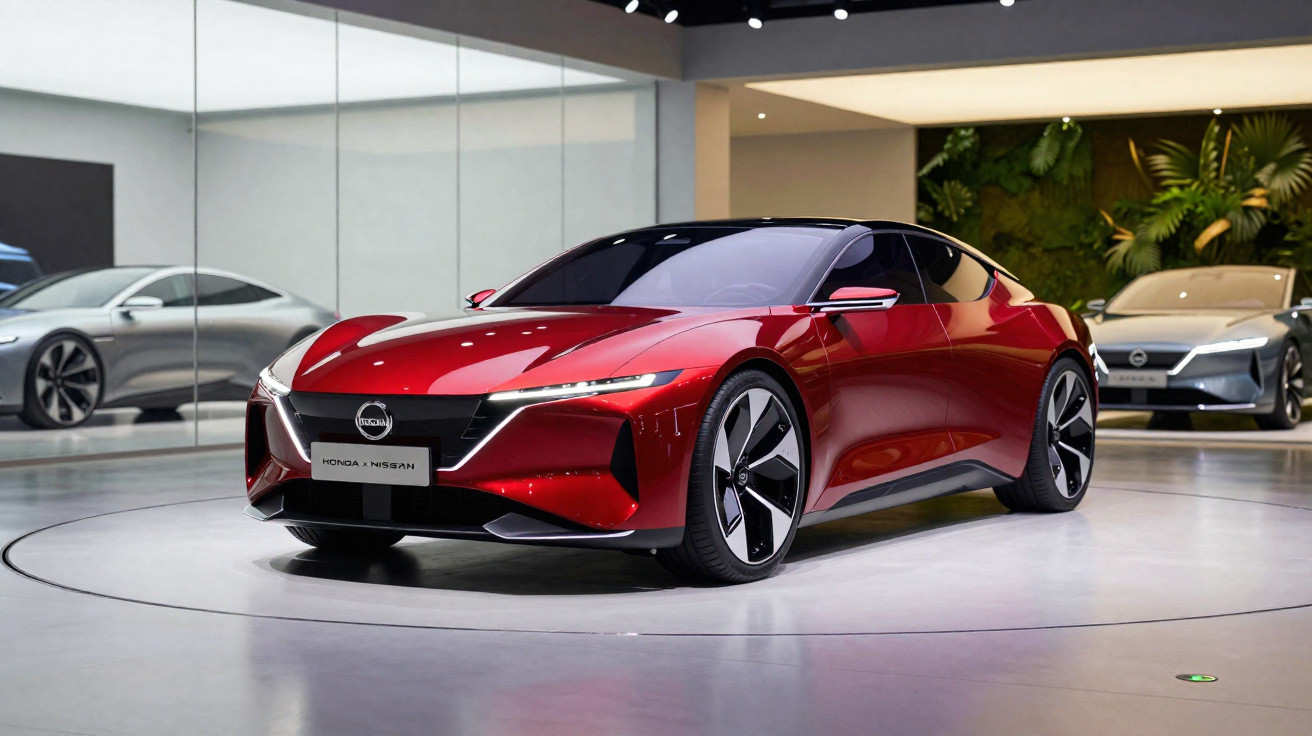
Honda and Nissan have now made it official: the two carmakers signed a memorandum of understanding today regarding a potential merger.
The plan would be carried out through a new holding company that would bring both manufacturers under one umbrella. If it goes ahead, it would create the world’s third-largest automotive group by sales, behind Toyota and the Volkswagen Group, with roughly 7.2 million combined annual sales.
Based on today’s figures, this new automotive heavyweight would generate revenues of more than €183.89 billion and operating profits exceeding €18.39 billion.
“Today is a very important day marked by the start of discussions about the integration of the two companies with the potential to shape our future. If realised, I believe that by joining the strengths of both companies, we will be able to deliver unparalleled value to our customers worldwide,” said Makoto Uchida, Nissan’s President and Chief Executive Officer.
Objectives for the Honda–Nissan merger
The logic behind this merger mirrors the rationale that led to Groupe PSA and FCA to combine in 2021: consolidation as a way to remain competitive. That is particularly relevant in the current environment, with new rivals and emerging technologies-especially around vehicle electrification and software development.
The first move bringing Honda and Nissan closer-Japan’s second- and third-largest carmakers, respectively-came in March, when they signed an initial memorandum of understanding to assess the feasibility of a strategic partnership focused on developing components for electrified vehicles.
This time, the ambition is to integrate the two businesses, share resources, build synergies, and speed up their ability to respond to market demands.
“The memorandum announced today aims to serve as an option to maintain global competitiveness for both companies, so that they can continue to deliver more attractive products.”
Nissan and Honda
How the new holding company would work
Even so, this is not expected to be a merger of equals: Honda is set to take the lead of the new holding company. Although the deal remains under discussion, the official statement already points to meaningful progress on several fronts.
The key areas cited are the synergies and economies of scale delivered through shared platforms and components; the integration of research and development departments; and improvements across production, including processes and factories.
What about Mitsubishi?
Alongside the memorandum of understanding between Honda and Nissan, a second memorandum was signed with Mitsubishi. Its purpose is to explore the manufacturer’s potential integration into the new holding company. It is worth noting that Nissan owns 24% of Mitsubishi.
Mitsubishi is currently examining how it could contribute to-and benefit from-this possible integration. If it decides to proceed, it could add close to 900,000 units, taking this new giant’s annual sales total beyond eight million.
What happens next?
A final decision on whether the merger will move forward is only due in January, but Honda and Nissan have already set out a provisional timetable for the next stages, should it proceed.
In June 2025, the two manufacturers are scheduled to present the definitive agreement, along with the share-transfer plan. This is also when the organisational structure is expected to be revealed, as well as the name of the new automotive group.
If everything runs smoothly, the new entity is expected to be listed on the Tokyo Stock Exchange in August 2026, with each company’s individual delisting taking place shortly beforehand.

Comments
No comments yet. Be the first to comment!
Leave a Comment