
From TDI to VTEC, and from boxer layouts to turbocharging, 16-valve heads or EcoBoost, the many types of internal combustion engine - and the technologies built around them - have long been a defining part of how car models and brands have expressed identity and stood apart, almost since the automobile began.
That era looks increasingly limited. The drive towards electrification, the need to cut costs and ever-tighter regulation are pushing manufacturers to look for cheaper alternatives to developing and building combustion engines in-house. Outsourcing (subcontracting) is emerging as the preferred route.
Times change, priorities change
Electrification is reshaping what the combustion engine is for. In hybrid systems, the electric machine is taking more of the starring role for both performance and fuel economy, while the combustion engine is steadily pushed into the background - and, in some applications, reduced to little more than a generator. In that context, few people care whether it has a turbo, direct injection, or three or four cylinders.
Speaking to Automotive News Europe, Ford vice-president John Lawler argues that “consumers don’t think about powertrains in the same way they did 30 years ago”. Electrification is also smoothing out how powertrains feel - linear delivery, instant torque and far less sound - so the engine becomes just another part of the car, rather than a key differentiator versus a rival.
“In the past, the engine defined the car - power, displacement, torque - but much of that has gone.”
John Lawler, Ford vice-president
As that mindset shifts, it becomes easier for manufacturers to pursue deeper cooperation and shared solutions in the name of cost reduction.
Cost pressure and the Chinese challenge
On top of the heavy investment already being poured into electrification, carmakers are also facing new competition from China that is far more cost-competitive.
Lawler says Chinese manufacturers operate with a cost structure around 30% lower than “anyone else in the world”. He also points to domestic overcapacity of 10–11 million units, which can only be absorbed through aggressive expansion into other markets. Cutting costs and improving competitiveness, he suggests, is no longer optional.
Money not spent on developing combustion engines can instead be redirected to the areas where Chinese brands are setting the pace: software and electrification.
“Chinese manufacturers are going to become a force to be reckoned with globally, and we’re going to have to compete with them at the same scale.”
John Lawler, Ford vice-president
Horse is a textbook example
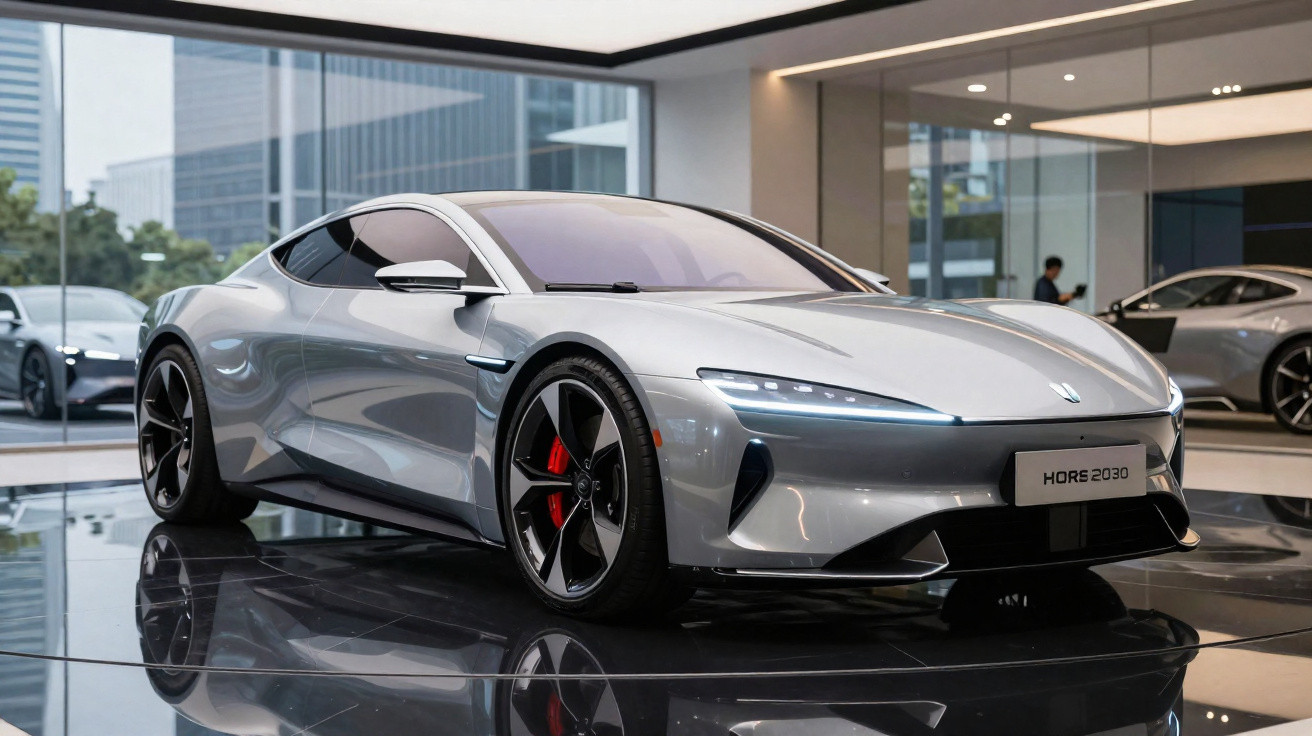
This new landscape - where the combustion engine increasingly looks like a standardised component, particularly in the mass market, and one that may even be shared between rivals - is already visible in Horse. The Renault Group and Geely joint venture focuses exclusively on developing and supplying thermal engines and hybrid systems.
Horse is not only an engine supplier to Renault Group and Geely. Any manufacturer can be a prospective customer. One customer already on the list is Mercedes-Benz: the new CLA mild-hybrid uses an engine developed in partnership with Horse and will be manufactured in China.
Mercedes-Benz, the CLA mild-hybrid and Euro 7
This is despite Mercedes having an engine of the same capacity, with the same number of cylinders, in its line-up - an engine that can be found in the C-Class or the current CLA.
Choosing Horse should allow Mercedes to save the resources that would otherwise be required to bring its equivalent engine into compliance with the Euro 7 standard (which comes into force on 29 November 2026).
It is likely we will see more manufacturers turning to third-party engines from companies such as Horse. The pressure to cut costs is enormous and, if reducing investment in combustion engines is what it takes to remain competitive, they are unlikely to hesitate for long.
Comments
No comments yet. Be the first to comment!
Leave a Comment