
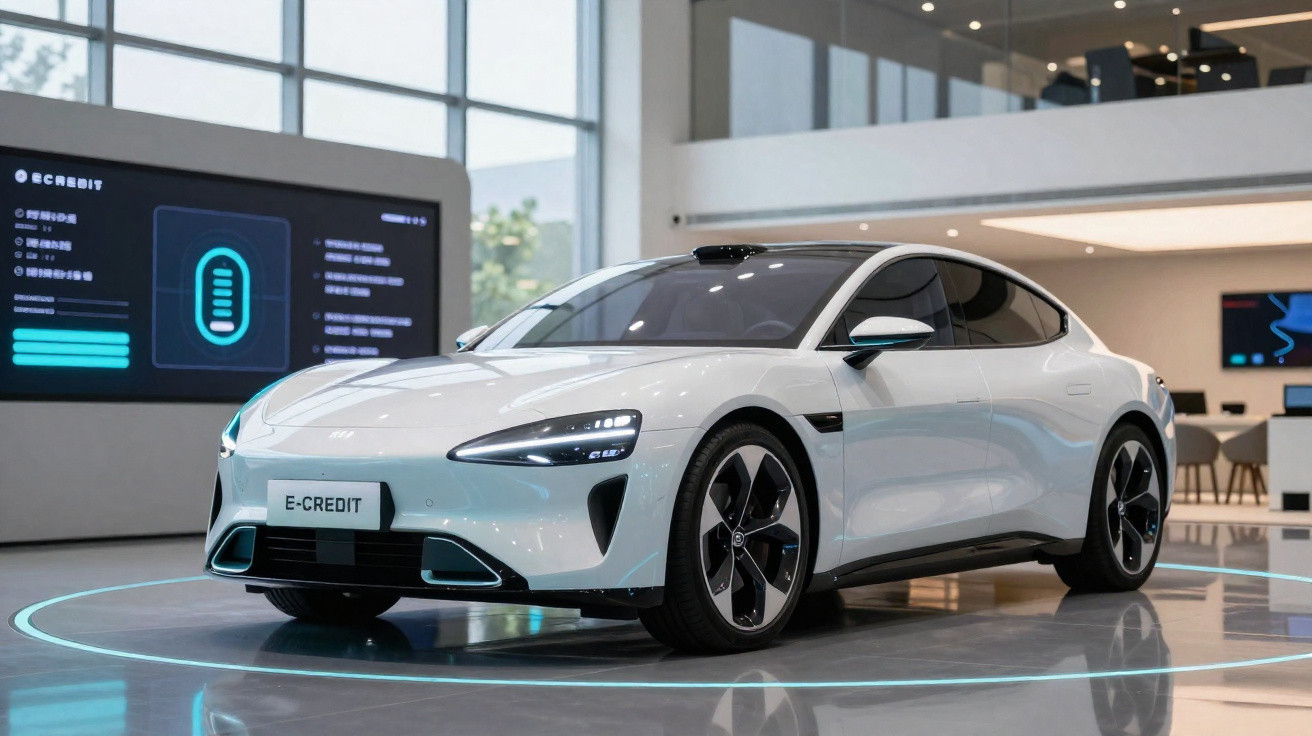
From next year, charging an electric car in Spain could become cheaper. The Spanish Government has approved a new mechanism that gives charging operators an additional revenue stream via credits bought by petrol companies, and that income can be used to bring down charging prices.
The measure is set out in Royal Decree 611/2026, published on 23 July, and it creates so-called e-credits: a credit scheme linked to the renewable electricity used to charge electric vehicles. Each e-credit corresponds to an amount of renewable energy equal to one megawatt-hour (MWh).
How do they work?
The idea is fairly straightforward. Whenever an EV is charged using renewable electricity, that energy generates a digital credit - an e-credit.
These credits are allocated to the operators of charging points. Operators can then sell them to petrol companies, which purchase the credits to meet European targets for cutting carbon emissions.
In this way, petrol companies can avoid relying solely on biofuels and can also avoid paying penalties for failing to meet emissions targets.
It is worth recalling that, under the Renewable Energy Directive, Member States are required to increase the use of renewable energy in transport, helping to reduce sector emissions and to meet the European Union’s climate objectives.
What’s in it for EV drivers?
The decree does not automatically translate into direct savings for drivers, but the intention is that the money operators earn from selling e-credits will be reflected in what drivers pay to charge.
With this extra revenue, operators are expected to cut tariffs, offer customer discounts, or invest more in infrastructure - all of which could make charging cheaper over time. However, the benefit may reach drivers in different ways depending on the operator.
At the outset, the scheme applies only to public charging points. The decree does state that home charging could eventually generate e-credits too, but that would require additional regulation to set technical requirements and to define how those individual electricity uses would be aggregated.
How much could they be worth?
The Spanish Government has not set a fixed price for e-credits; their value will be market-driven. Some companies in the sector estimate that each credit could be worth the equivalent of five to ten euro cents per kWh of electricity supplied.
If these expectations prove accurate, charging could become noticeably cheaper for many EV users.
In Portugal, a comparable approach is under discussion: Renewable Electricity Certificates. Issued by the National Entity for the Energy Sector (ENSE), these digital certificates are used to formally demonstrate that green electricity has been incorporated into final consumption.
The proposed mechanism would require energy suppliers to purchase the certificates or otherwise demonstrate the use of clean sources, acting as an important market tool for achieving the national decarbonisation targets set for 2030. It is also being considered that these certificates could be sold to petrol companies.



Comments
No comments yet. Be the first to comment!
Leave a Comment