
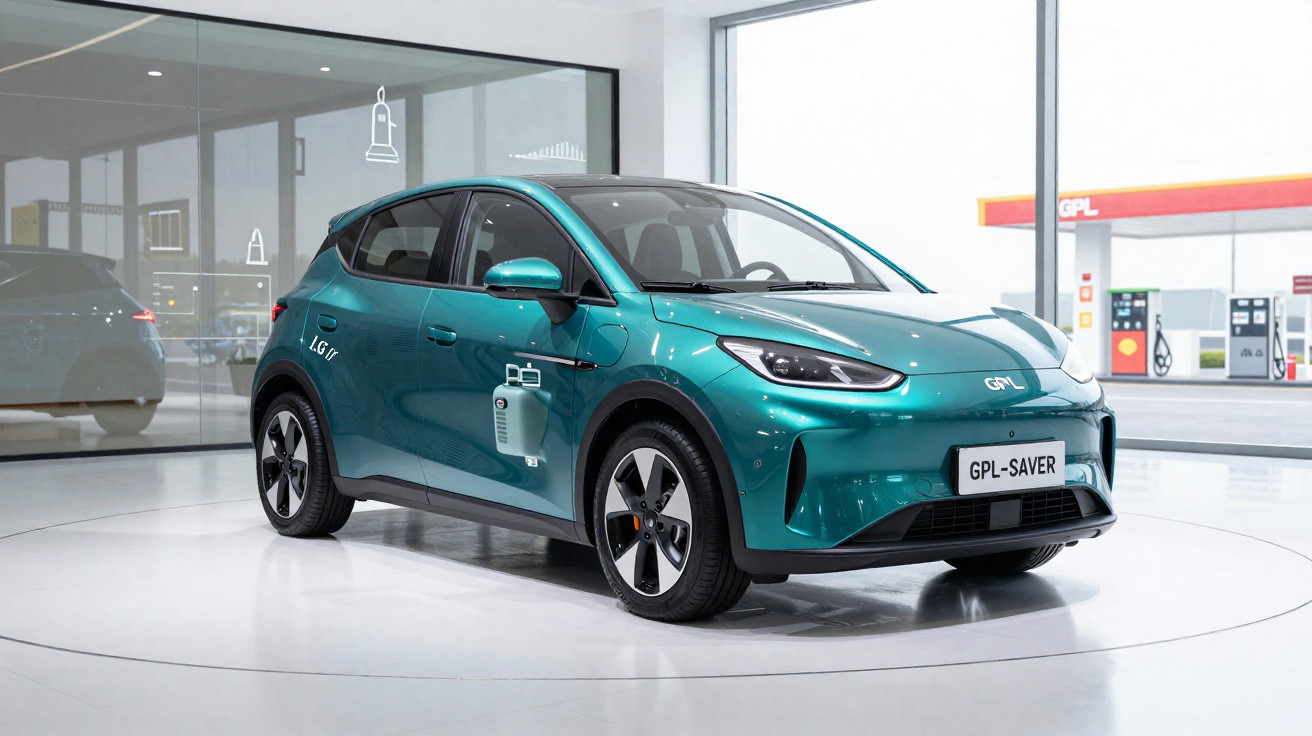
If you’re looking to cut your running costs in 2026, there’s a technology that’s affordable, straightforward to live with and exceptionally cheap to use: LPG (Liquefied Petroleum Gas - GPL).
With Renault, there’s an extra selling point: the reassurance of a factory-fitted system that’s fully integrated into the car.
The French brand’s ECO-G line-up - Clio and Captur - pairs a 1.0 TCe 100 cv engine with a Bi-Fuel (petrol and LPG) set-up designed from the ground up to operate in either mode. It’s as easy to use as a petrol car, but the difference shows up clearly in your wallet.
Real savings, proven at the pump
The headline benefit of LPG is simple: a litre typically costs around half the price of petrol. In Portugal, the average LPG price sits at about €0.85/l, while regular 95 petrol is close to €1.75/l.
Even allowing for higher consumption - roughly 15% to 20% more than an equivalent petrol engine - the savings remain substantial. Put into figures: covering 100 km on petrol costs around €11.4; on LPG, €6.4. That’s about €5 less for every 100 km.
Better still, ECO-G versions cost exactly the same as the petrol versions. In other words, the savings start from the very first kilometre.
Myths and facts about LPG
For years, LPG carried a few negative assumptions, largely caused by makeshift systems and non-certified installations. That era is over.
On Renault ECO-G models, the system is fitted at the factory, with the same build quality and warranty backing as any other component. It’s fully integrated - not an aftermarket conversion - and the warranty remains unchanged: 3 years or 100 000 km in the Portuguese market.
Another common claim is that it “lacks power”. In the Clio and Captur, the 1.0 TCe ECO-G produces 100 cv and 170 Nm of torque - 10 cv more than the petrol-only version. The latest generation of the Clio goes further, introducing a new 1.2 TCe ECO-G with 120 cv - 5 cv more than the equivalent petrol model.
In practice, there’s ample performance for overtaking, climbing hills or travelling comfortably, just as you’d expect in this class of car.
Automatic switching and easy everyday use
Switching between petrol and LPG happens automatically and is almost unnoticeable; the driver mainly spots it via the instrument display. With both tanks filled, the combined range comfortably exceeds 1000 km.
Refuelling is quick and safe, taking virtually the same time as filling up with petrol. Parking? There are no restrictions. Renault models equipped with the ECO-G system meet all safety standards and can enter covered car parks without any limitations.
Genuine economy, no gimmicks
According to the French brand, the ECO-G versions of the Clio and Captur make it easier for anyone who wants to save money without giving up performance, range or comfort.
The purchase price matches the petrol versions, yet day-to-day running costs are far lower. The technology is fully built-in, backed by Renault’s factory reliability and warranties. That may help explain why LPG has increasingly been chosen to replace Diesel, including within company fleets.
There’s also an environmental point: it emits less CO₂ than petrol, cutting emissions by around 10% - strengthening the financial advantage with a more positive impact on the planet.
For drivers who want to reduce costs without adding hassle to their routine, the Renault Clio and Captur ECO-G remain a clear example that you can spend less and drive more - with no tricks and no compromises.


Comments
No comments yet. Be the first to comment!
Leave a Comment