
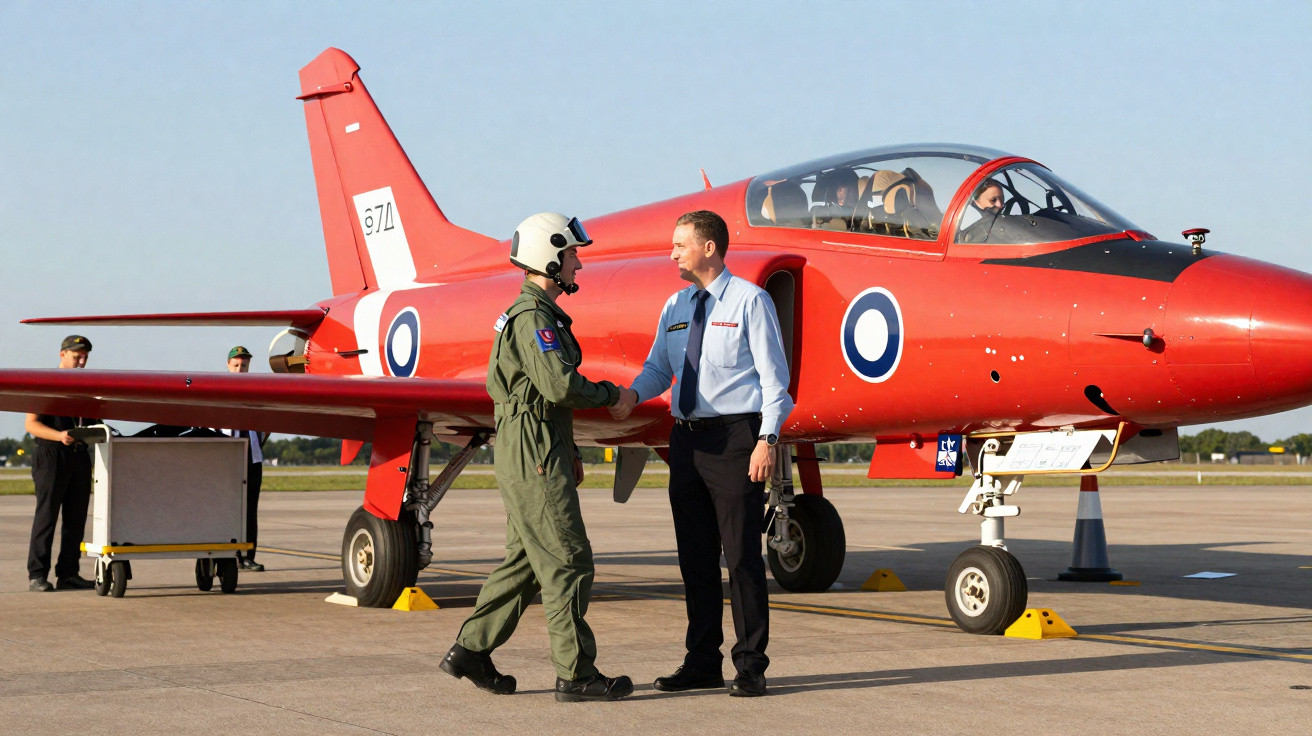
BAE Systems, Boeing and Saab have agreed a Letter of Intent to work together on the Royal Air Force’s (RAF) advanced jet trainer programme, with the T-7A Red Hawk positioned as the cornerstone of a future training system. The arrangement is intended to bring together training functions and the associated mission systems, while also examining ways to broaden the supply chain footprint in the United Kingdom.
Industrial plans for the RAF advanced jet trainer programme and the T-7A Red Hawk
BAE Systems is set to head the work, including plans to stand up a UK final assembly line and to generate high-value employment. “Our new collaboration with Boeing and Saab will allow us to present a strong offer to the Royal Air Force and our global customers, leveraging the latest technological innovation in training systems and a world-class jet trainer. We are committed to ensuring that this solution delivers the best outcome for the nation, supports the UK’s air combat readiness, and generates economic benefits,” said Simon Barnes, Managing Director of BAE Systems’ Air sector.
From Boeing’s perspective, Bernd Peters, Vice President of Business Development and Strategy at Boeing Defense, Space & Security, said: “Together with Saab and now BAE Systems, we will offer innovative training solutions to prepare RAF pilots for the future, including fourth-, fifth-, and sixth-generation aircraft. This collaboration enhances our technological capabilities, strengthens the transatlantic industrial base, and opens opportunities for cooperative developments.”
Saab’s Lars Tossman, Head of Saab’s Aeronautics business area, added: “The strong partnership between Boeing and Saab developed the T-7 as the world’s best solution for training future pilots. By working with BAE Systems, Saab believes the UK can acquire a suitable successor to the Hawk, which will be the right choice for pilots for decades to come.”
Requirement for a new advanced trainer and what the T-7A Red Hawk offers
The United Kingdom’s 2025 Strategic Defence Review set out the requirement for a new advanced trainer. The T-7A Red Hawk-chosen by the U.S. Air Force in 2018-is presented as an integrated training system aligned to fourth-, fifth- and sixth-generation aircraft. It has been designed so it can be adapted as technologies evolve and as operational demands change, supporting pilots who will go on to fly advanced fighters and bombers.
Background to the negotiations
In August, sources indicated that Boeing and Saab had begun early discussions with BAE Systems about possible cooperation, focused on replacing the BAE Hawk T2 currently operated by the RAF. The Hawk fleet, which also supports the Red Arrows aerobatic team, ended production in 2000. The 2024 Strategic Review advised progressing a replacement, placing particular weight on bids that include industrial participation in the UK.
At that stage there was no formal deal in place, but prospective collaboration between the three firms was viewed as an important development in the European military trainer market. A BAE Systems spokesperson said at the time that the company did not comment on rumours or speculation, while reiterating the role of training within its air strategy. Saab likewise did not provide specific detail, pointing to the confidential nature of its T-7A partnership with Boeing.
The UK Ministry of Defence had confirmed in March 2024 that the RAF was reviewing routes to replace the Hawk T2 through an integrated training approach, combining live flying with virtual capabilities.
With the Letter of Intent now signed, the effort moves into a more formal phase towards the possible adoption of the T-7A Red Hawk as the RAF’s next advanced jet trainer.
Images are for illustrative purposes only.
You may also be interested in: The U.S. takes the first step towards producing 60 new CH-47F Block II helicopters for the German Armed Forces


Comments
No comments yet. Be the first to comment!
Leave a Comment