
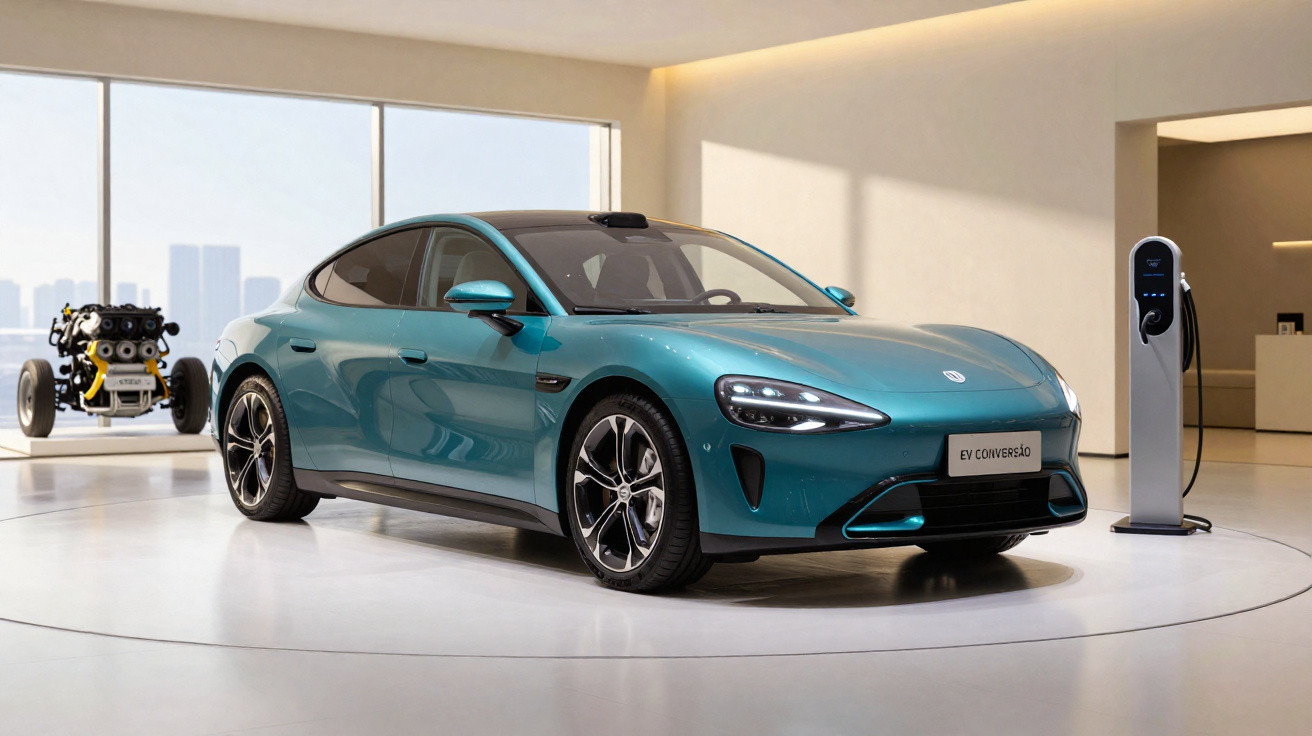
The Government has approved, in Cabinet, a decree-law establishing a new Vehicle Transformation Regulation as part of the Mobility 2.0 package. The measure is designed to end the maze of technical circulars and replace it with a clear legal framework for modifying motor vehicles and trailers without undermining road safety or the environment.
One of the headline changes is the option to replace combustion engines with electric systems-something that, until now, was close to impossible in practice. The Minister for Infrastructure and Housing, Miguel Pinto Luz, has presented the reform as a way to bring “speed and transparency” to these types of alterations.
What changes with the new regulation
With the Vehicle Transformation Regulation, Portugal gains a single, unified legal framework that spells out which modifications are allowed and what requirements must be met to ensure safety and environmental protection.
The decree replaces hundreds of circulars and streamlines the route for conversions such as ambulances, campervans and emergency response vehicles.
At the same time, the newly approved rules simplify procedures and remove the Mobility and Transport Institute (IMT) from direct responsibility for inspections. These checks will instead be carried out by periodic inspection centres, with an estimated 20 thousand vehicles a year expected to be inspected through those entities.
In short, anyone in Portugal who wants to turn a combustion car into an electric one should now face a simpler, faster and less bureaucratic process-this is the stated aim of the ministry led by Miguel Pinto Luz.
A new business opportunity
Making combustion-to-electric conversions legal creates room for new businesses in Portugal. In many countries, workshops and specialist firms have emerged to convert older vehicles-particularly classics-into electric vehicles.
There are plenty of examples, especially where procedures are quicker and less burdened by red tape. The United Kingdom is one such case. The British company Fellten, for instance, already sells ready-to-install conversion kits.
In Portugal, some firms have also started taking early steps. Vintage Vans, based in Seixal, which had focused on air-cooled engines (Volkswagen and Porsche), has already electrified a Volkswagen “Bread Loaf” van. According to the company’s owner, António Velez, the work is reversible and has given the German classic 150 km of range along with improved performance.
A phenomenon that divides opinion
Despite the enthusiasm among many owners, converting classics to electric power remains contentious. For some purists, removing the original engine undermines the essence of a historic vehicle. For others, it is a more practical, predictable and reliable way to enjoy a classic.
This debate is not new. The Fédération Internationale des Véhicules Anciens (FIVA), which oversees the preservation of historic vehicles, takes the view that converting a classic removes its status as a historic vehicle. It recommends that, if electrification goes ahead, all original parts should be kept so the change can be reversed.
FIVA also questions the environmental benefits, noting that battery production and recycling carry energy and environmental costs. It points out that the definition of a historic vehicle includes being more than 30 years old and being maintained in historically correct condition. In Portugal, certification of vehicles of historic interest is handled by ACP - the Automobile Club of Portugal, the Caramulo Museum and CPAA - the Portuguese Classic Automobile Club.

Comments
No comments yet. Be the first to comment!
Leave a Comment