
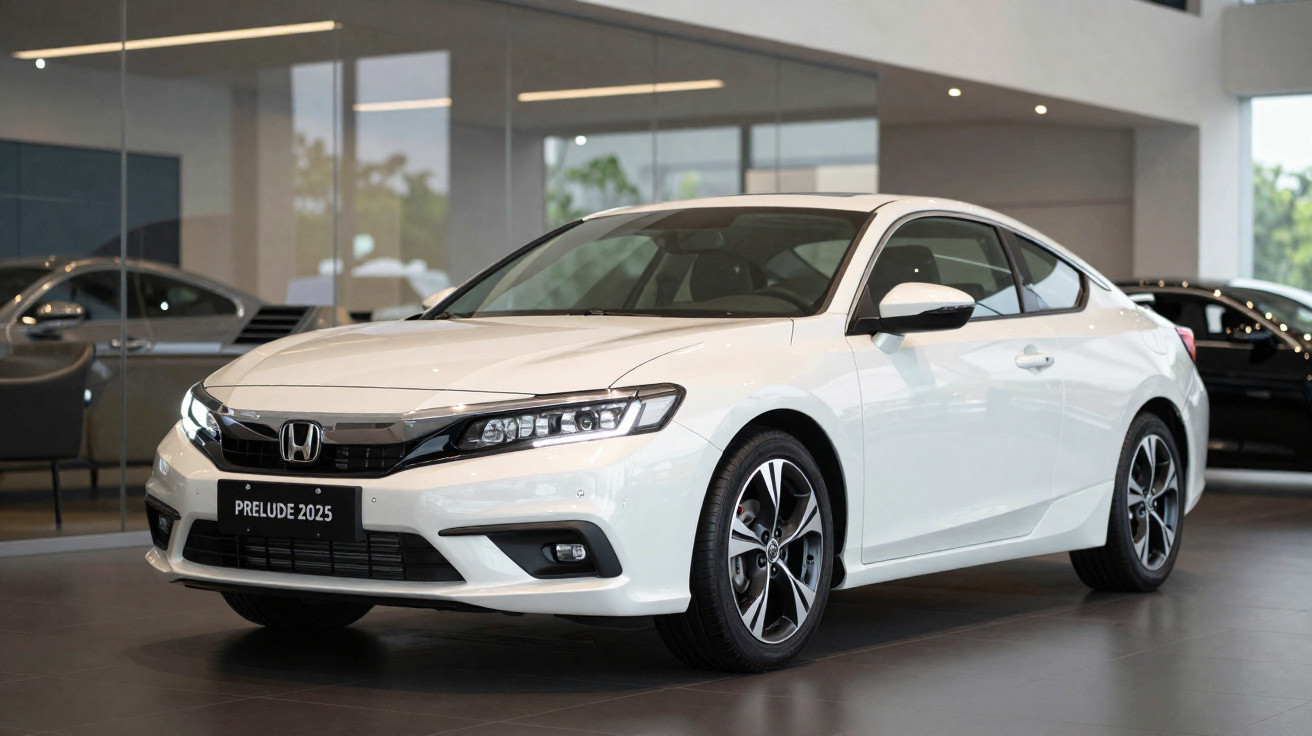
After two decades away, the Honda Prelude is back. And believe it or not: it hasn’t turned into an electric SUV!
It was always going to happen. The moment Honda decided to revive a badge with the historical weight of Prelude, comparisons with the Civic Type R were inevitable. After all, in an age where the hot hatch feels like an endangered species, Honda still seems to understand the formula better than anyone.
Early signs only fuelled that expectation: anyone who laid eyes on the Honda Prelude prototype could be forgiven for picturing it powered by the Type R’s 2.0-litre, 329 hp engine. Especially as the Prelude is, in many ways, the Civic’s coupé sibling.
Instead, Honda took the safer route and fitted it with the same hybrid system used in the Civic and the ZR-V. Was that the right call? I went to Nice to find out. Watch the video:
Full marks for styling
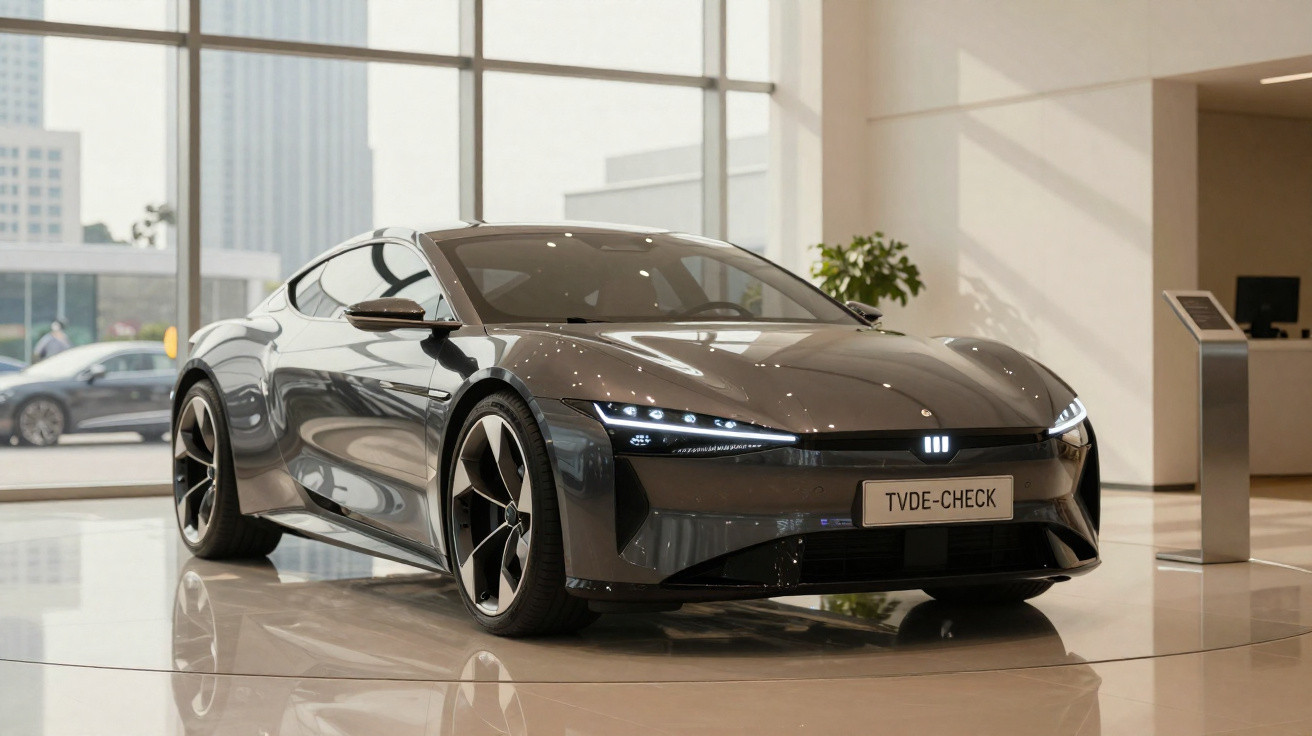
From the outside, the Prelude’s design feels spot on. You may disagree, but to my eyes Honda’s designers have landed on very balanced proportions and clothed them in elegant, flowing lines.
Crucially, it avoids the overly aggressive add-ons we often see on sportier models-whether that’s massive bumper air intakes or a towering rear spoiler.
The Prelude turns its back on all of that. The surfacing is clean, the shoulder line swells towards the rear, and the roof sits low-something I’d argue is non-negotiable on any coupé. There is a trade-off, of course, but I’ll come to that.
A restrained cabin
Inside, Honda has played it less boldly and kept the Civic’s layout largely intact. That’s hardly a problem, though: the Civic remains one of the best cabins in its class.
There’s no room for pointless decoration, flashy light shows, or cinema-sized screens. Instead, the Prelude’s interior leans into minimalism and restrained, sensible design choices.
Neither the digital instrument display nor the infotainment screen stands out for ultra-modern styling or graphics, but both are easy to read-and for many people, that matters most.
Materials and build quality also deserve praise. And given this is meant to be the more sporting, higher-pedigree option, the seats-and therefore the driving position-are arguably the main talking point.
Honda has gone as far as developing two different front seats, one for the driver and one for the passenger. The passenger seat is broader and softer; the driver’s seat is firmer and offers stronger lateral support. Details like that make a difference.
But there’s an issue
There’s no ignoring the elephant in the room: rear-seat space. Honda presents it as a 2+2 coupé, but it’s hard to imagine those back seats being genuinely useful for anyone other than children.
And it’s not so much legroom or knee room that’s the problem-it’s headroom. To the point where I found myself thinking Honda could have been bolder, deleted the rear seats altogether, and used that to shorten the chassis.
Where there’s nothing to criticise is the boot. According to the Japanese brand, it’s designed to take two golf bags or a set of four tyres.
VTEC? No…
Now to the Prelude topic that splits opinion most: the engine. If you were expecting to find a 2.0-litre, four-cylinder VTEC turbo with 329 hp from the Civic Type R under the bonnet, forget it.
As I said earlier, Honda opted for a more cautious approach. Yes, ever-stricter emissions rules keep tightening the screws-but Mazda still sells the MX-5 with a 2.0-litre engine and no electrification, and Toyota does the same with the GR Supra, which even offers a six-cylinder, 3.0-litre option.
That point alone could fill an entire article-or a Car Radio episode (who knows!). I’ll admit that when I first heard the Prelude would adopt the same hybrid setup as the Civic and ZR-V, I was somewhat disappointed.
Then I reminded myself of something: at least Honda isn’t using the Prelude name to badge a crossover or an electric SUV. And giving Japanese engineers the benefit of the doubt was the least I could do-history is on their side.
Complicated? Not really
All of that meant I was keen to get behind the wheel and see whether this hybrid system could live up to such a significant name. For a long time, the Prelude served as Honda’s technological flagship.
It took only a few kilometres to realise the hybrid setup isn’t a limitation at all. On paper, the e:HEV system sounds complex because the 2.0-litre, four-cylinder (Atkinson cycle) engine is only used to drive the wheels at higher motorway speeds.
Honda judges that, in that specific scenario, the 143 hp and 186 Nm combustion engine is the most efficient solution. In most other situations, the petrol engine acts purely as a generator, charging a small battery (1.05 kWh capacity) that feeds the traction electric motor.
That electric motor delivers 184 hp and 315 Nm of maximum torque, and it powers the Prelude most of the time-enough for 0–100 km/h in 8.2s and a… 188 km/h top speed.
At a brisk pace, I never felt short of power. But from a standstill, out of a few corners, and when overtaking, I did catch myself wishing Honda had extracted another 20 or 30 hp from the electric motor-like the North American Prelude, which claims 203 hp.
That’s the downside. The upside is that the hybrid system’s operation is consistently smooth and pleasant, with everything happening far more progressively. And on top of that, fuel consumption is impressively low: I ended this first drive with an average of 6.2 l/100 km, despite spending time on the motorway.
Sporty? No-more GT…
The driving position is faultless, as is the feel of the controls (particularly the steering wheel and brake pedal). And on twisty roads the handling is noticeably more engaging than I expected. But now that I’ve uncovered some of the Prelude’s secrets, that shouldn’t be surprising.
For this model, Honda has cherry-picked some of its best in-house solutions and dipped into the Civic Type R parts bin.
The adaptive suspension, for example, was “stolen” from the Japanese hot hatch, albeit tuned more softly here. The same applies to the braking system with Brembo calipers and many of the chassis solutions.
As the saying goes, the recipe might be excellent, but if the ingredients aren’t up to scratch, the final dish will never be good. Here, the ingredients are unquestionably high quality.
Still, it all comes down to expectations. If you insist on viewing it as a sports car-which I think is the wrong lens-you’ll quickly conclude the suspension should be firmer and the engine needs a bit more punch. But if you see it as a GT, it makes a very compelling case.
That, for me, is the Prelude’s key strength: it’s well balanced, engaging enough, and-above all-versatile. That’s what sets it apart most clearly from the Civic Type R. The Prelude is far more usable, easier to enjoy day to day, and offers a much broader operating window.
And when the perfect road appears-so long as you’re not trying to drive it “with a knife between your teeth”-it’s hard to come away disappointed. Not so much because of the S+ Shift system that simulates gear changes and that Honda sees as a bridge between car and driver, but because of the precision of the controls and the chassis tuning, which are at a very high level.
Price could be the biggest problem
Prices for the Portuguese market aren’t final yet, but considering the Civic with the same drivetrain starts at €45,000, it’s easy to predict the Prelude will never cost less than €60,000.
If that’s how it plays out, I can see it becoming one of the biggest obstacles to buying this model. It feels like a lot of money for what this coupé delivers. And at that price there are very tempting options in the used market-one of them being the Honda Civic Type R itself. You can revisit it here, at “our” Estoril Circuit:
But that’s only one side of the issue. It’s also worth understanding what pushes the price up. The main culprit is Portuguese taxation, which still penalises engine capacity too heavily through ISV, rather than focusing on emissions.
Because, at the end of the day, the Prelude manages to be as entertaining as it is efficient. That’s the real advantage of this hybrid system. True, it doesn’t deliver the same adrenaline hit as a Type R, but it’s more versatile, easier to live with, and far more economical.
That said, I understand that for many people this won’t feel like the comeback they hoped for from such an emblematic name. It lacks the standout differentiators that would make you forget that, deep down, it’s essentially a Civic coupé.
On the other hand, I have to acknowledge that choosing this hybrid system makes it more usable in any situation. And even if it isn’t a hardcore sports car, it can still deliver an engaging, genuinely enjoyable drive.
And, of course, with rare exceptions (notably BMW and Mercedes-Benz), it’s only fair to recognise the courage Japanese manufacturers still show by bringing back a body style that has genuinely fallen out of fashion: the coupé.


Comments
No comments yet. Be the first to comment!
Leave a Comment