
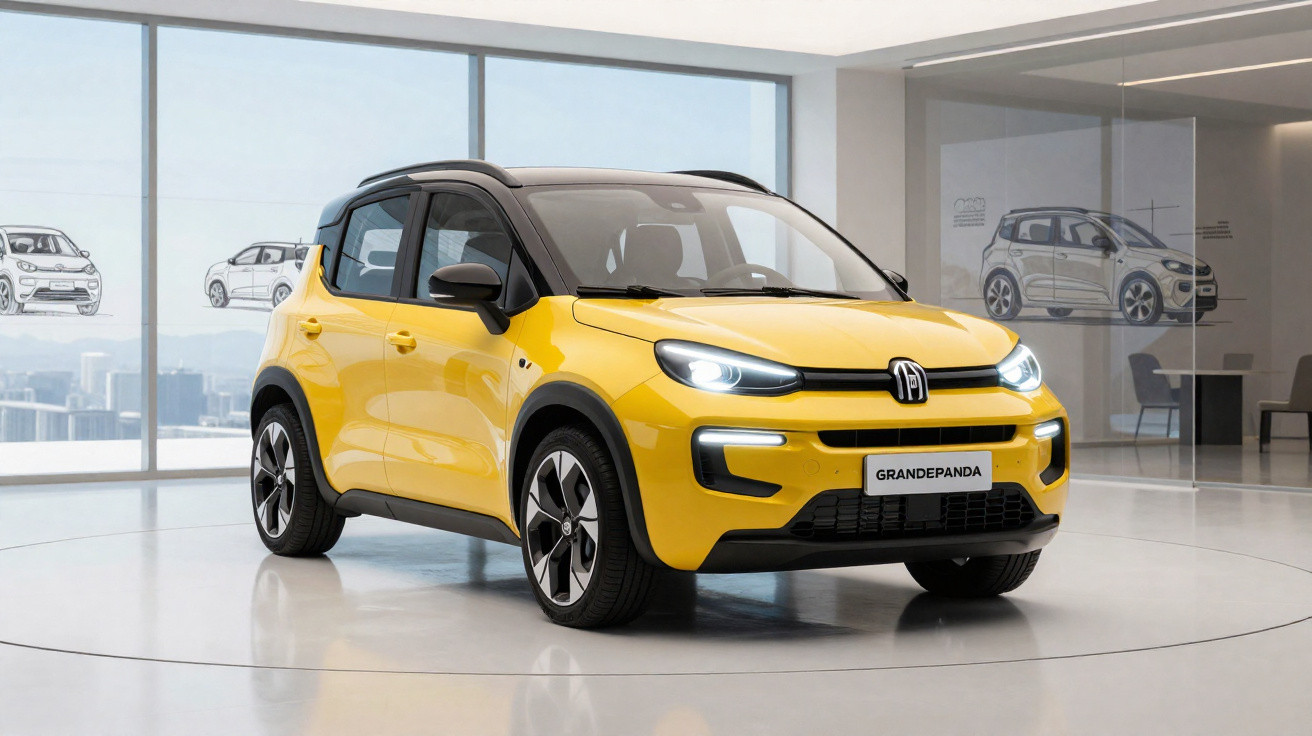
FIAT wants to become a truly global brand, and the Grande Panda is the first move in that plan. With the promise of reaching markets beyond Europe - the Middle East, Africa and South America - this model is positioned as a turning point.
“Now is FIAT’s moment,” declared Olivier François, the brand’s chief executive, during the model’s global unveiling, underlining just how important this launch is.
We’ve since had the chance to speak with Olivier François, and the conversation made one thing clear: the Grande Panda is a cornerstone of FIAT’s future. In his words, “The Grande Panda is the brand’s first genuinely global model (after the Palio in the 1990s) in many years”.
When we mentioned the Palio’s relative lack of success in Europe - where it was seen at the time as a ‘third-world’ car - François was unequivocal:
“That no longer exists, that concept of a third world, and that’s the beauty of living in the 21st century. With the right platform, from Stellantis, and inspiring design like what we have, we can aim for very high production volumes and, with that, make money on a B-segment car, which is quite difficult.”
Olivier François, FIAT Chief Executive
“The Grande Panda will go on sale in the Middle East, in Africa and in South America, where it will replace the Argo and it won’t necessarily be called Panda,” he concluded. The target is an annual production volume in the region of 300,000 units, spread across “at least three factories” - one for each of the regions mentioned above.
One thing is certain: the Grande Panda is only the start of FIAT’s global expansion, and over the next 18 months we’ll see more new arrivals - which you can read about further down. This exchange also revealed what happened to the Punto successor that was once on the cards.
A false twin
We also have to address the ‘elephant in the room’ - or perhaps Panda - namely the comparisons being drawn with the Citroën C3, which shares the same platform. François had a quick, straightforward response: “A platform is a platform. And just because it’s shared doesn’t mean the car becomes the same”.
“In terms of design, I think it couldn’t be more FIAT than it is, and with clear links to the original car.”
Olivier François, FIAT Chief Executive
In practice, the new Grande Panda adopts a retro-futuristic look, taking cues from the original 1980s Panda but reimagined with a tougher stance that sits closer to an SUV. The cabin follows the same idea, packed with touches that nod to the brand’s past - including interior inspiration drawn from the historic Lingotto factory - the very one that had a test track on the roof.
“It breathes history through every pore, with a larger size (than the Panda) and an SUV interpretation,” the executive confided. Here’s our initial verdict:
For the Grande Panda to live, the Punto had to die
Since the 1990s, FIAT’s presence in the B-segment was carried by the Punto (and, later this century, the Grande Punto). Production ended in 2018, and the brand was left without a successor in a segment it once dominated.
And, intriguingly, before the Grande Panda there might have been a new Grande Punto. Olivier François confirms as much: “There was a company project to develop a new Punto for the B-segment, but it didn’t excite me. So we cancelled that project,” he revealed.
His aim was different: “I wanted a more iconic car in terms of design, not a generalist one. I wanted it to immediately earn a unique status. But not as singular as the Fiat Multipla, which shocked the market and wasn’t successful”.
“My idea was a kind of genetic cross between the Range Rover Evoque and the original 1980s Panda.”
Olivier François, FIAT Chief Executive
The result is there for everyone to see: despite a silhouette that’s similar to its ‘French cousin’, the Grande Panda stands apart, has character, and is full of distinctive details.
Even though it was shelved, the possibility of the Punto returning still comes up in discussion. “I don’t think so (it will return), but it will depend a lot on the maturity of the electric car market,” he said.
Electric? Yes - that’s one of the routes being considered for any potential revival of this historic name. Recently, the design team presented François with a concept called “Aero Punto” - an electric hatchback that, according to the CEO, “is spectacular”.
But he offered no promises: “I don’t know if we’ll ever build it, because we do lots of projects that don’t go ahead, but I can guarantee it’s spectacular”.
“The FIAT Grande Panda is my baby”
The executive went further: “The FIAT Grande Panda is my baby, it’s almost personal… and at 63, near the end of my career, I see it being born, I launch it into the market and then I feel free”.
And he seems so confident about its prospects - including in Europe - that he doesn’t appear especially concerned about rivals such as the nostalgic Renault 5 E-Tech: “It’s going to be an interesting race… but the Renault 5 is quite expensive, so only our top versions will be direct competitors to their entry-level model”.
What’s next for FIAT?
Over the next year and a half, FIAT’s global line-up will expand with three new models derived from the concept cars shown last year: a C-segment SUV and a C-segment fastback (set to take the place of the Tipo), plus a pick-up (the successor to the Strada).
“They’re cars that share some of the Grande Panda’s genes, but they won’t be called Panda and they’ll sit in different segments, serving different customers, in different regions,” he said.
As for the current Pandina (the Panda still on sale in the city-car segment), production will continue at the Pomigliano plant in Italy. However, FIAT has already confirmed it will receive a new generation towards the end of the decade.
Comments
No comments yet. Be the first to comment!
Leave a Comment