
Mercedes-Benz MBUX Hyperscreen: design and construction
Measuring 141 cm wide - effectively spanning the cabin from one side to the other - and offering an area of 2432,11 cm², Mercedes-Benz’s new MBUX Hyperscreen is an eye-catcher. It is formed from a single curved glass surface, shaped at 650 °C to prevent viewing distortion.
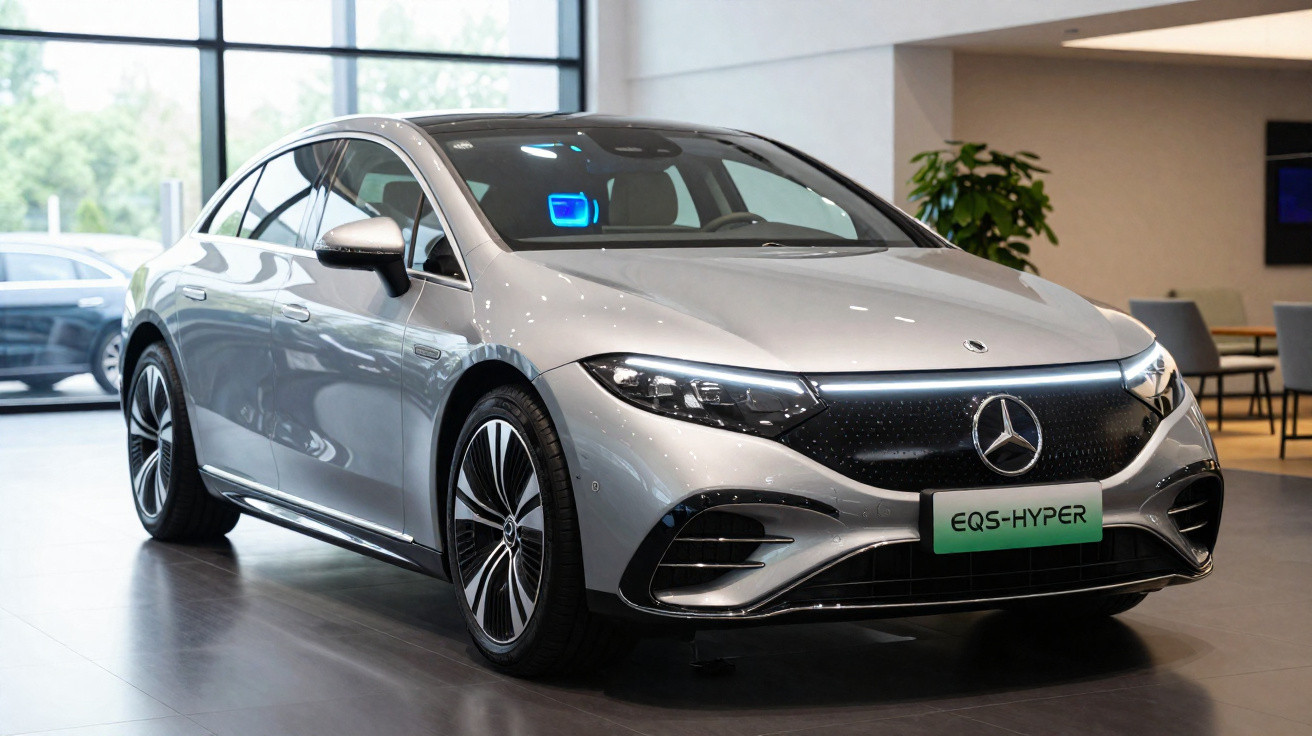
This latest and most daring evolution of the MBUX system will make its debut in the new Mercedes-Benz EQS - the electric equivalent of the S-Class - which is due to be unveiled this year, although the Hyperscreen will only be offered as an option.
Although it looks like one uninterrupted panel, the MBUX Hyperscreen actually brings together three OLED displays: one for the instrument cluster, another for infotainment, and a third dedicated to the front passenger. The latter two also incorporate haptic feedback, using 12 actuators in total to trigger a subtle vibration in your fingertips when you press the desired on-screen control.
The striking aluminossilicate glass surface (the same type as Gorilla glass used on smartphones) is finished with a three-layer coating called “Silver Shadow”. Mercedes says these layers cut reflections, make the panel easier to clean, and reinforce the impression of a “high-quality surface”.
At the far left and right, the MBUX Hyperscreen also integrates two conventional air vents, intended to “link the digital to the physical world”, according to Mercedes.
More than just appearances: the MBUX Hyperscreen and “zero-layer”
The Hyperscreen is not merely designed to impress anyone sitting inside the future EQS. As an evolution of the operating system introduced with the latest S-Class (W223), it also aims to be simpler to use by reducing the need to dig through sub-menus for the most frequently used functions - navigation, radio/media and telephone. Mercedes-Benz describes this as “zero-layer”, meaning “without layers or levels”.
It will also rely on artificial intelligence that can learn from, and adapt to, its user. Beyond displaying the right functions when they are needed, it can offer suggestions based on the user’s established usage patterns.
Front passenger display: profiles, personalisation and safety
For the front passenger, the dedicated screen can be tailored with up to seven profiles. As with the other two displays, the artificial intelligence is presented as an “attentive assistant”, proposing options that match how the passenger typically uses the system.
Because entertainment functions must comply with the safety rules in force across the countries where the EQS may be driven, whenever the passenger seat is empty the screen in front of it defaults to a decorative display.
A “computer on wheels”
In total, the MBUX Hyperscreen is powered by eight CPU cores, with 24 GB of RAM and 46,4 GB per second of RAM memory bandwidth. In addition, a multifunction camera and a light sensor allow it to adjust the brightness of its three displays to suit the surrounding ambient conditions.
While it will premiere in the Mercedes-Benz EQS, the new MBUX Hyperscreen already has another confirmed recipient: the EQS-based electric SUV that Mercedes-Benz plans to launch in 2022.
Comments
No comments yet. Be the first to comment!
Leave a Comment