
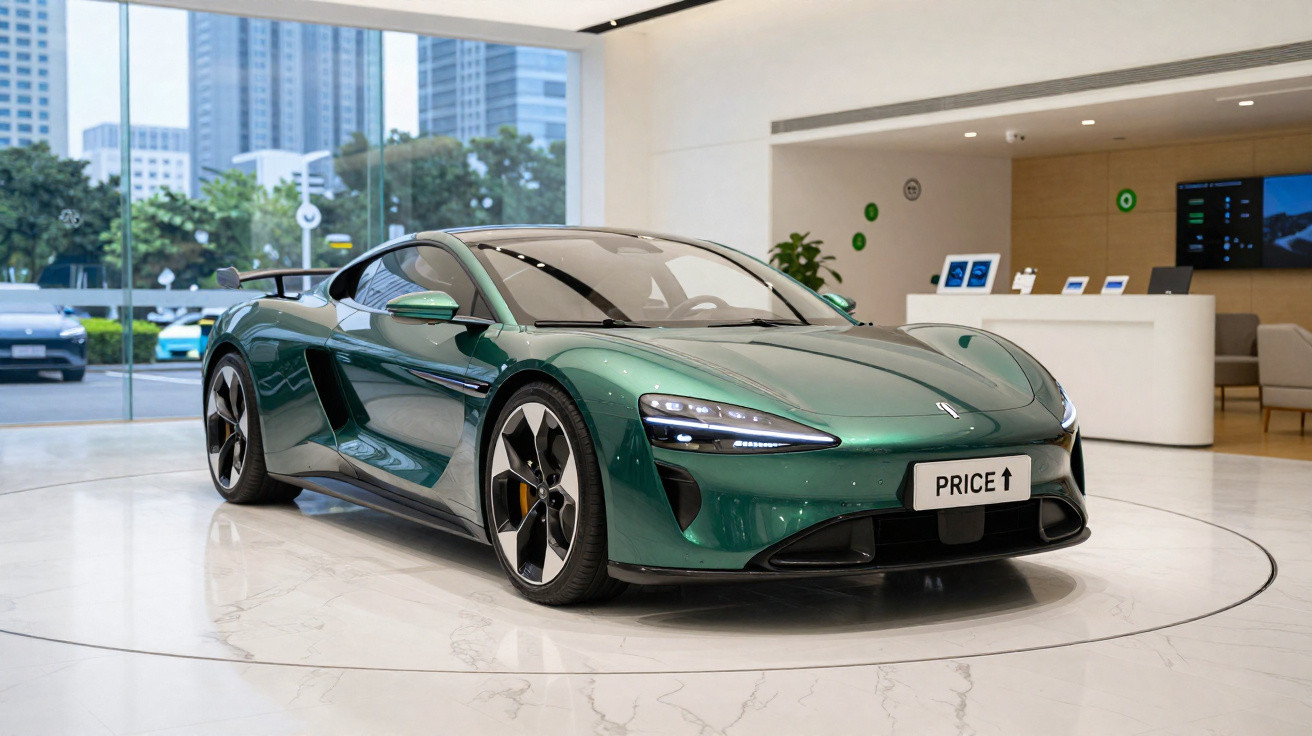
“I must have seen that wrong… how much does it cost?” That is probably the reaction we hear most often to the many road tests we publish here and on our YouTube channel. Yes, it’s true: cars are expensive.
If eye-watering prices are no longer a shock on certain models-especially those from premium brands, even if we too sometimes stare at the final total once all the options are added-on other cars, particularly in the lower segments with no “social climbing” ambitions, the story feels different.
To get into a reasonably well-equipped city car, €15,000 is already starting to look tight. Try the same exercise with a supermini? You are looking at €20,000 or very close to it, and you will likely be restricted to the cheapest engine option-one that is not always the best match for the job you actually need it to do. Want to jump into the fashionable B-SUV? Add a few more thousand euros for the equivalent version-practically in the same territory as the C-segment. And if you want to be “green”, €30,000 for a 100% electric supermini seems (for now) to be the minimum you need.
Some will argue that, these days, list price matters less than it used to. Up to a point, that’s true. More and more private buyers are choosing options such as leasing, and some manufacturers have even launched their own subscription services, as if they were a mobile network or a streaming provider.
And for those who still buy outright, it is also true that you rarely leave the showroom paying the list price, because promotional campaigns are common and there is often some room for discounting.
Even so, the price of a car remains one of the main factors in the buying decision.
That is the only logical takeaway when we pick apart sales charts, not only in Portugal but across Europe too. If we remove new-car registrations for businesses and fleets-which already account for around 60% of the market-we end up with a sales table where the best-sellers are not the names we are used to seeing.
Instead of the Volkswagen Golf and Renault Clio topping the charts, as happened in 2020, we see the Dacia Sandero and Duster in those positions. Exactly the models whose key selling point is… their low price. So the question remains…
Why are cars expensive, and why don’t prices seem to stop rising?
It would be easy, in Portugal, to point the finger at taxation, but in the lower segments-where almost everything seems to come with a small turbocharged 1.0-litre engine-the weight of ISV is not the most decisive factor. The gap to other countries, such as neighbouring Spain, is therefore not excessively large. Besides, electric cars do not pay ISV and hybrids get a 40% “discount” on the tax amount, rising to 75% in the case of plug-in hybrids-and, as you will already have noticed, they remain very expensive.
The biggest drivers behind ever-higher car prices are, above all, emissions-reduction measures and the response to tougher safety requirements. They are the main ones, but they are not the only ones…
Are halogen headlights not bright enough? LEDs are certainly better, but what do they actually cost? Apple CarPlay and Android Auto have become non-negotiable, and the more USB ports a car has, the better. Connectivity matters more and more, and even comfort features that used to be exclusive to luxury cars-such as heated seats-can now be found in city cars. Add the must-have “top-tier” sound system, or wheels with a diameter big enough to serve as a table for four. It all adds up.
Greener car = more expensive car
The push to cut emissions has been pursued both by making internal combustion engines more efficient-efficiency has never been higher than it is today-and by increasingly sophisticated and complex exhaust after-treatment systems (catalysts, particulate filters and selective catalytic reduction systems). The upside is clear: we have never had engines that are so economical and so “clean”.
Record compression ratios, advanced materials/coatings to reduce internal friction, cylinder deactivation, combustion strategies, turbocharging, among other solutions, make these results possible-but the side effect is that the cost of a powertrain today is significantly higher than it was 10-15 years ago.
Electrification to lower emissions? A cost “tragedy”. Even the lightest form of hybridisation, a mild-hybrid system, adds between 500 and 1000 euros per car on the production line. Full hybrids add another 3000-5000 euros per unit. And if we eliminate the combustion engine altogether-i.e., a 100% electric vehicle? Compared with an equivalent combustion-engined car, it can cost an additional 9000 to 11 000 euros to build.
This last scenario is changing, with forecasts suggesting the costs linked to electrification will fall-whether due to higher sales volumes and greater economies of scale, or because the expected “unclogging” of large-scale battery production for the automotive industry will take place over the next decade. Even if those costs drop to the point where they undercut combustion-engine costs, they will still settle at a higher level than many would like-note that the ambition for 2025 is to have an electric city car for a little under 20 thousand euros.
Safer, and almost driving themselves
Cars have never been as safe as they are today. After decades of progress in passive safety (deformable structures, airbags, etc.), this century has been dominated by active safety (in other words, the ability to avoid the crash in the first place). Driver-assistance systems have never been so numerous or so advanced, but to make them work we must add sensors, cameras and radar-yes, you can see where this goes: more cost.
And if, until recently, we could choose whether to add them-despite Euro NCAP effectively “requiring” them to achieve five stars-from the second half of 2022 many of these assistants will become mandatory under European rules. It will not matter whether it is a low-cost city car or a luxury XL SUV: both will have to include items and systems ranging from a rear camera to autonomous emergency braking, plus the addition of a black box and a lane-keeping assist system, and even more controversial features such as an intelligent speed assist or the pre-installation for ignition-interlock breathalysers.
Who pays for all of this?
The outlook is not easy for anyone searching for a new, cheap car. Hundreds-and in many cases thousands-of euros are added to the manufacturing cost of a vehicle so that it is cleaner, safer and more convenient. Cars are more expensive and will keep getting more expensive, whether because regulations demand it or because markets do.
Manufacturers do not have much room to manoeuvre. Either they absorb the additional costs (or part of them), dramatically cutting margins-which, as a rule, are not especially generous-or they pass those costs on to the customer.
That is how we have ended up where we are today, with people even debating whether city cars will disappear. We struggle to accept a city car priced between €15,000-€20,000, yet to develop it the manufacturer’s requirements overlap in far too many points with those of an executive E-segment saloon-both are subject to the same regulations.
Why launch a city car that costs as much to build as a supermini, then sell it for less money and make nothing from it? It is no surprise that European manufacturers have no near-term plans for new (affordable) city cars-even the new Smart models, which were never the cheapest, will be developed and produced in China-and the life cycle of those still on sale keeps being extended beyond what is reasonable, until regulations push them out of the market.
It is also unsurprising that alternatives such as electric quadricycles are appearing from carmakers, since this type of vehicle is not required to meet the same costly rules as a car. However, they are vehicles with very limited use. Even so, yes: a new generation of city cars is being prepared for the middle of the next decade, 100% electric, and it will be hailed as a victory because, as mentioned, they will manage to come in a little below… 20 thousand euros.
Like it or not, the “rescue” of these lower segments is in crossovers and SUVs. Why? Because people buying new cars are willing to pay a few thousand euros more for this body style-the sales figures prove it-even though, technically, they are no different from the superminis they are derived from. In other words, the cost impact of all the regulatory and technological additions is softened.
Luxury object
Don’t misunderstand me. Many of these additions on today’s cars are genuinely necessary, but they are still… additions. And that means they come with associated costs.
There is no radical reinvention of the car on the horizon that would quickly reverse the upward cost curve we have been witnessing. At best, we will see greater technical standardisation to boost existing economies of scale even further and blunt that growth curve. The decade we are about to enter will continue to be one of transition towards electrification. No wonder forecasts still point to rising costs associated with building cars.
On top of that, with all the limitations and bans approaching for the more affordable combustion-engined cars, we are being forcibly pushed towards electric vehicles. Yet even with generous tax incentives seen across Europe, their prices remain very high-and they seem even higher in Portugal, where salaries are below the European average.
As Carlos Tavares, chief executive of Groupe PSA, said: “electric cars are not democratic”. It will still take a long time before they are.
Cars are expensive, and they will remain so-more so-in the near future.
Comments
No comments yet. Be the first to comment!
Leave a Comment