
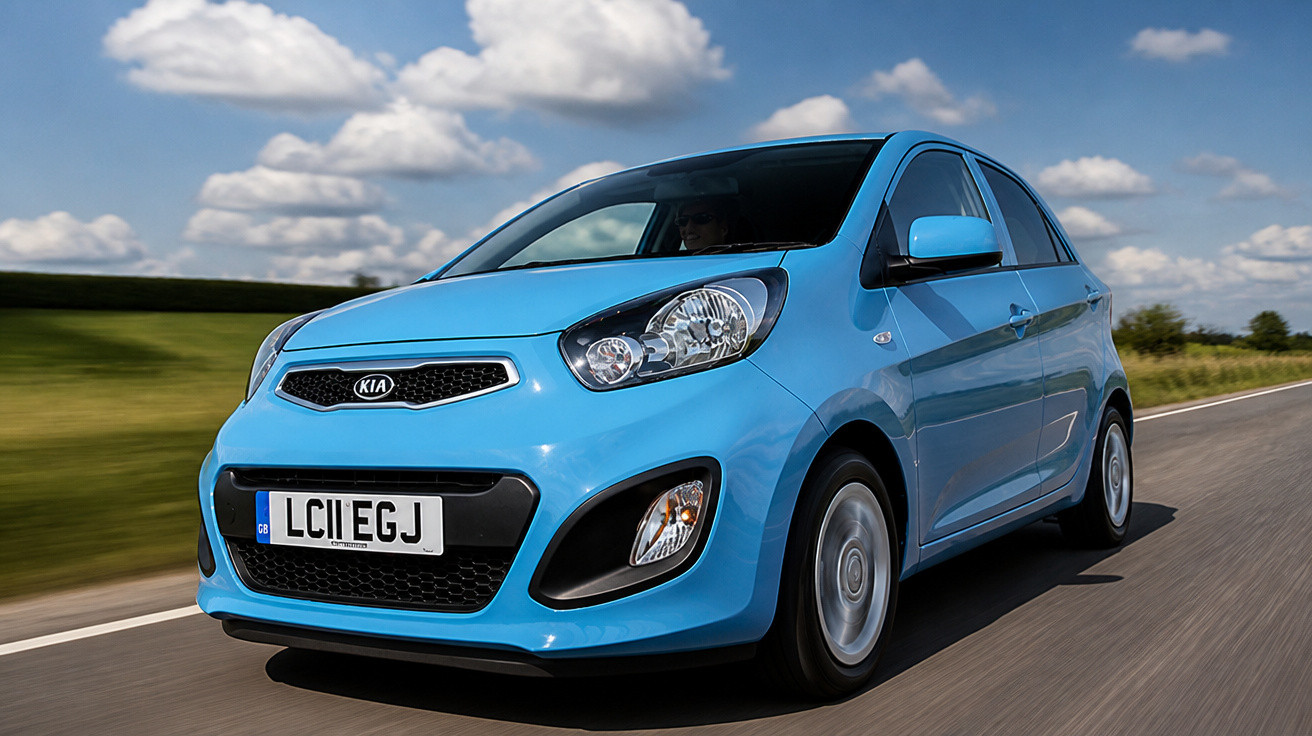
Kia’s biggest-selling model over the last seven years might be the Picanto, but the old car never exactly looked elegant. This replacement is a clean-sheet effort, and it signals a real shift. With Peter Schreger (the designer behind the original Audi TT) now leading the styling pens - and cars like the latest Sportage showing the direction - Kia is rapidly shaking off its former reputation.
Kia Picanto styling and space
Compared with the previous Picanto, which seemed pinched and underfed around its wheelarches, the new one looks sturdier - and, frankly, properly handsome. A strong shoulder line running from the rear light towards the top of the front wheel helps mask the tall flanks and slim glasshouse, while the bluff, chunky nose makes it seem larger than it is.
Underneath, it uses the same basic structure as the Hyundai i10, yet the bodywork sits on it with more assurance, helped by sharper creases and a more confident stance. It’s also 6cm longer than the outgoing model and, paired with tidier interior packaging, that increases bootspace from 157 litres to 200.
Engines, trims and running costs
You can choose between two engines and three trim grades, sensibly labelled 1, 2 and 3. The snag is that you can’t simply mix any engine with any specification - if you want the smallest engine and the top spec together, you’re out of luck.
Rather than drown in combinations, here’s the pick of the range: level 2 trim with the 1.25-litre EcoDynamics petrol engine, complete with stop/start. It costs £10,195, emits 100g/km of CO2, returns 65.7mpg on average and covers 0-62mph in a respectable 11 seconds. Standard equipment includes 14-inch alloys, aircon, fog lights and electric windows.
The 1.0-litre three-cylinder option has a fun, lively character, but it takes 2.9 seconds longer to reach 62mph and improves emissions by only one gramme of CO2. Still, it’s the only engine offered with level 1 trim, and that pairing comes in at £7,995. The trade-off is basic kit: steel wheels, and you’ll be winding the windows by hand.
On the road: suspension and steering
This new platform brings softer front springs and longer suspension travel than before, which means it deals with speed bumps more gently and irons out broken surfaces more effectively. At higher speeds it can feel a bit floaty, but a firmer rear torsion beam prevents it from pogoing off towards the brambles.
Every model gets electric power steering, with assistance dialled back as speeds rise to reduce the load on the engine and help fuel efficiency. Around town it’s light and easy - ideal for parking manoeuvres - yet on the motorway it’s less agreeable, and you find yourself repeatedly nudging it back to the straight-ahead.
Later this year, the Picanto range will expand for the first time with a three-door model. It ought to look even sharper - maybe not quite as cute as the Fiat 500 or Ford Ka, but the fact they belong in the same conversation shows just how much Kia has moved on. Need a final reason? Whichever version you buy, it comes with a notably generous seven-year warranty. Budget-friendly and upbeat? That’s back in vogue.
Dan Read
- We like: Big-car looks in small-car package
- We don't like: The odd electric power steering
- The verdict: Sharply styled, thoroughly decent city car. Kia's on a roll
- Performance: 0-62mph in 11.0secs, max 106mph, 65.7mpg
- Tech: 1248cc, 4cyl, FWD, 84bhp, 89lb ft, 930kg, 100g/km CO2
- Tick this on the options list: Level 2 trim
- And avoid this: The automatic 'box
Comments
No comments yet. Be the first to comment!
Leave a Comment