
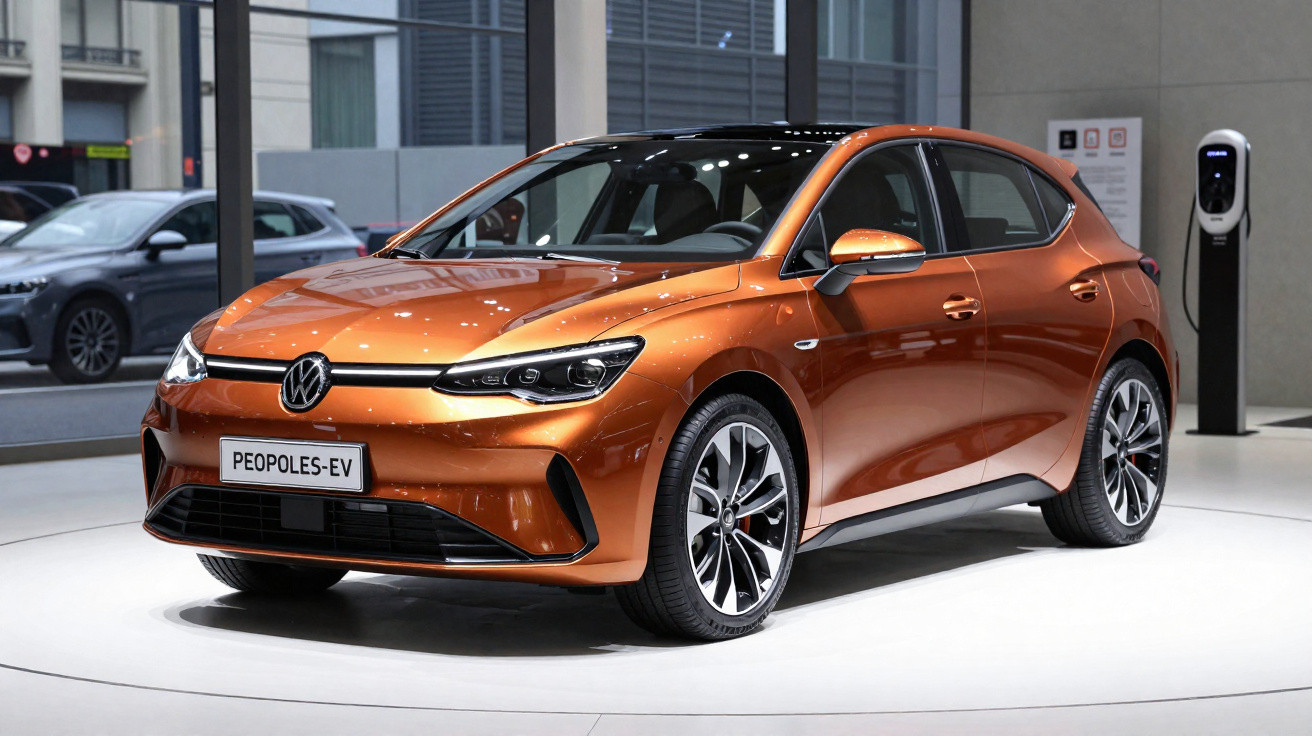
A growing number of recent signals suggest a shaky road ahead for the “people’s cars” - the most affordable models on the market and the ones most often bought by private buyers.
Rising costs: electrification and mandatory safety equipment
The pressure on the continued existence of the “people’s cars” comes from two directions. On the one hand, manufacturers must cut the industry’s emissions, largely through electrification. On the other, new safety equipment introduced in mid-2022 will become compulsory across all cars, adding to production costs - and, inevitably, pushing retail prices higher.
Two developments now look increasingly likely over the next few years: prices for these smaller, budget-focused cars will climb, bringing them uncomfortably close to larger alternatives, and the overall choice of models will shrink - especially in the city-car class.
Models already disappearing from the “people’s cars” line-up
On that second point, the pattern is already clear. Renault has confirmed the Twingo will not get a successor. The Peugeot 108 and Citroën C1 pair will also end without replacements - although the Toyota Aygo will continue, but only by being replaced with a larger, more expensive crossover. The Skoda Citigo has already vanished from price lists, and there are not even rumours of successors for its siblings, the Volkswagen up! and SEAT Mii.
Even the European frontrunners in the segment, the Fiat Panda and Fiat 500, are expected to exit the stage. The former is set to move up a class (becoming a larger, pricier B-segment crossover), while the latter is said to be heading towards a future limited to its (more expensive) electric version in the medium term.
As if that were not enough, significant movement is also emerging among superminis (segment B), Europe’s biggest-selling category. First, Audi’s chief executive raised doubts about a replacement for the current A1, citing the segment’s weak profitability. More recently, Ford’s announcement that its next electric model will be built in 2023 in Cologne - the same factory that produces the long-running, popular Fiesta - has fuelled a wave of questions about the Fiesta’s future: will there even be a successor?
When I wrote some time ago about cars becoming increasingly expensive, I did not fully account for the knock-on effects this could have on manufacturers’ product plans.
What is becoming hard to ignore, judging by the strategic roadmaps revealed over recent months by various automotive groups, is that they largely share one theme: moving upmarket and gravitating towards higher segments - even Dacia, for instance, is set to add a C-segment SUV - where it is easier to balance cost against price and secure stronger margins.
For carmakers, developing small, affordable cars is becoming both less attractive and more difficult. Historically, these models have delivered low profitability, only made worthwhile by high production and sales volumes.
The future of the “people’s cars” does not look bright
Looking ahead, the most affordable end of the market seems set to become steadily less affordable, while the choice on offer is likely to be dominated above all by crossover/SUV-style vehicles. It is not hard to see the logic.
Crossover/SUV models typically cost several thousand euros more than the cars they are based on, despite sharing almost everything underneath. That price gap translates into healthier profits for manufacturers, and sales performance does not appear to be suffering - as the registration tables have repeatedly shown.
At the same time, a new trend is gathering pace: image-led, nostalgia-heavy superminis (segment B) are increasingly the models brands choose to electrify fully - a technology that will remain relatively expensive for longer than expected.
We have already seen this with the Honda e, and we have also been promised a Renault 4 and a Renault 5. These join the smaller Fiat 500 (the new, 100% electric version) and the MINI, which will receive a new generation in 2023. There is no shortage of rumours about further models in the same mould from other brands. They will not be the cheapest options, but they will certainly rank among the most desirable. And, like crossovers/SUVs, they allow manufacturers to manage the cost/price equation more effectively.
Even if these choices can be properly justified by the changes sweeping through the automotive industry, the practical outcome will be that a significant part of the market will find it harder to access a brand-new car.
In Europe, the car market splits broadly into two main groups: private buyers and businesses/fleets. If we look specifically at private registrations, the Dacia Sandero and Duster lead the charts - two of the most affordable and practical models available. They are followed by other conventional superminis and city cars, underlining how decisive the purchase price still is.
Perhaps, in the long run, this picture will shift after the transition to electric and connected mobility, once costs begin to fall and returns start to rise. Until then, the “people’s cars” may have to endure a long crossing through the desert.

Comments
No comments yet. Be the first to comment!
Leave a Comment