
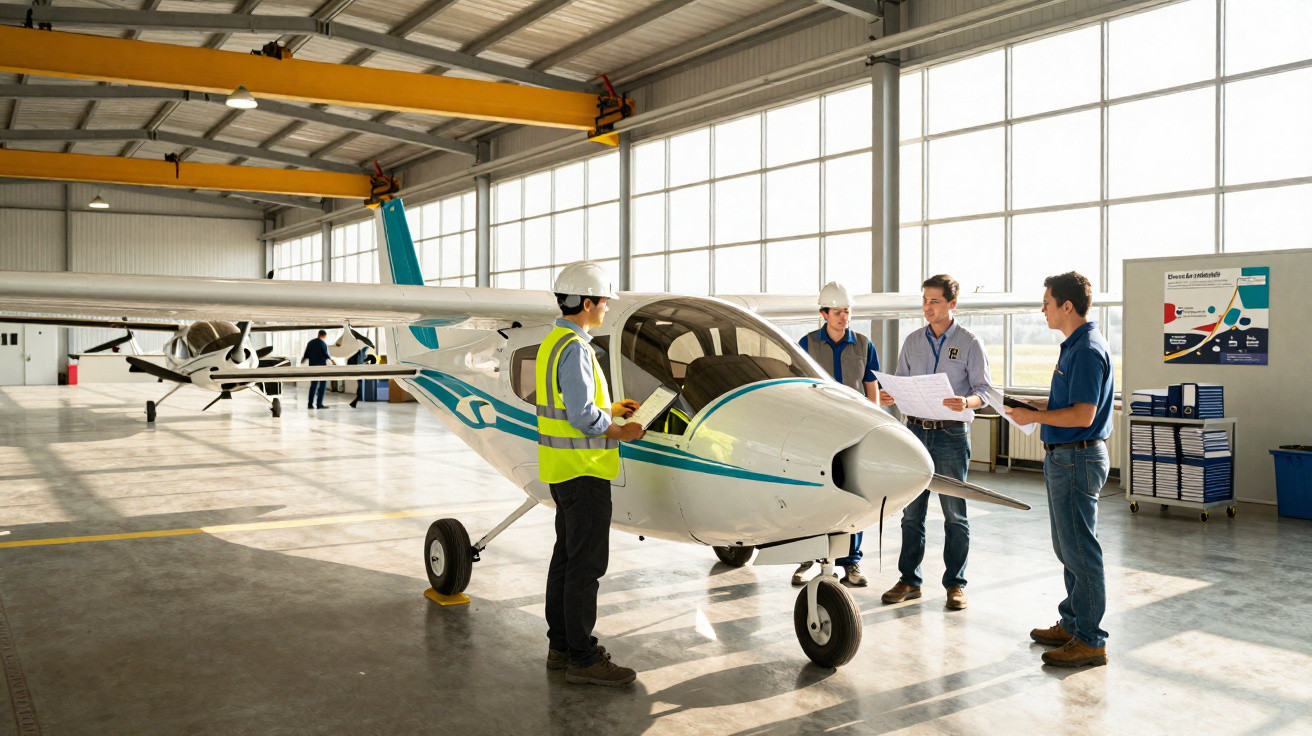
Electra has set out plans to open its first factory dedicated to building the EL9 Ultra Short, a nine-seat hybrid-electric aircraft designed for ultra-short take-off and landing. The site will be in Springfield, in Clark County, and marks a step-change for the company as it shifts the programme from development into large-scale commercial production.
The project involves an investment of US$ 850 million and is expected to create around 1.975 direct jobs. The Springfield facility will serve as the manufacturing hub for the EL9 Ultra Short, which Electra says will reshape direct air mobility by enabling efficient, affordable point-to-point travel.
The EL9 Ultra Short is designed to take off and land in just 50 metres (150 ft), combining hybrid-electric propulsion with blown-lift technology.
Springfield, Ohio factory for the Electra EL9 Ultra Short
The plant will be developed at AirPark Ohio, close to Springfield-Beckley Municipal Airport. The location is home to the National Advanced Air Mobility Centre of Excellence (NAAMCE) and the SkyVision system, which has FAA approval for flight testing in unrestricted airspace-an advantage intended to speed up the development and certification of new technologies.
Marc Allen, Electra’s CEO, said: “We are ushering in a new era in aviation, with direct and affordable flights, closer to the communities served. In Springfield we found a rare combination of location, skilled workforce, aerospace ecosystem and commitment from local authorities. We appreciate the welcome and are ready to take the EL9 into production, certification and operation.”
Ohio Governor Mike DeWine added: “Ohio is the birthplace of aviation and the national centre of advanced air mobility. Electra’s arrival and the creation of nearly 2,000 jobs will be transformative for Clark County, reaffirming the state’s role in leading the next era of aviation.”
Site selection, production scale and operations
Springfield was selected after a search process that assessed more than 140 locations. Electra cited the area’s infrastructure, availability of skilled labour, room to expand, and access to nearby research and military organisations, including Wright-Patterson Air Force Base and the Air Force Research Laboratory.
In its first phase, the factory is planned to support production of up to 400 aircraft per year, with a second-stage expansion aimed at increasing output to as many as 800 units. Electra will also continue to run part of its operations from Manassas, Virginia, to retain facilities and talent as the business grows.
Direct Air Mobility goals and certification pathway
Electra positions the EL9 Ultra Short for the Direct Air Mobility market, aiming to connect people and places via unconventional nodes such as car parks, ferry terminals and sports fields. The programme is framed around six pillars:
- access
- quiet operation
- payload
- range
- safety
- affordability
In 2025, Electra raised US$ 115 million in a Series B funding round to support pre-production activity and certification. The company also signed an agreement with Safran Helicopter Engines to develop the TG600 turbogenerator, set to form the core of the EL9’s hybrid-electric system, alongside an initial order for 250 units.
Electra has already submitted the EL9 to FAA Part 23 certification, with a first flight targeted for late 2027 or early 2028. The FAA has recently completed the process of defining the certification requirements, moving the programme into its next stage.






Comments
No comments yet. Be the first to comment!
Leave a Comment