
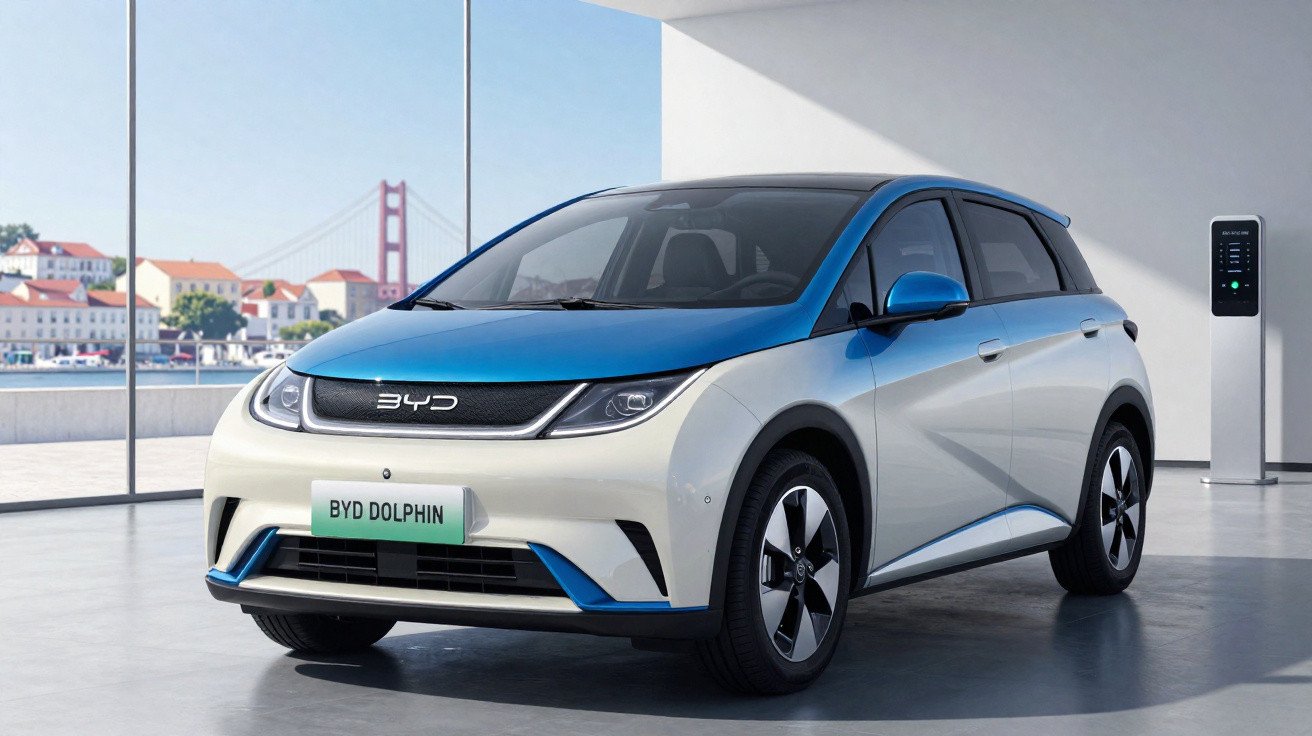
BYD, short for “Build Your Dreams”, is one of the newest Chinese car brands to enter Europe - and it is doing so in emphatic fashion. After unveiling the Atto 3 - which we have already tested - alongside the Han and the Tang, BYD has now introduced two further 100% electric models: the Dolphin and the Seal.
The Seal is a conventional D-segment saloon that is clearly taking aim at cars such as the Tesla Model 3.
The Dolphin, meanwhile, is a C-segment hatchback designed to take on rivals including the Renault Mégane E-Tech Electric and the Volkswagen ID.3.
Despite their playful names, these two new BYD models are genuinely serious contenders, arriving with enough strengths to make an impact in Europe’s crowded - and crucial - market.
That is especially true of the Dolphin, which looks as though it has been tailored for European tastes: it has a contemporary design, a cabin “packed” with technology and, by all indications, a highly competitive entry price of around €30,000.
LFP battery and more than 400 km of range
Measuring 4.29 m long (the Volkswagen ID.3 is 4.26 m), the BYD Dolphin is built on the brand’s e-Platform 3.0 architecture (the same one used by the Atto 3). It uses BYD’s own Blade Lithium Iron Phosphate (LFP) batteries with a 60 kWh capacity, although it is already known that a range-opening version will be offered with a smaller battery.
The front-mounted motor delivers 150 kW (204 hp) and 290 Nm, figures that enable it to sprint from 0 to 100 km/h in 7 seconds and reach a top speed of 170 km/h.
As for range (for the version with the larger battery), it is rated at 427 km (WLTP), broadly in line with its main competitors. The entry-level version, on the other hand, is expected to offer a range in the region of 300 km.
It is also worth noting that the BYD Dolphin supports charging speeds of up to 11 kW on alternating current (AC) and up to 100 kW on direct current (DC). On a DC charger, the 60 kWh battery can be replenished from 30% to 80% in just 29 minutes.
In addition, the BYD Dolphin comes as standard with V2L (Vehicle to Load) capability, meaning external devices can be powered from the car’s battery. Total output can reach 3 kW.
Modern, tech-led styling
And if the BYD Dolphin holds its own on figures and specifications, the same can be said for its exterior: crisp lines and a distinctly tech-forward look, without resorting to anything too outlandish.
The same approach continues inside. Rather than chasing minimalism (as has become increasingly common) or going overly showy, the cabin strikes a measured balance.
The result is a harmonious, well-judged layout, dominated by a 12.3-inch central infotainment screen - which can rotate between portrait and landscape orientations.
With electrically adjustable, heated front seats (trimmed in vegan leather), the Dolphin also offers 20 storage compartments distributed throughout the cabin. In the rear, it provides a 345-litre boot, expanding to 1,310 litres when the second-row seats are fully folded down.
It is coming to Portugal
The BYD Dolphin is close to “touching down” in the European market, with the Chinese brand confirming that pre-orders will open in the summer and that first deliveries are scheduled for the final quarter of the year.
Pricing has not yet been announced, but it is known that the Dolphin (and the Seal) will go on sale in Portugal by the end of this year in two versions: one with a smaller battery (capacity still to be confirmed) priced at around €30,000, and another with a 60 kWh battery, expected to start at roughly €36,000.
Comments
No comments yet. Be the first to comment!
Leave a Comment