
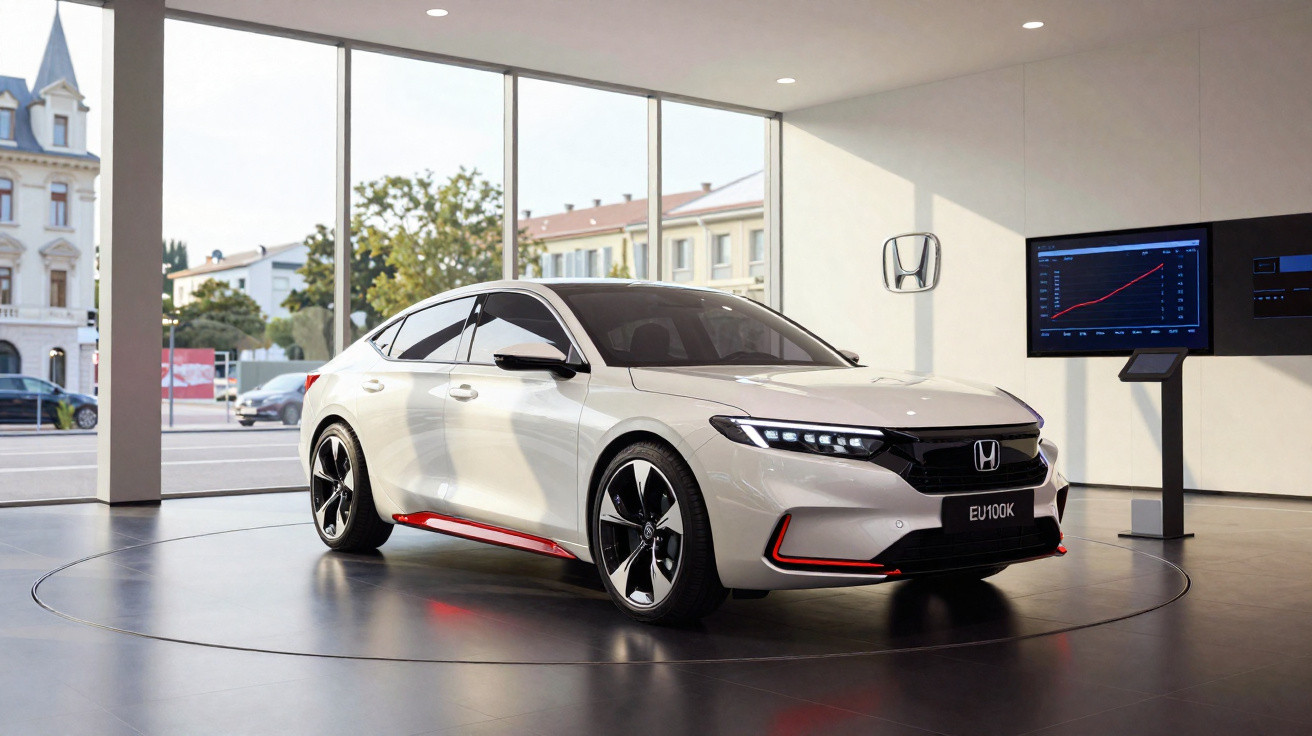
Honda used to be a far bigger force in Europe than it is today. In 2007, the brand enjoyed its strongest year on record in the region, selling almost 400,000 cars. Ten years ago, that figure had already dropped to 130,000 units and, in 2025, it reached only 71,000.
Honda sales in Europe: recent performance
In the first quarter of the current financial year, which began on 1 April, Honda’s European results were effectively flat compared with the same period a year earlier, at around 17,000 units. While those European figures are underwhelming, the global picture looks much healthier. Between April and June, Honda lifted worldwide sales by 23% to 798,000 cars.
Hans De Jaeger, Honda’s new President for Europe, acknowledged the brand’s decline in the region in an interview with Automotive News Europe, and said it was partly driven by the manufacturer’s own strategic choices: “We were forced by regulators to accelerate electrification and we did not listen closely to customers,” he said.
Hans De Jaeger’s plan to rebuild Honda in Europe
The focus now is to regain a more meaningful position in the European market. De Jaeger has set a target of achieving annual sales of around 100,000 cars in Europe, including Turkey, within two to three years.
To get there, Honda intends to lean into niche models, such as the new Prelude, and to prioritise segments where Chinese manufacturers are less dominant. “The mass market is where new Chinese competitors are concentrating their efforts. We want to offer more distinctive products and take advantage of our customers’ loyalty,” he argued.
In practice, Honda wants to put the emphasis on models that match market demand, without being drawn into the price war that has gripped Europe’s car industry following the arrival of multiple Chinese brands. As a result, the turnaround is not expected to come from aggressive discount campaigns.
“We don’t want to enter this competition through discounts. We want to build a sustainable business,” Hans De Jaeger explained. “We finally have products that private consumers want to buy. We’ve found a very solid base from which we can grow volumes again,” he added.
No factories, but more flexibility
With no factories in Europe since the closure of production sites in the United Kingdom and Turkey, Honda believes the lack of local manufacturing could become an advantage.
According to Hans De Jaeger, the brand can draw on vehicles built in different regions-such as Japan, China, India or North America-to respond more quickly to specific needs in the European market.
While he accepts that demand for electric vehicles is rising more slowly than initially expected, he insists Honda will keep expanding its electric line-up, without giving up on hybrid powertrains, which he sees as better aligned with what customers want today. “We need to offer what customers really want to buy,” he concluded.
Comments
No comments yet. Be the first to comment!
Leave a Comment