
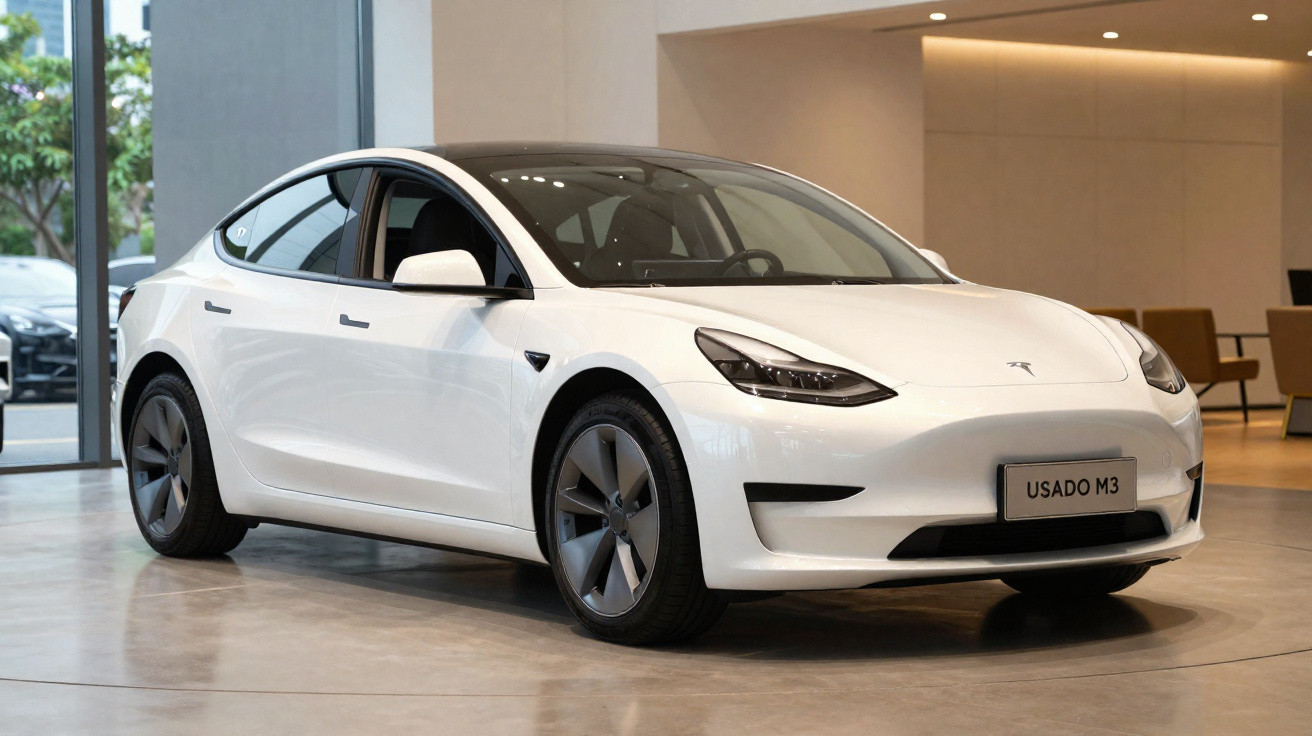
A used Tesla Model 3 can be a smart buy, but you should keep an eye out for a few warning signs.
Searching for a used Tesla Model 3 is a solid starting point - and you’ll see why in a moment. It makes particular sense if you prioritise low running costs and technology. Between video games and a “fart mode” simulator (yes… really), there are also features that are genuinely useful.
In this buying guide, we’ll concentrate on the first generation of the model, which arrived in Europe in 2019 and was sold until 2023. There are hundreds of cars available on the used market.
It achieved what few electric cars had managed up to that point: it helped normalise the idea that an EV can have enough range for proper journeys without costing a fortune. That was true when it was new - and it’s still true as a used purchase.
We explain everything in this article and also in a video on our YouTube channel:
With support from Piscapisca.pt - the portal with the largest number of cars for sale in Portugal - this buying guide covers everything you need to know before purchasing a Model 3: the most common issues, what you should check, how prices have changed, and the cost of the main wear-and-tear parts. All of that is in the video and also in the sections below.
Tesla Model 3 on the outside
From the outside, the Tesla Model 3 still looks contemporary. Its minimalist styling has aged well: flush door handles, a glass roof, and clean, neutral lines. In fact, that very neutrality is what keeps it looking current - it won’t set hearts racing, but it also won’t put most people off.
Every used example referenced here is from the pre-Highland generation, built up to 2023. That also means some of the fit and finish (especially on early cars) isn’t quite at the level European buyers were used to.
Before committing to a purchase, it’s wise to check panel alignment, paint defects and general paint wear. For imported cars - particularly those coming from Nordic countries - you should also pay attention to any potential corrosion spots.
High tech, but average build quality
Compared with the exterior, the cabin is similarly restrained, but it’s a more radical and, in some ways, a more convincing execution. There are clear highlights and also some low points - starting with the positives.
A 15-inch screen handles almost everything in the car. It’s the feature that creates the futuristic feel that attracts so many buyers, but it can also be a vulnerability: if the display fails, access to most functions goes with it.
Fortunately, the infotainment system - screen and processing unit - tends to be very reliable. It shouldn’t be a major concern.
As you can see in the image gallery, physical buttons are almost non-existent. Thankfully, the user interface is exceptionally well done. Even around six years after its European launch, it remains one of the strongest systems in the automotive industry.
There’s ample room for four adults, the boot is generous, and the frunk (storage under the bonnet) adds extra practicality. The less impressive side is the quality of some plastics and the longevity of certain trim pieces, which can vary significantly depending on model year.
On the road
In terms of how it feels to drive, there are really two ways to judge the Tesla Model 3. If you’re coming from a small runabout, stepping into a Model 3 will feel like a huge upgrade. If you’re moving from a premium-brand car (less than 20 years old), you may not experience a meaningful step forward - and in some areas it could even feel like a step back.
That point is worth making to avoid two extremes: the absolute statements of the brand’s detractors on one side, and the blind enthusiasm of Elon Musk’s most devoted fans on the other. As with most things, the truth sits somewhere in between - and the Tesla Model 3 is no exception.
With that clarified, the response from this fully electric car deserves emphasis. As mentioned in the video, whichever version you choose, the acceleration is beyond reproach. It’s efficient, quick and… inexpensive. It’s one of the cheapest ways to have more than 350 hp sitting on your driveway.
When it comes to comfort, the suspension could be more accomplished. On poor road surfaces, the Model 3 can feel firmer than you might want. You may also notice a variety of rattles and other unwanted noises. Here, age makes things worse: the older the Model 3, the more likely you are to encounter these issues. Tesla’s assembly quality has improved substantially over the years - to the point where some of these criticisms no longer apply to the Highland version launched in 2023.
As for handling, it’s very precise. Is it exciting? Once again, it depends who you ask. Petrolheads will miss the sound of a combustion engine and complain about the weight. Most everyday drivers will mainly register that it feels safe and secure.
Rear-wheel-drive versions may trigger the traction and stability systems more often in low-grip conditions. Even so, that doesn’t change the overall assessment of the model.
Price trends
Razão Automóvel, in partnership with Piscapisca.pt, wants to help improve transparency in the used-car market. Via this link you can find figures provided by the consultancy MotorCV relating to Tesla Model 3 price movements in the Portuguese market:
Naturally, the older the car, the lower the price - a rule that applies to every model. With the Tesla Model 3, however, there’s an extra reason to consider newer cars: build quality improved as production progressed.
Running costs
As we highlight in the featured video, running costs are one of the biggest benefits of fully electric cars. And while build and assembly quality can be debated, Tesla’s electrical components are generally tough.
It’s common to see cars with mileage above 200,000 kilometres showing battery degradation of around 10%. Given that degradation is typically greatest in the early years and then tends to level off, that’s reassuring.
As we explain in the video, it’s also possible to carry out a battery health check-up. It’s a transparent process that increases confidence for both buyers and sellers. And when it comes to replacement parts or consumables, pricing is competitive too.
Our pick
It depends. If you want the lowest purchase price and you don’t cover many kilometres, go for the Tesla Model 3 SR (Standard Range), ideally with LFP batteries - we explain how to identify the battery chemistry in the video.
If, on the other hand, you plan to do longer journeys and you expect the car to be the main vehicle for the family, then the LR (Long Range) versions may be the better value choice.
Alternatives
If you’re not completely sold on the Tesla Model 3’s strengths, Piscapisca.pt lists plenty of strong alternatives to this electric saloon - for instance, the Volkswagen ID.4, which can already be found for prices around €23,000.
And if space is the priority, you can always take a look at the Skoda Enyaq, which can also be picked up for roughly €25,000. Newer examples (from 2023 onwards) of the Kia e-Niro can also be a good option if you want an electric car that’s comfortable and roomy.
For those after something more premium, there are two models worth considering: the Volvo XC40 Recharge (from €27,000) and the Polestar 2 (from €25,000). The latter is a direct rival to the Tesla Model 3 and stands out positively for its interior finish and its dynamic behaviour.

Comments
No comments yet. Be the first to comment!
Leave a Comment