
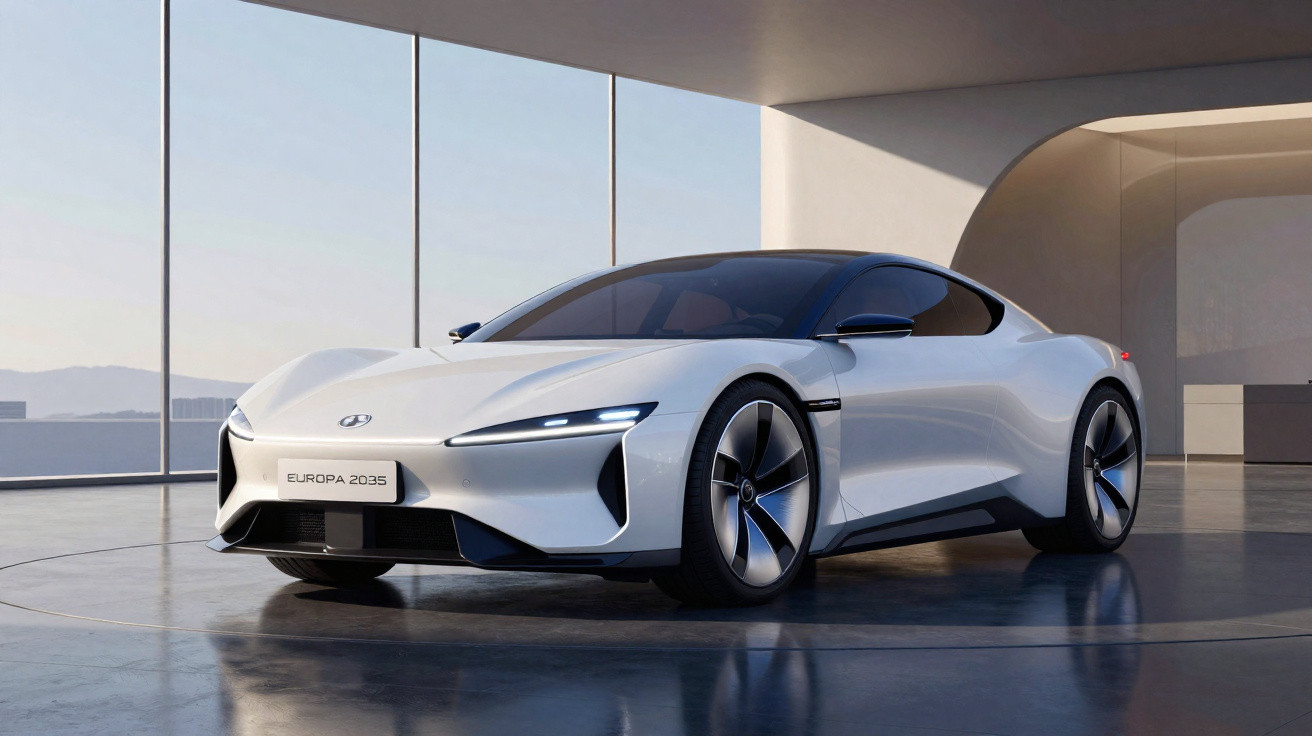
The political atmosphere is changing rapidly.
Not even two years after EU leaders signed off on ending sales of new combustion cars by 2035, pressure from national governments, carmakers and cautious buyers is beginning to have real impact. The era of an all‑electric mandate is being questioned - quietly, but with increasing seriousness.
2035 under fire: when the “end of petrol” stops looking inevitable
In March 2023, the 2035 deadline was presented as a pillar of Europe’s climate plan. The pitch was straightforward: after that point, no new petrol or diesel cars, apart from a handful of narrowly defined exceptions. That sense of certainty has since faded.
Italy, Poland and Hungary are at the front of a widening group urging Brussels to water down the rules. Their case is that a uniform, battery‑only route fails to reflect economic constraints and the mood of voters.
People are not ready to switch en masse to battery-only cars, and national governments know it could cost them at the ballot box.
These governments repeatedly highlight three issues:
- Electric cars still carry upfront prices that remain out of reach for many ordinary households
- Rapid‑charging coverage is uneven once you leave major city routes and key transport corridors
- Range anxiety remains common, particularly for motorway travel and in rural areas
They also make a wider point: climate policy, they argue, should not shut out other low‑carbon solutions - including long‑range plug‑in hybrids or synthetic fuels that could be used in adapted combustion engines.
Although this group is still a minority among the 27 member states, it is becoming more influential. In EU discussions, 2035 is no longer treated as an immovable endpoint; it is increasingly handled as a negotiating lever.
Carmakers change gear as the electric boom cools
While governments hesitate, Europe’s car industry is already adjusting course. Major manufacturers that once proclaimed all‑electric futures are now discreetly reassessing timelines, capital spending and the mix of models they plan to sell.
A number of companies have postponed battery‑plant schemes or trimmed ambitious EV volume goals. Demand is not lining up with the projections made in the post‑pandemic surge, when subsidies were generous and fuel prices jumped.
Once marketed as a sprint to full electric, the transition is increasingly managed as a marathon with multiple technology lanes.
Hybrids - previously dismissed as a brief stepping stone - are back in favour. Plug‑in hybrids, in particular, present a pragmatic middle option: electric running for everyday commuting, with petrol as reassurance for longer trips and holidays. They appeal to drivers concerned about charging‑point queues during busy weekends.
At the same time, European manufacturers are putting money into:
- Advanced hybrids featuring larger batteries and realistic electric ranges of 80–100 km
- Biofuels aimed at particular fleets and heavy‑duty applications
- E‑fuels (synthetic fuels) designed to help some combustion engines meet future CO₂ requirements
Parts suppliers - especially firms tied to engines, gearboxes and exhaust systems - are lobbying strongly against a battery‑only end state. Their concern is direct: if regulators effectively pick a single drivetrain, tens of thousands of highly skilled mechanical‑engineering jobs could be lost far sooner than new battery roles appear.
Lobby battles in Brussels: two visions colliding
Within EU institutions, the dispute has become increasingly heated. Trade bodies representing established carmakers, leasing providers and corporate fleets are pushing for adaptable targets rather than hard bans. They want continued scope for hybrids, alternative fuels and other bridging approaches.
Opposing them, a smaller set of brands - including Volvo, Polestar and Ford Europe - argue that the 2035 date must remain unchanged. Their corporate roadmaps and investor narratives are already built around that timetable. Any retreat, they say, would undermine Europe’s climate credibility and deter long‑term investment.
For policymakers, the dilemma is brutal: hold the green line, or ease off to avoid an industrial and social backlash.
The split is more than ideological; it is also regional. Northern and Western countries with stronger charging networks and higher average incomes are more inclined to support tougher rules. Southern and Eastern states, where vehicle fleets are older and wages lower, caution that excessive pressure could provoke social anger and bolster Eurosceptic parties.
Sales slowdown: when consumers hit the brakes on electric
These political strains mirror what retailers are already seeing. After years of double‑digit expansion from 2020 to 2022, electric car registrations have levelled off or fallen in several large markets.
Germany reduced some EV subsidies, and demand cooled almost at once. France tightened its bonus rules, prompting many buyers to return to hybrids and small petrol cars. Across Europe, there are still too few genuinely affordable entry‑level EVs, leaving many households unable to make the switch.
Buyer reluctance remains persistent - and rooted in practicalities. Drivers commonly point to the same problems:
- Monthly finance costs for EVs are frequently higher than for similar petrol or hybrid cars
- Real‑world motorway range can shrink sharply in cold conditions or at higher speeds
- Doubts about battery life and replacement costs weigh on second‑hand values
- Charging provision in rural areas and smaller towns continues to lag well behind major cities
At the same time, Chinese manufacturers such as BYD, MG and Leapmotor are expanding into Europe with keenly priced electric models. They often beat local brands on cost while still offering respectable equipment and range. That adds pressure on European carmakers already dealing with high energy prices and tighter labour rules.
| Factor | Impact on EV momentum in Europe |
|---|---|
| Reduced subsidies | Makes EVs less competitive versus petrol and hybrids |
| Charging gaps | Limits adoption outside major urban areas |
| Chinese competition | Pressures margins and investment capacity of EU brands |
| Economic uncertainty | Pushes households towards cheaper, familiar technologies |
Towards a more “open” transition after 2025
With all this in mind, EU officials are quietly exploring ways to adjust the 2035 framework without openly abandoning it. A range of approaches is being considered for the latter half of the decade.
Proposals circulating in Brussels include:
- Keeping 2035, but introducing carve‑outs for limited volumes using verified carbon‑neutral fuels
- Offering additional time or flexibility to countries with weaker charging and energy infrastructure
- Letting plug‑in hybrids with a guaranteed minimum electric range continue counting towards targets after 2035
- Setting out clear rules for synthetic fuels to make investment decisions in that area less risky
The age of “all batteries or bust” is giving way to a messier but more realistic mix of technologies.
France illustrates the push and pull. The state committed billions to EV incentives and domestic battery factories as part of its post‑COVID recovery effort. Now, with budgets tighter and voters tiring of costly programmes, Paris faces growing demands to back more affordable hybrids and shield local engine plants, while still presenting itself as a climate leader.
What “multi‑energy” actually means for drivers
For drivers, a multi‑technology market is unlikely to feel like a sharp break; it will look more like an extended period of overlap. Petrol and diesel will not disappear overnight - instead, they will face steadily tighter regulation and, in many places, rising costs to operate in urban areas.
Electric cars will continue to spread, particularly as smaller and cheaper models reach showrooms and the second‑hand supply increases. Hybrids and plug‑in hybrids may occupy the middle ground for years, especially in suburbs where public transport is limited but home charging is feasible.
Alternative fuels will remain niche for some time. Synthetic fuels require a lot of energy and are currently extremely expensive to make. They are most likely to be used for sports cars, historic vehicles, or specific professional fleets where battery options are difficult to roll out.
Key terms and real‑world scenarios
Three technical concepts are likely to shape car policy over the coming decade:
- Battery electric vehicle (BEV): powered solely by electricity, with no fuel tank. It has the lowest tailpipe emissions, but relies entirely on charging infrastructure.
- Plug‑in hybrid (PHEV): pairs a rechargeable battery with a combustion engine. Real‑world emissions depend greatly on how consistently drivers charge.
- E‑fuel: synthetic fuel produced from captured CO₂ and green hydrogen. It can be low‑carbon in principle, but it is expensive to produce and needs plentiful clean electricity.
Consider an average European household in a commuter town. Under a strict 2035 regime, their next purchase could be a small BEV even if fast chargers on nearby motorways are limited. Under a more relaxed approach, they might choose a plug‑in hybrid offering 80 km of electric range, running on battery power during the week and using petrol for holiday travel.
For city leaders focused on cleaner air, these distinctions are important. Some councils are already preparing zero‑emission zones that admit only full EVs, while others discuss permitting hybrids or cars running on certified e‑fuels. The EU’s eventual stance on 2035 will strongly shape those local decisions.
There are obvious risks in extending the transition. Reductions in CO₂ from road transport could slow, increasing pressure on other areas such as industry or agriculture. Yet a more flexible approach could also lower the risk of a severe public backlash and improve Europe’s chances of keeping its car industry competitive against US and Chinese rivals.
Comments
No comments yet. Be the first to comment!
Leave a Comment