
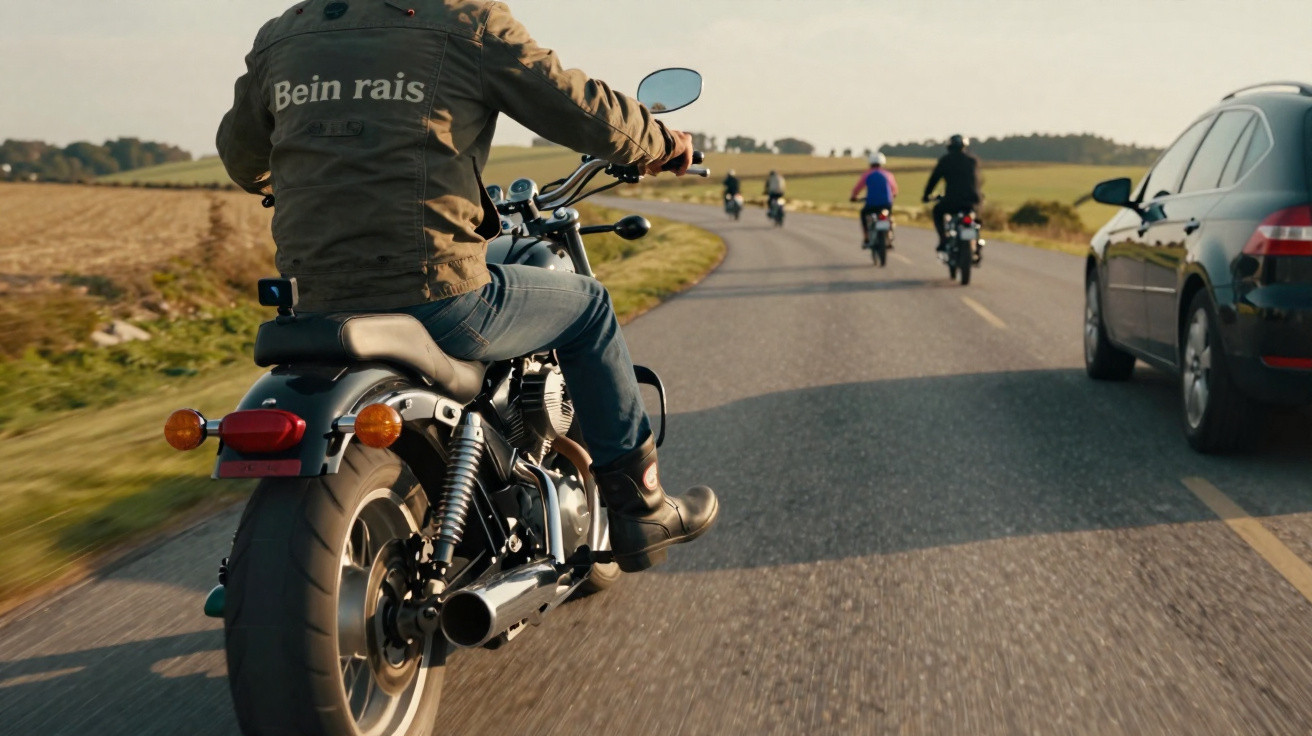
On a country road, a biker suddenly stretches a leg towards the asphalt - it looks odd to outsiders, but to insiders there are clear reasons.
Anyone who rarely (or never) travels on two motorised wheels tends to do a double take: mid-ride, a rider sends one leg back and lowers the foot towards the road. It’s not a kick-start, not a cramp - yet you see it again and again. Behind this seemingly small gesture is more than a quirky habit: it has roots in racing, practical uses in everyday riding, and a strong emotional meaning within the motorcycling community.
Where the “leg out” move actually comes from
Its origins are in motorsport. Early road racers and off-road riders stuck a foot out to help steady the bike through fast corners. Dropping the leg lowered the centre of gravity slightly; the rider felt they could almost “brace” the motorcycle and trust the grip more.
- Cornering at the limit: Especially on loose surfaces, the leg acted like a kind of emergency anchor if the front end started to slide.
- A ritual that stuck: Over time, the motion became ingrained - many leisure riders copy what they’ve seen in races or videos, often without thinking.
In today’s road riding, that pure racing technique is usually only a minor factor. Modern tyres, suspension and rider aids mean the effect on normal roads is fairly small. Even so, the move has endured as a sort of ritual - for many, it’s simply part of the “motorbike feeling”.
“The outstretched toe has long been more than riding technique - it’s a quiet signal with several layers.”
Communication on two wheels: the leg as a thank-you
In day-to-day riding, the most important reason is often non-verbal communication. Motorcyclists don’t chat while moving - they signal. Alongside hand gestures and a nod, briefly sticking a leg out has become common, particularly on rural roads and motorways.
Typical situations for the foot signal
- A car changes lane to give you room.
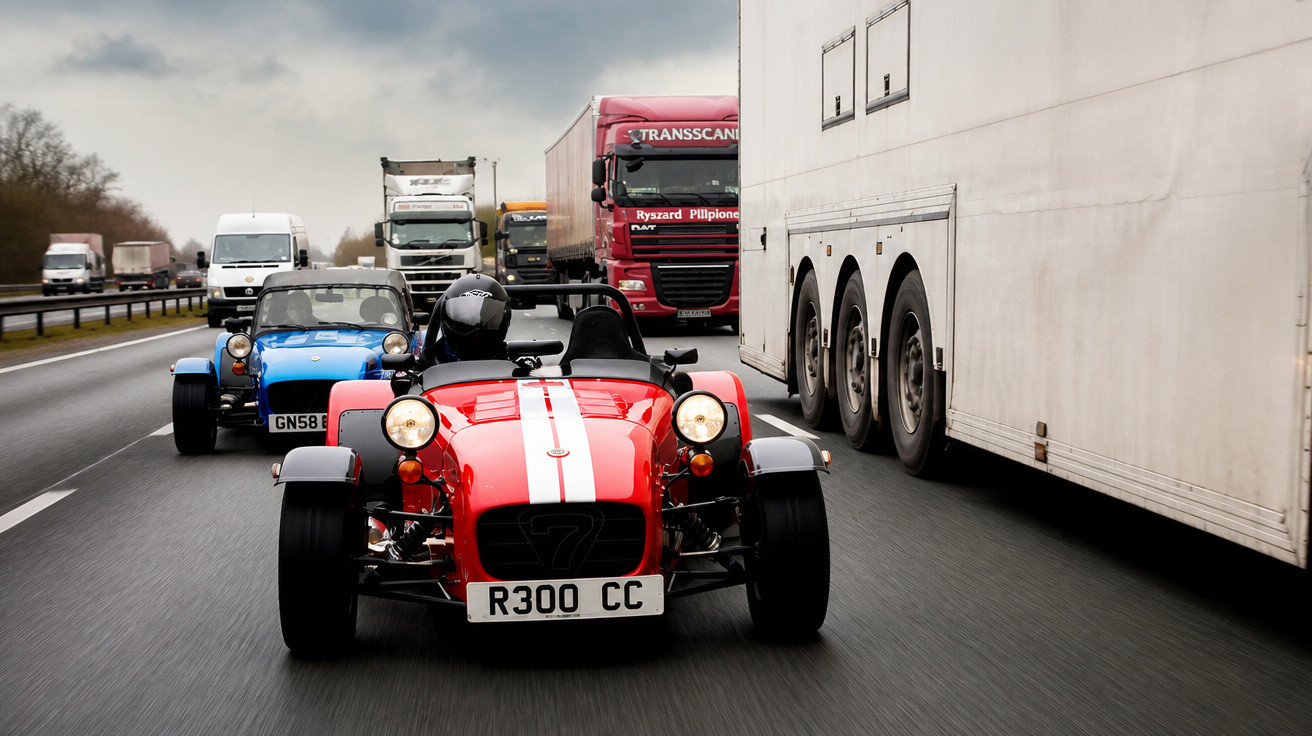
- A lorry eases off briefly so the rider can pass safely.
- In narrow roadworks, a car shifts over a little to create space.
In these moments, many riders don’t lift a hand; instead, they flick a leg back for a second - usually on the side of the vehicle that helped. It looks casual, doesn’t interfere with steering, and is easy for traffic behind to spot. In some areas, it has almost replaced the classic raised-hand thank-you.
To newcomers it can feel strange at first, but after a few hundred kilometres in mixed traffic, the pattern is obvious: it’s a semi-established back-and-forth between car drivers and motorcyclists - and it can take a lot of frustration out of everyday riding.
Does it have anything to do with safety?
Many riders associate leg-stretching with a sense of control, especially in awkward, low-speed moments. Some describe it as having an extra “emergency prop” ready, even though the real-world benefit is limited.
When the leg can affect safety
- Stop-start traffic and queues: Just before stopping, the foot moves towards the ground a few seconds early so the rider can stabilise immediately.
- Slippery surfaces: On gravel, wet leaves or a damp road, some riders feel they can react faster if the bike begins to tip.
- Visibility: A suddenly extended leg can catch other road users’ attention in their peripheral vision - a bit like an unexpected arm movement.
Road safety specialists broadly agree on one point: nobody should build their safety strategy around this. Defensive riding, proper following distance, suitable protective gear and good anticipation make far more difference than any spur-of-the-moment foot gesture.
“Anyone who relies on an outstretched leg instead of clean lines and distance is betting on the wrong safety concept.”
There is also a downside: at higher speeds, an uncontrolled leg-out can become a hazard in itself - for instance, if it clips an obstacle, a mirror or a bollard. That’s why responsible riders tend to use the gesture sparingly: brief, deliberate and controlled.
Psychology: belonging, style and a hint of rebellion
Motorcycling culture runs heavily on symbols. Letting a leg trail back belongs in the same world as the quick left-hand greeting, a nod of the helmet, or the relaxed glance at the lights. Doing it can communicate: “I’m one of you.”
What the leg says about the rider
- Sense of community: The move shows you understand and use the scene’s unspoken codes.
- Expression of freedom: Playing loosely with posture and weight reinforces the feeling of not being sealed inside a metal box.
- Personal style: Some riders weave the gesture into their riding persona - like a signature stance in snowboarding or skating.
- A milestone for beginners: Many clearly remember the first times they did it - a small moment when they felt “like a real biker”.
Psychologists would describe this as a group-building ritual: you do something that isn’t strictly necessary because it creates identity. In motorcycling, that shared “we” feeling is particularly strong, because riders are a minority group and, at the same time, are exposed to higher risks than car drivers.
How common is the leg trick really?
Transport and safety organisations have looked at the phenomenon in multiple countries. The figures vary by region, but one trend appears consistently: many people recognise the move, while far fewer use it often.
| Group | Share who know the leg signal | Use it regularly |
|---|---|---|
| Long-time touring riders | over 90% | around 50–60% |
| City riders and commuters | about 70–80% | around 30–40% |
| New riders (under 2 years’ experience) | about 50–60% | under 25% |
Places with a strong motorcycle culture - Alpine passes, popular country-road routes, classic biker meeting spots - show noticeably more leg and foot signalling than big cities. In dense urban traffic, hand signals and indicators tend to dominate, because any extra instability in narrow lanes can be critical.
When the leg makes sense - and when it’s better not to
If you ride yourself, the gesture can be useful, but it should be a conscious choice. A few rules of thumb help you avoid trouble.
Good moments to use the foot signal
- As a brief thank-you at speeds above 50 km/h, when you want to keep your left hand on the bars.
- When rolling up to a traffic jam, if you’re already preparing to stop.
- On an open stretch of road, where there’s no immediate obstacle near your leg.
When it’s better to keep your foot up
- In tight roadworks or tunnels with barriers and close oncoming traffic.
- At very high speed, for example on unrestricted motorway sections.
- On unclear routes where objects could suddenly appear on the carriageway.
If you’re still early in your riding life, it’s wiser to prioritise the fundamentals: braking, where you look, cornering line, and shifting body position. The leg signal sits more in the “polish and style” category than in the essential basics of training.
Terms and misconceptions around the foot down
A common question is whether sticking a leg out has an official meaning under traffic law - similar to hand signals for cyclists. The answer is straightforward: no. It’s an informal sign within the community, with no standardised legal effect.
Some car drivers misread an extended leg, for instance as a warning of a fault or as an aggressive gesture. The only fix is awareness: anyone who spends time around motorcyclists will quickly learn it’s usually neutral or positive - not a complaint, but communication.
For riders themselves, a quick reality check helps: is the move serving a purpose right now - thanks, stability, preparation - or is it just habit? Used deliberately, it reduces unnecessary risk and keeps you more in control of your own riding style.
All told, the small gesture shows how symbol-rich everyday life on two wheels can be. A brief push of the foot can express gratitude, style, nerves or anticipation - and for many riders, that’s exactly what separates mere transport from a genuine riding experience.



Comments
No comments yet. Be the first to comment!
Leave a Comment