
The time has come: the effects of the war in Iran are now being felt for real at European petrol stations. And, sadly, this looks like only the beginning.
For several days, Iran has kept the Strait of Hormuz closed. The consequences are enormous, because 20% of the world’s oil passes through this narrow corridor. It was therefore inevitable that the disruption would spread well beyond the region - and Europe is now seeing the impact.
Emergency measures in Slovenia after the Strait of Hormuz closure
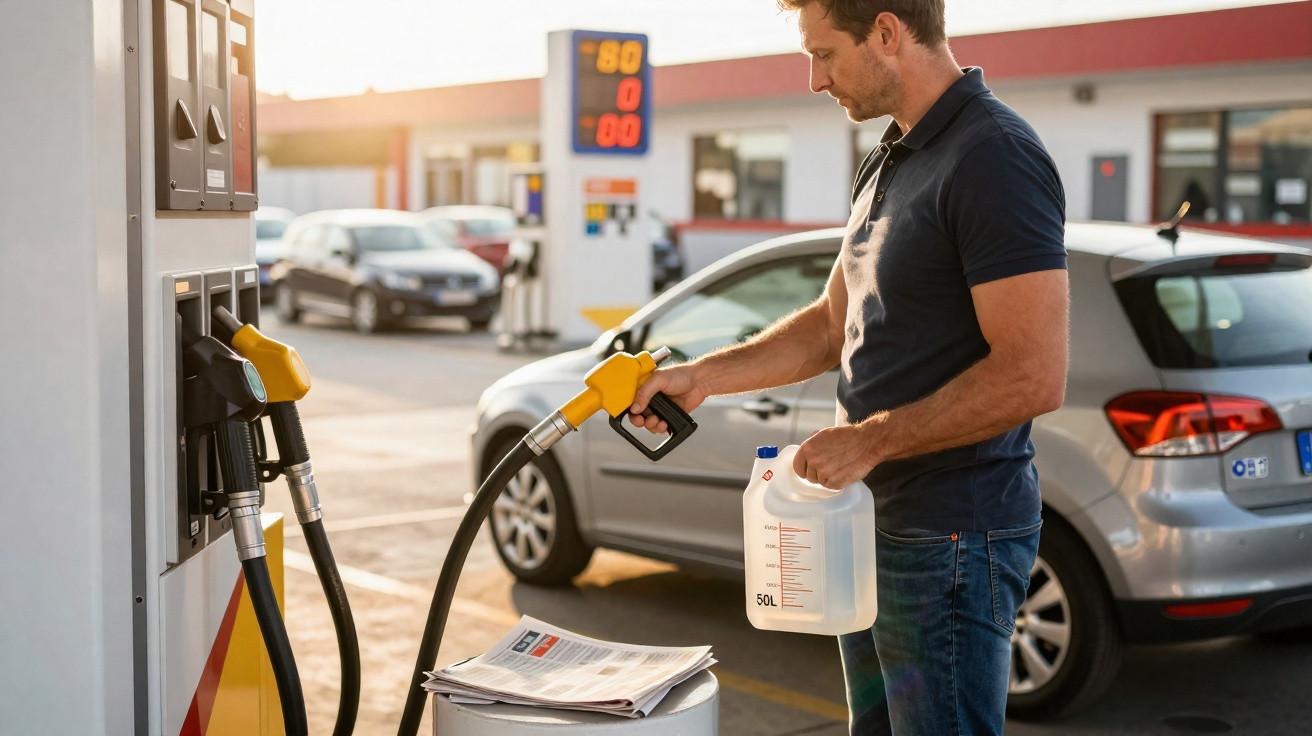
The situation is especially tense in Slovenia, where the government announced emergency steps on Sunday 22 March. Fuel purchases are now officially capped at 50 litres per day for private motorists and 200 litres for businesses and priority users such as farmers.
Although Prime Minister Robert Golob introduced the measure at short notice, he sought to calm public fears: “Warehouses are full, there will be no shortage”. The problem, according to the authorities, is a logistics breakdown made worse by two factors: heavy stockpiling by individuals and cross-border refuelling by foreign drivers coming to take advantage of prices that are still competitive.
Why pump prices are climbing across Europe
These strains highlight a pattern economists know well: supply panic. Even when inventories are adequate, the fear of running out can be enough to bring about the very shortage people worry about. Since the Strait of Hormuz was shut, Brent crude has climbed from 73 to 112 dollars in under a month - an increase of more than 50% that automatically feeds through into forecourt prices.
Spain cuts petrol taxes, Sweden considers following suit
In this climate, Spain has opted for a very different response. Rather than rationing, Madrid has decided to cushion the blow through a large-scale tax intervention. From the same Sunday 22 March, VAT on fuels was halved, falling from 21% to 10%. The change is a flagship measure within an 80-point emergency plan presented on Friday by Prime Minister Pedro Sánchez, designed to limit the immediate economic fallout from the conflict in Iran.
As a result, some drivers reportedly saved up to 8 euros on a fill-up, with the Ministry of Transport estimating an average reduction of 20 cents per litre. Queues formed quickly from the moment stations opened, according to L’Indépendent.
Alongside this, Spain has also reduced the special hydrocarbon duty: 11 cents less per litre of petrol and 5 cents per litre for diesel. Taxation has also been lowered on other energy sources, including natural gas and wood pellets.
Sweden, too, is weighing up a cut in petrol taxes from May. With parliamentary approval, the country would reduce the price of a litre of petrol by 9 cents and the price of a litre of diesel by 4 cents. “All parties must recognise that what is happening in the Middle East and across the rest of the world is putting the Swedish economy under severe strain,” Prime Minister Ulf Kristersson said at a press conference.
Even so, these steps should not be seen as a long-term fix. Final prices remain tightly tied to how crude oil prices move. It is also worth noting that the entire petrochemical industry is being affected by the closure of the Strait of Hormuz. A wide range of consumer goods may rise in price in the months ahead, especially if the situation in Iran escalates further.




Comments
No comments yet. Be the first to comment!
Leave a Comment