
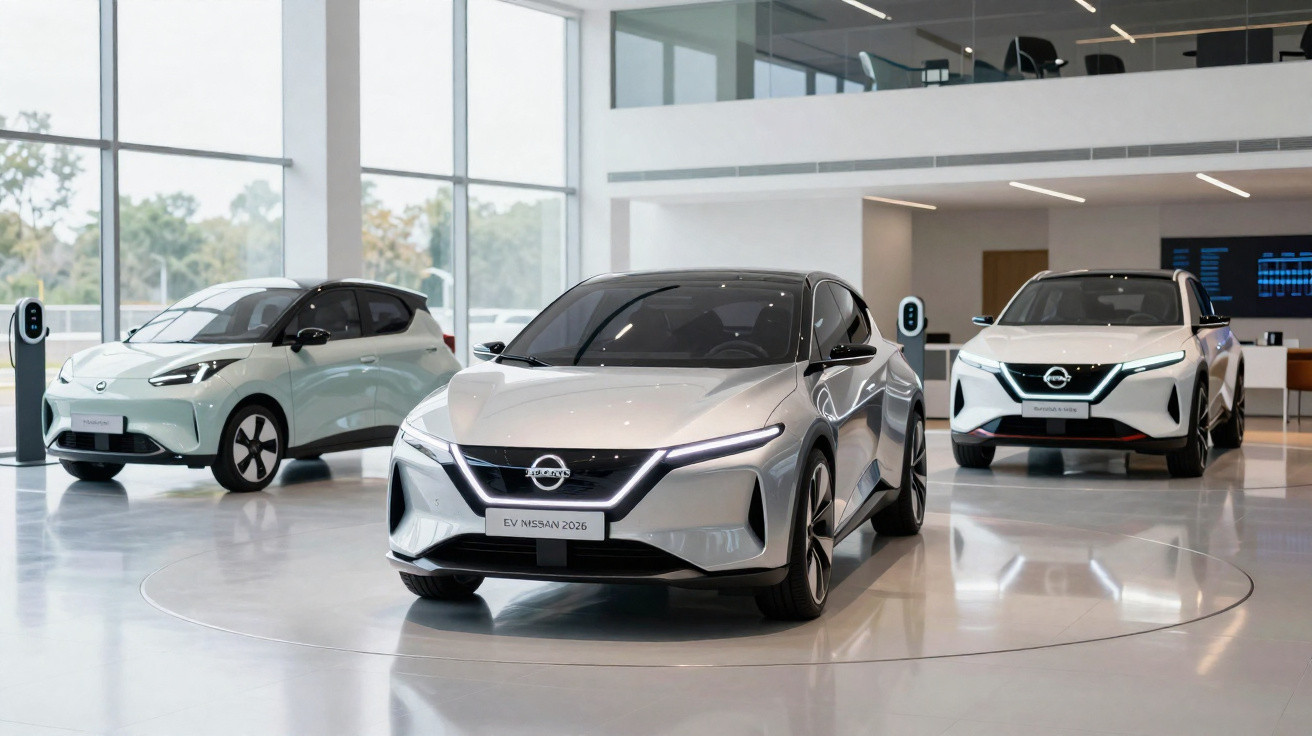
A Nissan enters 2026 at a delicate point in its recent history. After several years of weak results and unsettled leadership, the arrival of a new chief executive in 2025, Ivan Espinosa, set in motion a global restructuring process that is still under way - but is already showing encouraging signs.
Those results are enough to provide momentum and justify moving faster. Faced with pressure, the Japanese manufacturer has opted for the classic response: go on the offensive. And it intends to do so through new products. In Europe, that push will take the form of three brand-new 100% electric models.
The strategy leans on familiar, well-established names, but with a clear change in direction: Leaf, Micra and Juke will all compete on the same electric playing field. Three different segments, one underlying technology approach and a shared objective: to regain relevance in a market where electric cars are no longer niche, but make up an ever-growing share of the total.
Leaf reinvents itself and raises its ambitions
The new Nissan Leaf represents a significant shift. The car that helped bring the electric vehicle into the mainstream back in 2010 returns in 2026 with a different positioning: it leaves behind the compact saloon shape and becomes a crossover with tougher - and more aerodynamic - styling, closely aligned with current European tastes. So this is not merely another generation; it is an attempt to reposition a historic badge in a far more competitive landscape.
It arrives in Portugal during this first quarter with two power outputs - 130 kW (177 hp) and 160 kW (218 hp) - and two battery options, 52 kWh and 75 kWh, which promise ranges of up to 436 km and 622 km (WLTP), respectively.
Prices have not yet been announced, but we have already been able to drive Nissan’s third-generation electric model:
First ever 100% electric Micra
We have also seen the new Nissan Micra in person (watch the video below). Another long-standing name in the brand’s line-up, this latest generation becomes fully electric and will (for now) be Nissan’s entry point to electric mobility in Europe.
Built on the same technical base as the Renault 5 - with which it shares virtually everything - it sets itself apart through different front and rear styling, steering clear of an overly nostalgic approach. Even so, the brand does not hide the influence of the model’s third generation (K12). It comes with 90 kW (122 hp) and 110 kW (150 hp) motors, and 40 kWh and 52 kWh batteries - all identical to its “French cousin” - delivering ranges that run from 310 km to 419 km (WLTP), respectively.
The Nissan Micra launch is also imminent, and orders have already opened, with prices starting from €27,750.
Electric Juke is the last part of the offensive still to be revealed
The third component of this push will be the new Nissan Juke 100% electric. It has not yet been unveiled, and the electric Juke faces a tough task: in time, it will need to replace one of Nissan’s most defining European models of this century - now without an internal combustion engine.
All indications suggest it will retain its distinctive, irreverent visual character, but paired with a dedicated electric platform. And we already know which one: AmpR Medium, the same architecture used by the new Leaf. It is expected that the two will share most components, including batteries. There are still no confirmed specifications or a precise launch date beyond the confirmation that it will arrive in 2026.
The electric Juke rounds off a year for Nissan that will also continue to be shaped by the restructuring process, which remains ongoing. The manufacturer has been cutting costs, streamlining factories and revisiting priorities, both in Europe and globally. The logic is straightforward: less spread, more focus on key markets and products that can be delivered at scale.
Nissan will unveil many more new models - from purely internal combustion to 100% electric - in other parts of the world in 2026, with a stronger regional focus than a single global approach. That reflects how the car industry has evolved in recent years, responding to specific tastes and needs, as well as to the geopolitical context.
Comments
No comments yet. Be the first to comment!
Leave a Comment