
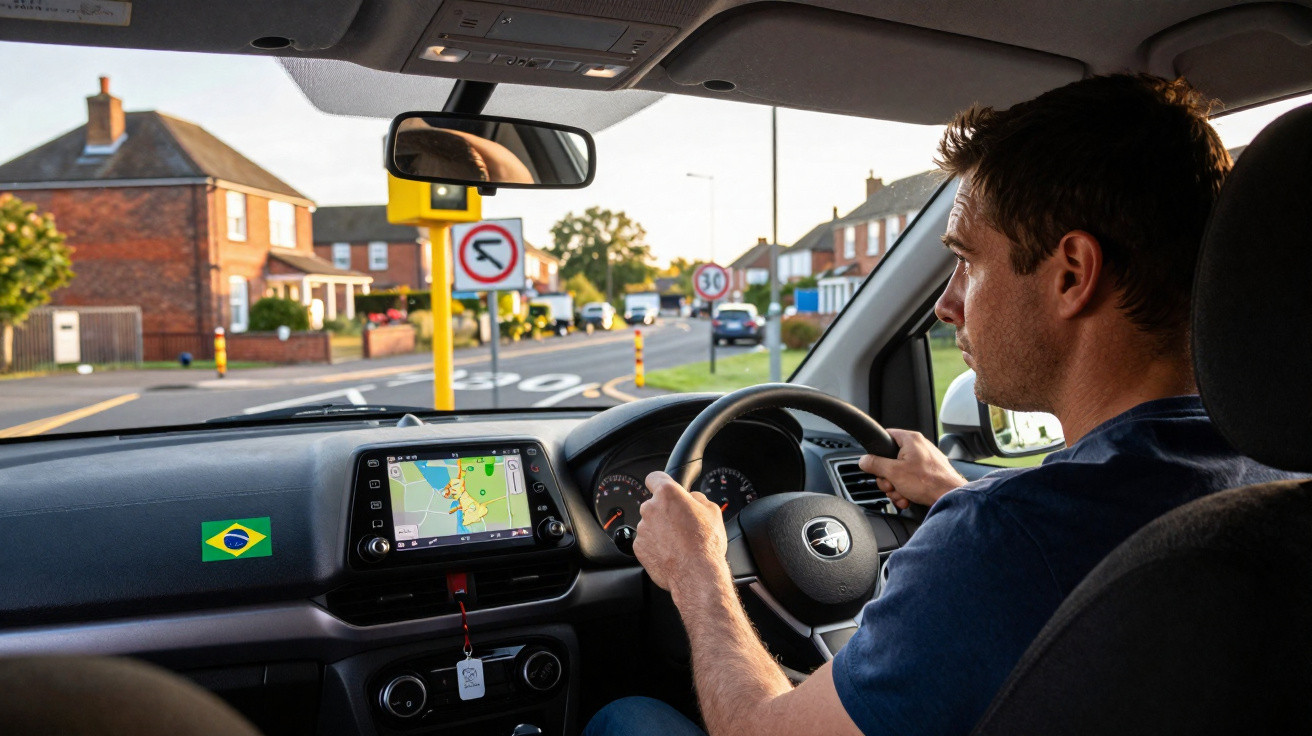
He was inching along in a 20mph zone on the fringe of a calm London suburb, with children pouring out of a nearby primary school, when the camera flashed against the drizzle-grey afternoon. He glanced at the speedo: a touch over 23. He muttered a curse. There’d been no warning board about a new limit. No sign saying it was “temporary”. Just another penalty landing on the doormat days later, citing a regulation he’d never even heard of.
All over the UK, motorists are realising that the road rules have subtly shifted beneath them. Fines. Points. Different priorities at junctions. Altered limits on roads they’ve used for years. And hardly anyone can pinpoint the moment those changes were properly spelled out to them.
Somewhere between safety ambitions and legal wording, a low-profile change has slipped into everyday driving. The consequences, though, are anything but quiet.
When the rules change quietly, and drivers pay loudly
Take a damp Tuesday on the M4 and you can see uncertainty playing out in front of you. One lane sits faithfully at 60mph beneath a red-ring sign. Another pushes on at 70, with drivers plainly treating the limit as “just advisory” along that section. A third brakes sharply as a camera gantry comes into view. Same carriageway, same signage, three completely different interpretations.
A big part of the issue is that UK highway regulation hasn’t simply developed over time; it has fragmented. There are smart motorway rules, local 20mph defaults in Wales and parts of England, and cyclist priority at junctions under the Highway Code’s updated “hierarchy of road users”. For solicitors and policy people, it’s all documented. For an everyday driver juggling children, work, and a tank that costs £90 to fill, it can feel as if the rules reset every few months.
And when the goalposts come with cameras, the price adds up fast.
Look at Wales after the blanket 20mph default was introduced. In one stroke, thousands of routine commutes turned into potential offence routes. Freedom of Information requests later showed hundreds of thousands of drivers were photographed, including many on roads they’d used for decades without any trouble. Local Facebook groups filled up with people swapping fines, sharing photos of letters, and posting baffling screenshots of Google Maps still showing 30mph.
Speed is only part of it. In places such as Bristol, Birmingham and London, Clean Air Zones and congestion-style schemes are catching out visitors every day. A tradesperson drives into an unfamiliar area, follows the satnav, doesn’t see any obvious barrier… and then a penalty arrives in the post a few days later. By the time they work out what caused it, they’ve already driven back the same way. Each new rule sits on top of the last, like layers of cling film on a windscreen that was already fogged.
The more you dig, the more consistent the picture becomes. Many of these changes are lawful and linked to safety, climate, or congestion targets that plenty of people broadly agree with. The weak point is how they’re communicated. A line buried in council papers. A notice on a government page that few people visit. Perhaps a leaflet that looks like junk mail and goes straight into the recycling. Meanwhile, automated enforcement runs continuously, with no “grace period” for drivers who simply never got the message.
There’s a genuine tension at the heart of it. Roads are shared spaces with real dangers, and rules have to adapt to traffic, technology and safety evidence. But when enforcement is treated as hard law while the messaging feels like a soft hint, confidence wears thin. People stop feeling involved in safety and start feeling like targets in a quiet revenue hunt. Once that belief sets in, every new sign can start to look suspicious.
How to drive defensively against “silent” rule changes
One small habit tends to separate drivers who are regularly caught out from those who mostly avoid trouble. They don’t treat the Highway Code and local updates as a dusty textbook; they treat them as a living document. Once or twice a year, they spend 10 minutes skimming what’s changed online. Just 10 minutes. Not a full re-read, not a mock test-simply a quick, curious scroll through the GOV.UK “Highway Code updates” and their local council’s transport page.
That tiny routine means they’re not blindsided when, for example, junction priority shifts, or a town centre quietly turns into a low-emission maze. They understand that 20mph limits aren’t confined to school streets any more. They’ve clocked the guidance about cyclists riding two abreast, and about giving at least 1.5 metres when overtaking. It’s the driving equivalent of checking the forecast before you hang the washing out: dull, yes, but strangely comforting.
In day-to-day driving, the simplest protection is to read your environment like a mildly paranoid detective. Spot brand-new signs? Assume they’re enforceable. Does a familiar route suddenly feel slower-fresh road markings, different lamp columns, new poles? Treat it as a changed limit until you see clear evidence otherwise. Is the traffic oddly light where it used to be busy? That can often signal “a camera went in” or “a charge zone started”.
And accept a difficult reality: your satnav lags behind the real world. Apps can be excellent, but speed limits and restrictions are often updated late, and commercial map databases don’t always align with the Traffic Regulation Orders that enforcement systems follow. So if your dashboard display says 30 but the roadside sign says 20, believe the sign. Your phone won’t be standing beside you in court.
On a human level, most of us are the same. You leave work exhausted. You’re thinking about dinner, the email you didn’t send, or whether you paid that bill. You’re not actively scanning for a small white plate announcing a “new limit” half-hidden behind a tree. On a bad day, you’re effectively driving on muscle memory. That’s exactly when quiet changes do the most damage.
So give yourself a buffer. Leave a margin under the posted limit when you’re in an area you don’t know. Come up to junctions and crossings as if people on foot and on bikes now have slightly stronger priority than they did last year-because in many places, they do. And talk about what you notice. One straightforward chat at work-“did you know they changed the priorities there?”-often spreads quicker than any official campaign.
Another helpful mindset shift is to stop believing that “no one mentioned it” means “it doesn’t apply yet”. Law doesn’t roll out like a software update where you wait for a pop-up. If the sign is up and the order is in force, enforcement is live-even if the council’s publicity never quite kept pace. It can feel unfair, and in plenty of ways it is. But acting as though a rule doesn’t exist because the communication was poor only adds a fine on top of the annoyance.
“I don’t mind driving safer,” says Mark, a delivery driver from the Midlands. “What gets me is feeling like I’m playing a game where the rules change overnight and nobody tells you… until the letter with a barcode arrives.”
If you want a quick reality-check toolkit, here’s a compact mental box to keep in the glove compartment-figuratively speaking:
- Before long trips, spend 2 minutes checking whether any Clean Air Zones or new charging schemes sit on your route.
- If you notice a newly painted 20 roundel or fresh signage, treat the whole area as “recently changed”.
- Keep navigation apps updated, but never let them override roadside signs.
- If you receive a fine from somewhere you travel to often, treat it as a clue: something has changed-go and find out what.
- Speak up: if you’ve been caught out, sharing your experience could stop someone else getting the same surprise.
What this shift on UK roads really says about trust
This low-visibility evolution in road regulation isn’t only about drivers and cameras. It also reflects trust in how rules are created, explained and enforced. When people feel part of a change-consulted, informed, and given clear reasons-they’re much more likely to adjust without resentment. When the first time they hear about it is a fine on the mat, the response is understandably different.
In another sense, it’s about coping with complexity. Modern roads aren’t just stretches of tarmac with one national speed limit. They’re layered systems combining safety rules, pollution controls, local trials, smart technology and political compromises. Expecting every driver to keep up with that alone is unrealistic. Let’s be honest: nobody truly does that every day.
But inside that mess is a small opportunity. If drivers start treating awareness of rule changes as part of everyday road craft-like mirror checks or tyre pressures-the balance shifts slightly. You move from feeling pursued to feeling ready. From being the person blindsided by a regulation you’d never heard of, to being the one who quietly gives others a heads-up.
Next time you’re out, pay attention to how many of your trips depend on assumptions. “This has always been 30.” “They’ll never enforce that here.” “No one gets pulled for this.” Then think about how quickly roads have changed in just the last five years, from smart motorways to updated priorities for pedestrians and cyclists.
The risk isn’t disappearing. If anything, more rules-and more cameras-are coming. The real question is whether drivers will keep learning about changes by opening penalty letters, or by reading, talking, sharing and noticing together. That choice, at least, remains in your hands.
| Key point | Detail | Why it matters to the reader |
|---|---|---|
| Rules that shift quietly | Highway Code changes, 20mph limits, toll-style charging, and low-emission schemes are often poorly explained | Helps explain why “surprise” fines are becoming more common |
| Preventive driving habits | Briefly check official updates, and treat roadside signs as higher priority than GPS | Cuts the risk of unintended points and penalties |
| Rebuilding trust | Talk about changes with other drivers, and feel like a participant rather than a target | Drive with more confidence in an increasingly complex road system |
FAQ:
- Which regulation changes are currently catching UK drivers out? The most common culprits are new 20mph zones, Clean Air Zones and Low Emission Zones, altered junction priorities under the updated Highway Code, and variable smart motorway limits enforced by cameras.
- Can I appeal a fine if I didn’t realise the rule had changed? Not usually. “I didn’t know” rarely succeeds as a defence. You may have grounds to appeal if signage was missing, unclear or wrong, but “nobody told me” typically won’t cancel a penalty.
- Is a satnav legally reliable for speed limits? No. Navigation apps can be out of date. If there’s a dispute, roadside signs and the official Traffic Regulation Orders take precedence over what a device displayed.
- What’s the quickest way to check for new rules near me? Use the GOV.UK Highway Code updates page and your local council’s transport or roads pages. A short scan once or twice a year already puts you ahead of most drivers.
- Are these changes genuinely about safety, or mainly about revenue? Many measures are based on safety and air-quality evidence, but poor communication and strict automated enforcement can make them feel like revenue-raising. Better transparency and outreach would significantly change that perception.






Comments
No comments yet. Be the first to comment!
Leave a Comment