
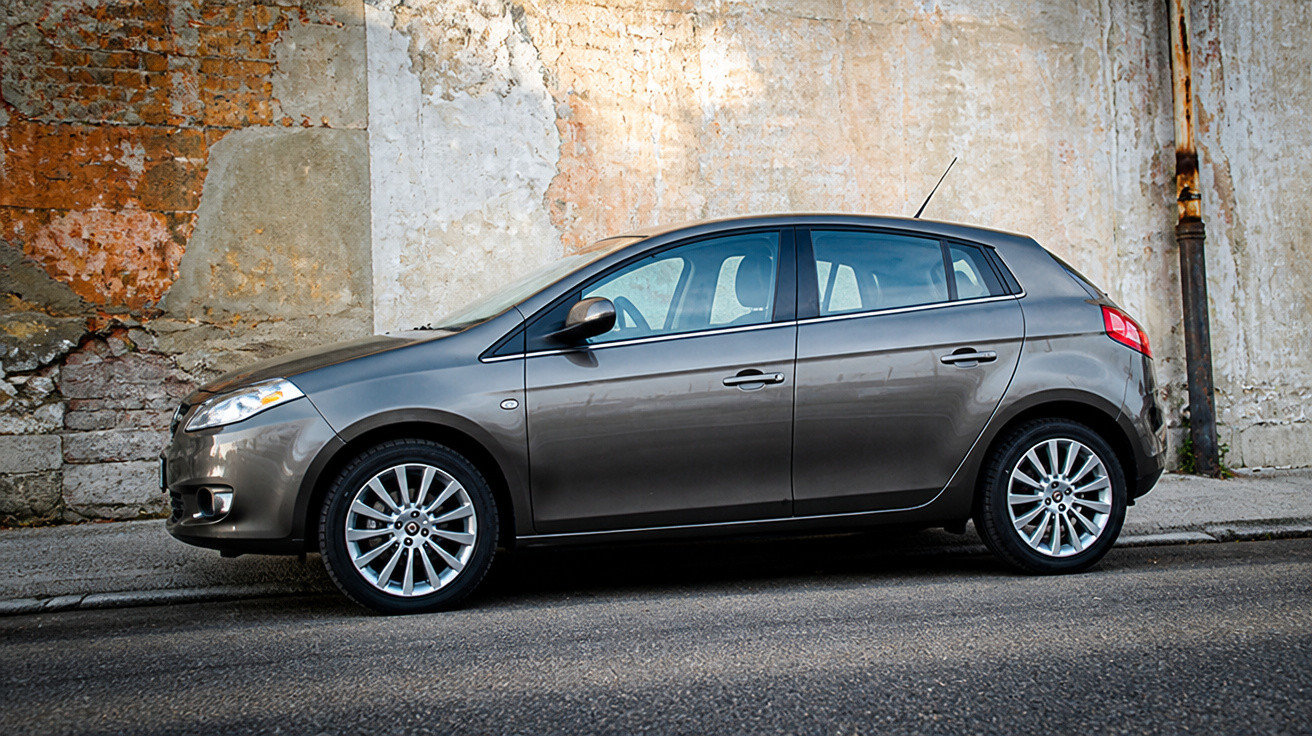
Driving position and visibility
The steering wheel sits slightly skewed: its right-hand rim feels farther away than the left. The seat base is also overly flat. You end up perched rather than supported, with only about two per cent of your buttock circumference actually touching the cushion and your thighs left hanging, unsupported.
The wheel itself is nicely finished and good-looking, but it was the only part of the driving position I truly got on with.
The Bravo isn’t the easiest car to see out of, thanks to its thick A- and C-pillars. Still, that compromise has clearly been made in the name of design, and it’s probably the right decision. Cabin room, meanwhile, feels merely acceptable rather than generous.
Diesel performance and gearbox
On this brief run on the relatively smooth roads around Bolocco, we drove the 150bhp diesel. As with most diesels in this sector - the Golf included - it’s not especially quiet, with plenty of gruff diesel racket finding its way into the cabin.
Even so, it shifts along strongly. The common-rail MJET pulls hard from low revs and serves up ample torque. The gearchange is decent: the shift is long, yet reassuringly positive. The 16-valve diesel gets a six-speed gearbox, whereas the 120bhp 8v diesel makes do with five.
Chassis, ride and steering
I’m keen to try the petrol models, particularly the 150bhp 1.4-litre FIRE turbo. That light, economical engine ought to be a good match for the Bravo, especially as the chassis feels eager - torsional stiffness is up by 50 per cent compared with the old Stilo, and you notice it immediately once you pull away.
Ride comfort is impressive, and it’s clear Fiat has invested serious time and money in damper tuning. We’ll hold off on a final verdict about the car’s dynamics until we’ve covered proper miles on British roads and driven it back-to-back with key rivals, but early signs point to an excellent blend of ride and handling. This is the clearest step forward over "the previous segment C Fiat model".
The electric power steering is respectable too: light, accurate and responsive. As on the Punto, there’s a "City" mode that makes it noticeably lighter for low-speed manoeuvres.
Development and outlook
The new Bravo was developed from a blank sheet in just 18 months, which feels like a record for such a significant mass-market car. That timescale might raise questions, but to me it suggests something encouraging - that the designers and engineers were working at peak effectiveness, with little disruption from middle management and marketing teams fixated on focus groups.
With modern computer-aided design, much of the dynamic evaluation could be carried out virtually, and physical prototypes weren’t built until the programme’s final stages.
In the round, Fiat has probably landed close to the ideal overall package, and this car is likely to help build on the firm’s strong results in Europe. It isn’t without flaws, but the key point is that if you’re taken with the styling, the way it drives should not leave you disappointed.
If Fiat can move beyond its budget image in the UK, ensure build quality is solid and set a genuinely competitive price - in other words, make it plainly cheap to buy - then the new Stilo will do very well. Sorry, Bravo. I meant Bravo.
Comments
No comments yet. Be the first to comment!
Leave a Comment