
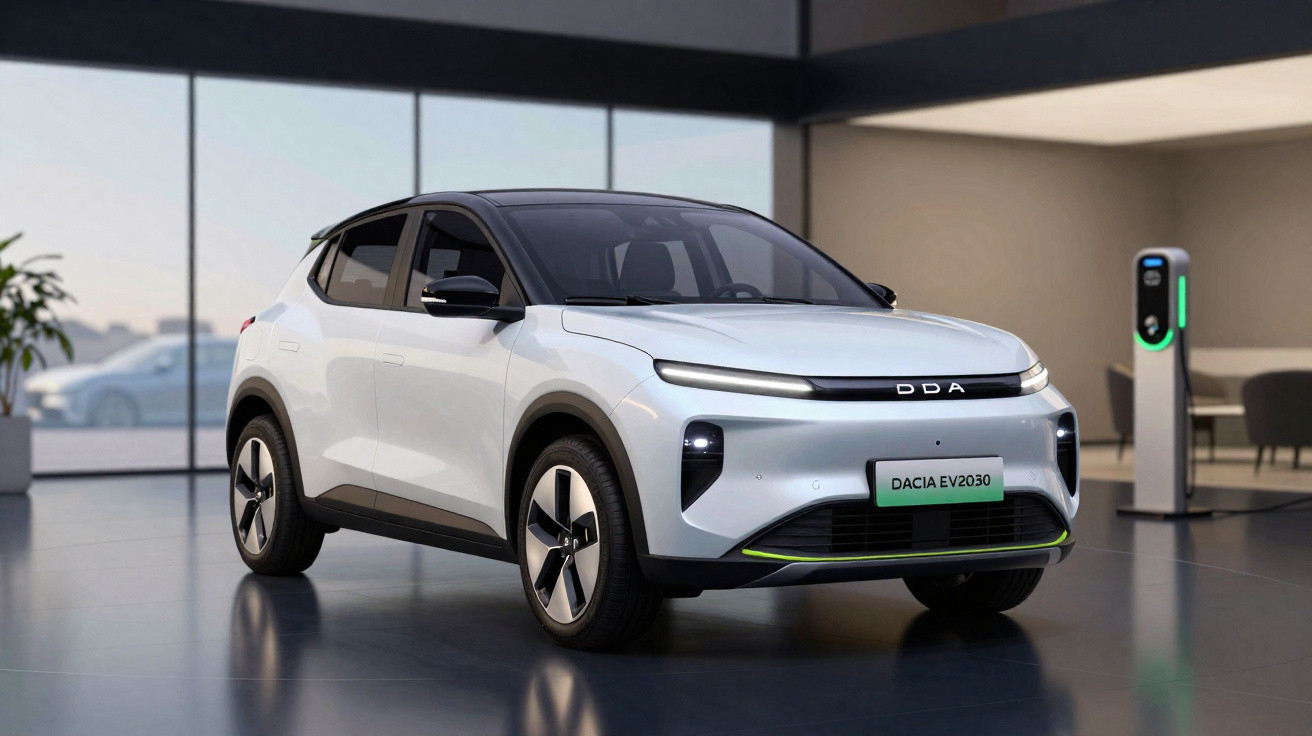
Dacia has long been seen as a brand for purists who prioritise one thing above all else: getting as much car as possible for the money. Now the manufacturer is stepping up its electric ambitions in a big way. By 2030, four fully electric cars are set to feature in the line-up, led by a particularly low-cost city EV with a planned entry price below 18,000 euros. Behind this sits a wider Renault Group initiative aimed at making electric mobility affordable in Europe again.
Renault plan “futuREady”: Dacia gets a clear electric direction
On 10 March, the Renault Group unveiled a new strategy called “futuREady”. Dacia is using this roadmap to reshape its positioning. Instead of offering just one electric model range-as it currently does with the small Spring-the plan is to expand to four battery-electric models within the next few years.
“Dacia wants to achieve two thirds of its sales with electric power by 2030-while still remaining one of the most affordable brands on the market.”
For now, Dacia is still in the early stages of electrification. The Spring sells reasonably well, but it has been held back in some markets by incentive rules: because it is built in China, it does not qualify for certain state bonuses. The new approach targets that weak spot directly-more models, far more aggressive pricing, and manufacturing in Europe.
Four electric models by 2030: what is specifically planned
No model names have been officially confirmed so far, but the Group has already outlined the direction fairly clearly. By 2030, four pure EVs are intended to sit in Dacia’s portfolio. Broadly, the plan breaks down as follows:
- new small electric cars based on the next-generation Twingo
- a planned electric version of the popular Sandero
- additional, as-yet unnamed models in the compact and city segments
- the Spring will remain in the range for now as the entry-level EV
The Duster is, for the time being, not part of this shift and has not been announced as a fully electric SUV. Dacia appears to view the most urgent challenge in the price-sensitive small and compact classes-precisely where the brand has traditionally been strongest.
New city EV: an electric car planned at under 18,000 euros
The headline-grabbing detail is the pricing for the new city-focused EV, which will be closely related technically to the upcoming electric Twingo generation. Dacia is promising an entry point below 18,000 euros. In markets with state support, the effective purchase price could drop substantially further.
“With possible deductions through an environmental bonus, the entry price in certain countries can fall to around 15,000 euros-an extremely unusual figure for a new electric car.”
The new small car will be built in Europe. That means it should meet the requirements to qualify again for schemes such as the environmental bonus in countries like France. For buyers, that can be a double benefit: a low list price plus additional public funding.
Why European production matters so much
The Spring illustrates the trade-off: Chinese production helps keep manufacturing costs down, but it can exclude the model from many incentive programmes. Dacia is now flipping that logic-building closer to customers, accepting somewhat higher production costs, and regaining access to state support. In total, the final price can even end up lower than that of an imported model that does not qualify for subsidies.
Sandero as an EV: what to expect from the technology
An all-electric Sandero is also highly likely. While not officially confirmed, internally it is reportedly treated as a given. A key point will be the battery technology, and there is plenty to suggest the use of LFP batteries (lithium iron phosphate).
This cell chemistry is typically heavier and usually delivers less range per kilogram than conventional nickel-manganese-cobalt batteries. However, it is cheaper and tends to be more resilient in everyday use. That aligns neatly with Dacia’s image: straightforward, durable engineering without unnecessary gimmicks.
Comparison of Dacia’s electric plans known so far
| Model / project | Status | Planned entry price | Production location | Notable points |
|---|---|---|---|---|
| City EV based on Twingo | announced | under 18,000 euros | Europe | can qualify for environmental bonus |
| Spring | already on sale | still unclear | China | in some countries not eligible for incentives |
| Sandero Electric | planned | still unclear | still unclear | LFP battery very likely |
Strategy: 66 percent electric share without premium pricing
Dacia is setting out its ambition plainly: by 2030, around two thirds of sales should come from electric drivetrains. At the same time, the brand wants to stick to what it is known for-minimal frills, clear trim and equipment packs, practical cars at a low price.
“Dacia talks about the ‘most competitive’ offer in terms of price, costs and value for the customer-meaning as much usefulness per euro as possible.”
Rather than focusing on expensive infotainment features or very large battery packs, Dacia intends to use more compact batteries that cover day-to-day needs and keep costs under control. Record-breaking ranges are not the priority; usability and manageable monthly payments are.
What does this mean for buyers in German-speaking countries?
For customers in Germany, Austria and Switzerland, Dacia could become significantly more appealing again. Until now, the Spring has been viewed as inexpensive but, for many, too compromised-and its eligibility for incentives has been limited. A new, Europe-built city EV could become a genuine price disruptor, particularly for commuters, car-sharing fleets or younger drivers.
Typical use cases where Dacia’s EVs could shine include:
- daily commutes of 20 to 60 kilometres
- a second car for families living in cities
- car-sharing or company fleets with clearly predictable costs
- budget-focused buyers who do not want a used car but still want to buy new
For anyone comfortable with 250 to 350 kilometres of range and happy to do without every high-tech driver assistance feature, this could mean a brand-new, warranty-backed vehicle at a price level that previously often meant looking at older combustion cars instead.
Background: why affordable electric cars are so rare
In recent years, many manufacturers have concentrated on expensive electric SUVs and high-performance models. Margins are higher there, and development costs can be recouped more quickly. By contrast, low-cost small cars with batteries have been seen as difficult to make viable, because the battery and associated technology account for a large share of the vehicle’s overall price.
Dacia is taking a different route: fewer variations, simpler platforms, and a deliberate avoidance of costly equipment options. The brand now wants to carry that concept into the electric era. The four planned EVs therefore also send a message to the wider market: affordable e-mobility is achievable if you cut costs in the right places-without compromising the basic function of a car.
For buyers, that can translate into less gloss, fewer luxury touches in the cabin, and potentially smaller screens-offset by more attainable list prices and comparatively low running costs. For those who share these priorities, Dacia may offer far more choice in the coming years than it does today.
Comments
No comments yet. Be the first to comment!
Leave a Comment