
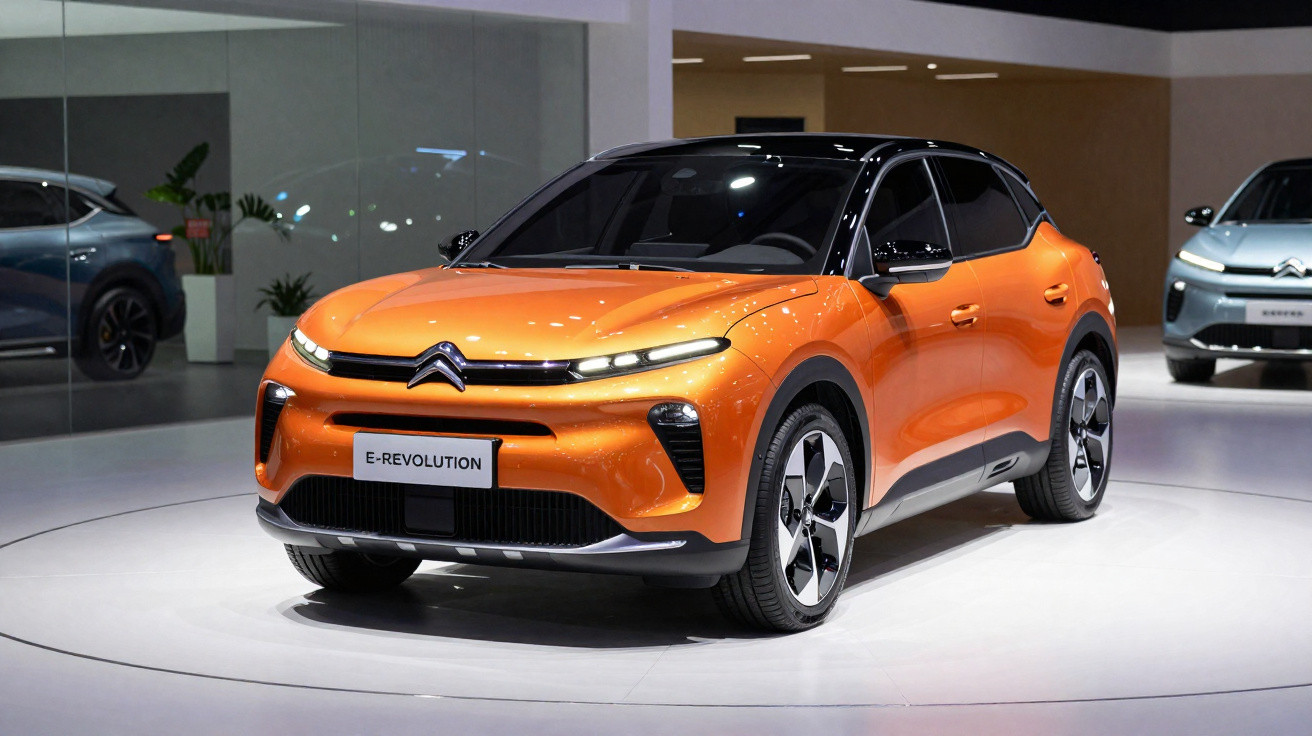
With the launch of the new Citroën ë-C3 - including a version priced below €20,000 - Citroën has moved into an EV price bracket that very few brands have reached, much like Dacia did with the Spring.
Drawing on the French marque’s heritage and the era of the 2CV for inspiration, the objectives this time are clearly different. Citroën is keen to underline that it can bring a 100% battery-electric B-segment model to market at a price comparable with a rival fitted with an internal combustion engine.
Making the Citroën ë-C3 more accessible
At heart, this is an effort to democratise 100% battery-electric cars - something Dacia previously attempted (with some success, it must be said) via the Spring. It is therefore unsurprising that the arrival of the new ë-C3 has prompted questions about how close these two brands might be.
Asked about this by the Dutch outlet AutoWeek, Citroën chief executive Thierry Koskas acknowledged that the brands’ positioning is not the same, while also accepting that Citroën will take on Dacia in certain parts of the market.
“You’re comparing us with a brand we have a lot of respect for. The difference between Dacia and Citroën is that we are a brand with 100 years of history. We have other key values, such as comfort, simplicity, sustainability and courage,” Koskas said.
He added: “Cars should be affordable for everyone, as much as possible, but we also make larger models, such as the C5 Aircross and the C5 X. Citroën’s positioning as a brand is therefore not the same as Dacia’s.”
“We compete with Dacia on some models, but not on all of them.”
Thierry Koskas, Chief Executive of Citroën
Response to the Chinese offensive
The Citroën ë-C3 is the first of several European-built, 100% electric models expected to reach the market at €25,000 or less. The Renault 5 and the Volkswagen ID.2 are good examples of the same trend.
For the double chevron brand, however, this car is also presented as a direct answer to the wave of Chinese EVs that have recently arrived in Europe, often with very aggressive pricing.
That situation has already led to an investigation by the European Commission, as well as strong criticism from Commission President Ursula von der Leyen, who said:
“Their price (Chinese electric cars) is kept artificially low thanks to massive state subsidies. This is distorting our market.”
Ursula von der Leyen, President of the European Commission
During Stellantis’s first-half financial results presentation earlier this year, the group’s chief executive Carlos Tavares had already promised a 100% electric model for Europe priced below €25,000.
The Portuguese executive went further, calling it “the first step of our response to what is now labelled a ‘Chinese invasion’ in the European market. We will fight it with this kind of product and we have more on the way. All of them will be affordable and profitable”.
Now that the ë-C3 has been unveiled, Citroën’s boss reiterated the same message: “It is certainly a response to the Chinese offensive”.
Source: AutoWeek
Comments
No comments yet. Be the first to comment!
Leave a Comment