
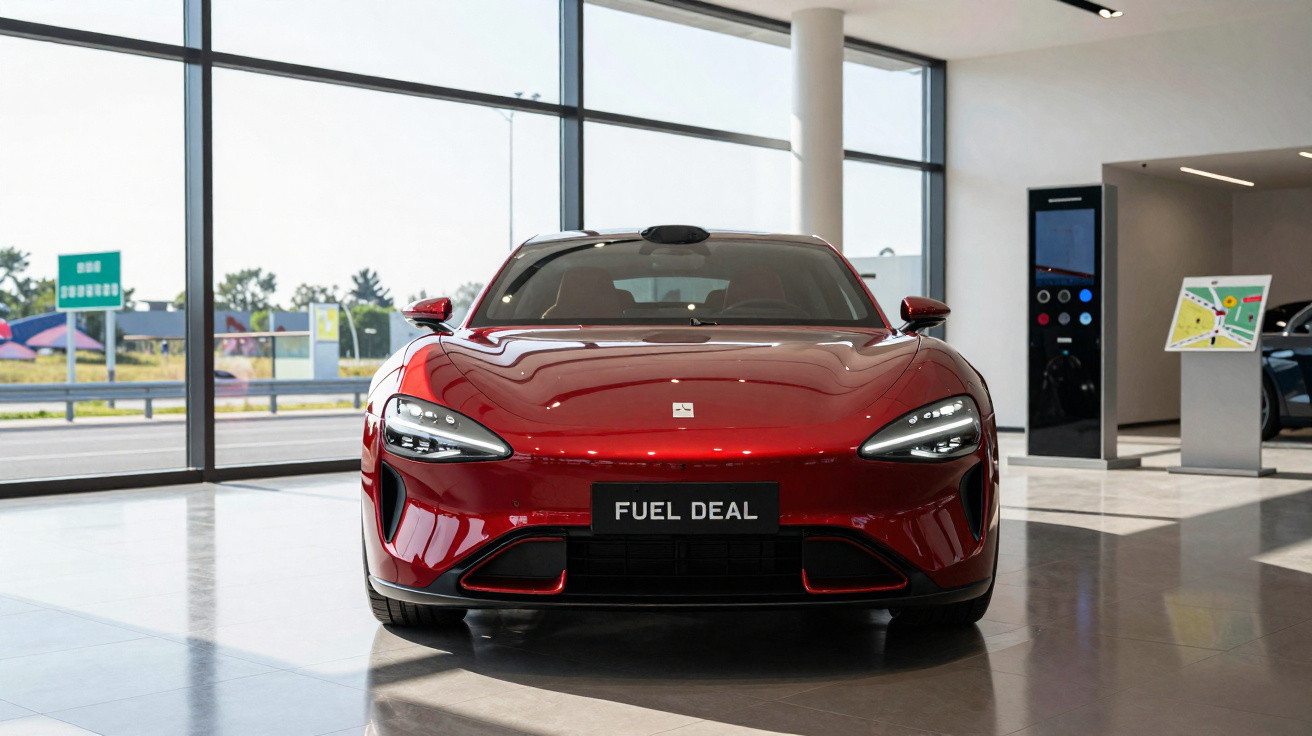
Pump prices keep climbing, and many motorists’ patience is wearing thin. In south-west France in particular, this has triggered a well-established response: anyone who can makes the short run over the border into Spain and fills up there. What starts as a minor detour quickly becomes a set habit - and the saving per tank can be surprisingly substantial.
Border traffic at the pumps: full car parks, plenty of foreign number plates
In towns close to the Pyrenees, the scene at filling stations has noticeably shifted. Car parks at Spanish forecourts are increasingly lined with French registration plates. Families from Béarn or Bigorre often pair a weekend outing or a shop across the border with a stop for fuel.
The reason is straightforward: a litre of petrol or diesel in Spain is frequently much cheaper than it is just a few kilometres further north. For people living near the frontier, the maths is simple. Filling the tank can deliver a saving that quickly reaches double figures.
"If you live near the border, you can save several dozen euros per fill-up - month after month, that adds up to noticeable sums."
Commuters and high-mileage drivers, in particular, adjust their routes accordingly. Work trips are organised so a stop in the neighbouring country is possible. Some even schedule the weekly supermarket run in Spain on purpose, so they can roll a fuel stop into the same journey.
Price gap as the main driver: the state takes its share
At the heart of the issue is tax policy. A large share of every tank ends up going straight to the public purse. Spain imposes a lower tax burden on fuel, and that difference shows up immediately in the price displayed on the forecourt.
Although the underlying cost of crude oil is broadly similar on the world market, it is national taxation that largely determines what appears on the illuminated price signs outside filling stations. That gap is what pushes drivers to cross the border.
- lower fuel duties in the neighbouring country
- lower overall price per litre of petrol and diesel
- clear savings every time the tank is filled
- being close to the border makes the detour financially worthwhile
- fuel stops are built into everyday routes as a fixed routine
Many stations south of the border also sweeten the deal with extras: car washes, inexpensive shop items, and snacks and coffee priced far more modestly than at French motorway service areas. For lots of people, it is the overall package that makes a trip to a Spanish pump pay off in more than one way.
When filling up becomes a strategy: daily life for border residents
For people living in border areas, travelling to the neighbouring country for cheaper fuel has long been part of normal life. What is new is how sharply the practice has intensified in recent months. Household budgets are forcing many to rethink and reorganise the way they drive.
One example: a family with two cars, both used every day for work. If they fill up every second time in the cheaper neighbouring country, they can quickly save an amount each month comparable to a utilities bill. Many justify the extra miles with exactly that calculation.
A lot of drivers combine the fuel stop with other errands and plans:
- a weekend trip with a short shopping run and a fuel stop
- slightly extending the commute to pass a cheaper station
- timing family visits or leisure activities near the border so the tank is almost empty
In this way, motorists try to squeeze as much financial value as possible from every kilometre driven. For households on tight budgets, it is no longer a small bonus - it has become part of a deliberate strategy.
A reflection of purchasing-power pressure
Driving to the cheaper forecourt is not only a money-saving trick; it also highlights how stretched many household finances are. The cost of “mobility” takes a significant chunk of monthly budgets, especially in rural areas. If you can scarcely reach work, doctors’ appointments, or the supermarket without a car, you feel every penny at the pump.
Many drivers talk openly about frustration and helplessness. They see the high prices at home, compare them with what is charged only a few kilometres away, and act accordingly. The border becomes a price line: pressure on one side, tangible relief on the other.
"When you can fill the tank for almost a quarter less, it feels like a direct pay rise - especially for people with long commutes."
Losers on the other side: the situation for local filling stations
While Spanish filling stations benefit from rising takings, many operators in the neighbouring French areas are coming under pressure. Regular customers stay away or only turn up occasionally. In some regions, turnover trends are clearly heading down.
Operators face a dilemma: they would like to match prices, but they are constrained by national rules. Taxes, duties and fixed margins leave very little room to manoeuvre. A steep discount would put their own businesses at risk.
| Aspect | Border-area station in France | Station in the neighbouring country |
|---|---|---|
| Tax burden per litre | high | lower |
| Customers from the border region | declining | rising sharply |
| Scope for discounts | very limited | somewhat greater |
In many conversations, operators point out that they are effectively paying the price for a policy they cannot influence. Drivers go wherever the price is right - regardless of which side of the border the pump stands on.
What holidaymakers and passers-by should bear in mind
Checking a fuel-price app on your phone can also pay off for travellers who are simply passing through. If you are planning a trip south, smart timing can save money too. A few practical points help:
- compare current prices in both countries before you set off
- avoid filling up unnecessarily early if a cheaper area is coming soon
- for longer routes, roughly estimate how far one tank will take you
- do not tackle sparsely populated mountain stretches with an almost empty tank
If you plan too tightly, you risk stress and expensive emergency fixes. Even with a strong desire to save, keeping a sensible reserve in the tank and being realistic about distances remains essential.
How the trend could develop next
As long as the price gap persists, this cross-border fuel tourism is unlikely to fade. If domestic prices keep rising or state relief measures disappear, the flow towards Spanish filling stations may well grow further. That leaves policymakers with the question of how long they are willing to tolerate the shift.
Experts expect border regions to become ever more like small hubs for cross-border bargain hunting. It is not only fuel: groceries, tobacco and other goods also benefit from the side-by-side comparison across the border. The fuel stop then becomes one part of a wider bundle of price advantages.
For drivers, the key question remains: does the detour genuinely pay off? If you live far from the border, you burn a good portion of the saving getting there and back. If you are only a few kilometres away, you come out well ahead. A simple rule of thumb helps: the larger the car, the higher the consumption and the closer you are to the border, the more attractive the trip to a foreign pump becomes.





Comments
No comments yet. Be the first to comment!
Leave a Comment