
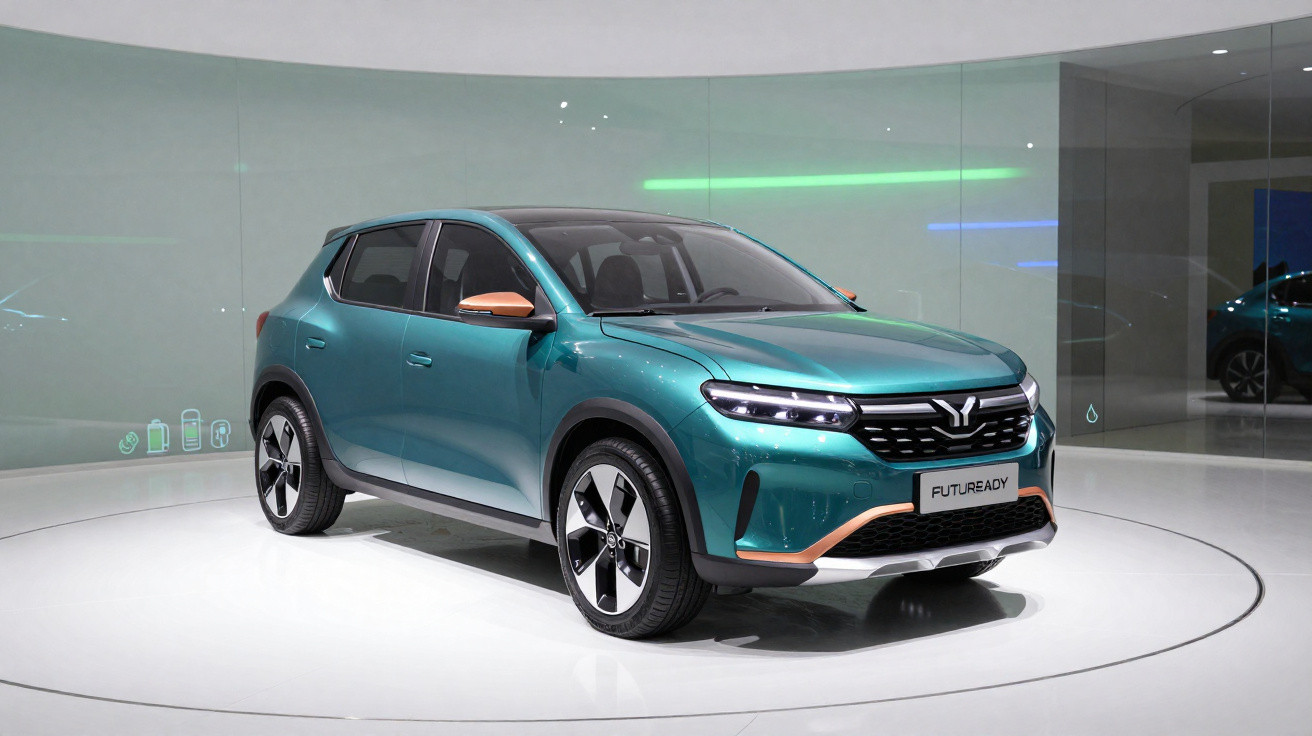
While the Renault Group is pouring investment into battery-electric and hybrid technology through its “FutuREady” programme, Dacia is facing a pivotal question of its own: what happens to the Sandero, the brand’s most affordable best-seller? One thing is already clear: the model is staying - just not exactly as we know it today.
Why the Sandero remains indispensable for Dacia
For Dacia, the Sandero is not merely another nameplate; it is the brand’s commercial backbone. Across Europe, this small-car line repeatedly tops Dacia’s own sales charts. In some countries it even pushes aside established rivals such as the Renault Clio, as well as newer small electric cars from within the same group.
"Without Sandero, Dacia would lose a large share of its customer base - which is why a direct cancellation is not currently on the table."
France provides a clear snapshot of that importance. In the first two months of the year alone, the brand reported more than 6,500 new Sandero registrations there. That puts it ahead of models such as the Renault Clio 6 and the R5 E‑Tech. The result underlines that affordable, practical small cars remain in demand despite the surge of interest in electric vehicles.
It is also worth remembering that the current generation has only just received a facelift. Styling, equipment and, in part, the technology have been updated. That gives Dacia breathing space to map out the next stage without rushing.
FutuREady: how the group is steering Dacia towards electric power
With “FutuREady”, the Renault Group is setting its course towards electrified mobility. Dacia’s position within that plan is unusual: it is expected to keep offering low-cost cars, while also coping with tightening CO₂ limits.
So far, Dacia has just one fully electric model in its range: the Spring. This small SUV acts as a budget-friendly entry point for cost-conscious buyers. However, the roadmap indicates that the maker intends to broaden its battery-electric line-up substantially.
- By 2030, three additional electric models are due to join the Spring.
- Dacia is aiming for two thirds of its sales to be electrified by then.
- At the same time, alternative powertrains such as LPG (Eco‑G) and hybrid will remain part of the offer.
Fresh products like the newly revealed Striker - a 4.62-metre-long crossover positioned between an estate and an SUV - hint at the direction of travel: more choice in energy source, more space, and a continued emphasis on value for money.
Multi-energy is the new watchword
A key term stands out in the group’s communication: “multi-energy”. In practice, this describes model families that can be sold with different powertrains depending on the market and customer base - from petrol to LPG, to hybrid, and potentially later to battery-electric.
"According to the manufacturer, the next Sandero generation is explicitly intended to be offered as a multi-energy model."
Although there are no official details on engines yet, the current range points to what is plausible:
- Petrol: traditional TCe units are likely to stay as the lowest-cost entry option.
- Eco‑G (petrol/LPG): Dacia’s proven autogas approach, designed to reduce running costs.
- Hybrid: an electrified variant to cut fleet fuel consumption and lower emissions.
A fully electric Sandero has not been confirmed at this stage. That said, an additional small, entry-level EV has been announced. It is therefore possible Dacia will position a separate electric city car alongside the Sandero, or launch a clearly distinct electric variant, in order to keep pricing under control.
Why Dacia is sticking with LPG and hybrid
Dacia stresses that its electric push does not mean proven powertrains will simply vanish. LPG - sold by the brand under the Eco‑G label - is expected to remain a cornerstone. In everyday use, this set-up brings several practical upsides:
- lower fuel bills compared with running solely on petrol
- noticeably reduced CO₂ emissions
- usable real-world range without stopping to charge
- straightforward engineering that many garages already understand
Models such as the Jogger, Duster and the upcoming Bigster already reflect this strategy. The new Striker is also being introduced as a multi-energy crossover. A Sandero offered with petrol, LPG and hybrid options would fit neatly into the same pattern.
Hybrid as the key to the CO₂ balance
If Dacia is to reach its target of offering roughly two thirds of its sales as electrified by 2030, LPG alone will not be enough. Hybrid systems bridge the gap between a conventional internal combustion engine and a pure battery-electric car. For the Sandero, that could look like this:
| Powertrain | Strengths | Typical use |
|---|---|---|
| Petrol | low entry price, simple engineering | occasional drivers, smaller budgets |
| Eco‑G (LPG) | low cost per kilometre, improved CO₂ figures | commuters, high-mileage rural drivers |
| Hybrid | reduced consumption in town, quieter driving | mixed routes, city plus surrounding areas |
A Sandero hybrid could be particularly appealing in urban areas for buyers who are not yet persuaded by small battery-electric cars - for example due to charging availability or purchase price.
What buyers can expect from the next generation
Because the current Sandero has only recently been facelifted, its successor is unlikely to arrive before the next few years. That time buffer allows Dacia to set up the platform so it can serve different markets and meet varying CO₂ requirements.
Several developments are likely:
- improved driver-assistance systems to comply with newer safety standards
- up-to-date infotainment with smartphone integration
- even more efficient engines, some with electrical assistance
- a clearer split between a low-cost base version and better-equipped trims
The most sensitive topic will be price. Dacia’s reputation rests on being an “honest” budget brand. Higher raw-material costs, more complex emissions rules and electrification all put pressure on margins. To counter that, the manufacturer may lean more heavily on option packs, leaving certain extras as paid add-ons rather than standard fit.
What a “multi-energy” car means in everyday life
The phrase may sound technical, but its day-to-day implications are straightforward. Anyone considering a model offered with multiple energy options should keep a few points in mind:
- Check fuelling and charging locally: are there enough LPG stations or charging points in your area?
- Match the powertrain to your driving: frequent short trips and city traffic suit a hybrid; long motorway runs often favour LPG or an efficient petrol engine.
- Balance purchase price against running costs: hybrids cost more up front, but savings at the pump can repay that over time.
- Consider resale value: electrified versions may become more desirable as CO₂ rules tighten.
For Dacia customers in particular - who typically keep a close eye on costs - it pays to look at the full calculation: what the car costs today, and what you will spend over five or eight years on fuel, servicing and any potential repairs.
Context: why the Sandero remains so important to the market
Small cars like the Sandero represent a wider question many European drivers are asking: will there still be affordable, simple cars for everyday use in the future, or will regulation and technology price them out? Dacia is trying to occupy that space.
Even if the entry price edges upwards over the coming years, a multi-energy Sandero would still be a route into the new-car market for many households. Young drivers, families on tight budgets, and commuters from outside city centres often turn to straightforward, durable cars like this.
To understand the discussion properly, it helps to separate the terms. “Electrified” does not automatically mean “fully electric”: it also includes mild hybrids and full hybrids that still have an internal combustion engine. Battery-electric models run only on electricity and depend on charging infrastructure. Dacia’s approach appears to be to use every step on that ladder, rather than forcing customers abruptly into a single solution.
For prospective buyers, the message is simple: the Sandero is not disappearing - it is evolving. Anyone buying the freshly updated model now gets a well-developed car. Those who can wait may see a broader choice of powertrains and technology in a few years’ time, with the possibility that pricing remains relatively down-to-earth despite the upgrades.
Comments
No comments yet. Be the first to comment!
Leave a Comment