
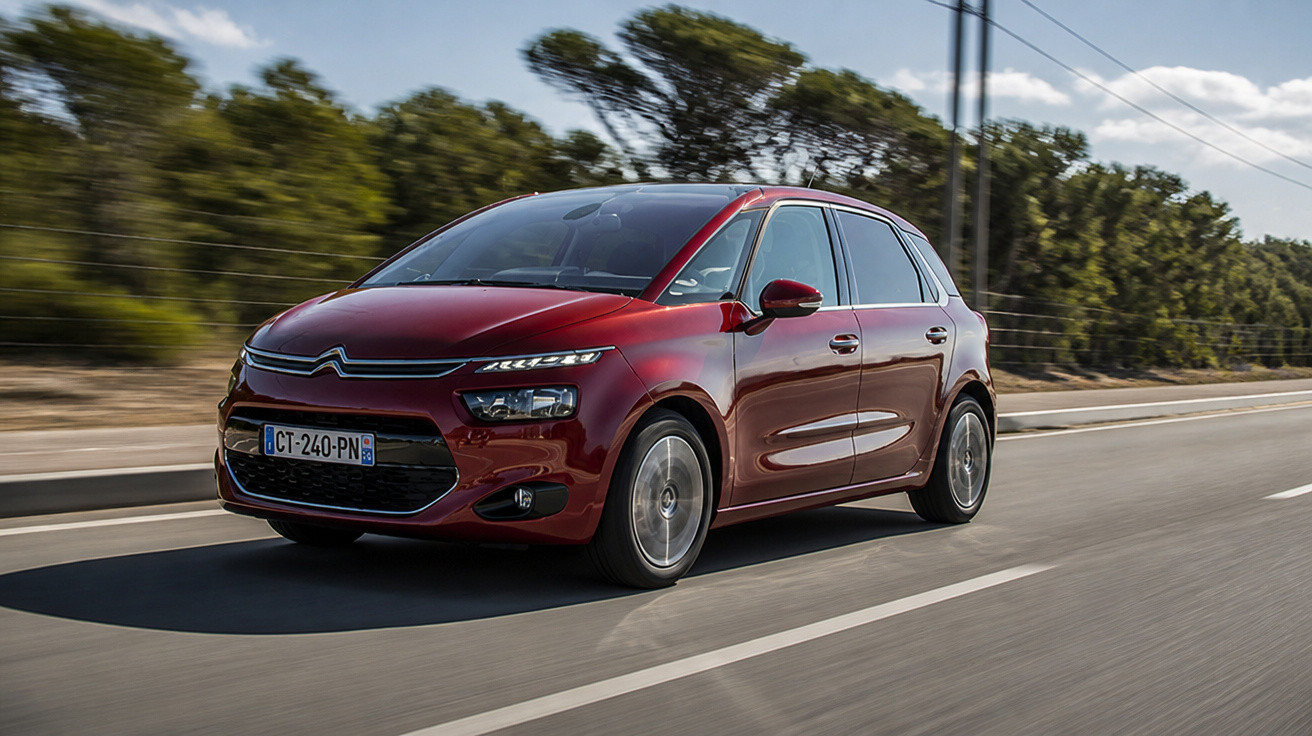
Design that embraces the MPV brief
Ford and a few other makers keep trying to dress their MPVs up as ordinary hatchbacks, usually with proportions that look faintly ridiculous. Citroen takes the opposite view: an MPV ought to look like an MPV, and there’s nothing embarrassing about being seen in one. Fair enough. If a sports car is widely treated as a badge of virility, then a proper family-sized vehicle suits people who don’t need to prove anything.
Citroen’s new C4 Picasso sits squarely on the road, helped by shorter overhangs and a longer wheelbase. The brand says it wants its cars to come across as approachable and friendly. From head-on, it strikes me as more of a friendly shark - probably not the brief. At the rear, the 3D-effect lamps and the clamshell tailgate have an Audi-like feel, and that’s meant as a compliment.
Cabin and practicality in the Citroen C4 Picasso
Step inside and the vast glass area makes it feel almost like you’re outside. When the dashboard is asleep it’s practically stripped of buttons and conventional switchgear. Turn the car on and two displays wake up: a lower 18 cm (7-inch) touchscreen with a sensibly arranged menu structure and clear graphics, plus an upper 30 cm (12-inch) screen - about the size of a pub telly - handling the main instruments along with other configurable information.
In this class, space matters most, and the longer wheelbase pays off. Flexibility is a strong point too: all five seats slide and recline. There are also storage bins and concealed cubbyholes everywhere, to the extent that if you hired one for a holiday, you’d almost certainly leave something behind.
Ride, handling and refinement
The driving experience mirrors the styling approach: there’s no attempt to pretend this is a hot hatch in disguise. It makes progress without much noise and it rides pleasingly softly. The trade-off is body roll and understeer, yet in corners it remains predictable and easy to read. It would benefit from stronger high-speed self-centring; now and then I wandered onto the motorway lane markings and set off one of the many electronic alerts. And the gearshift action feels loose.
Platform, weight and efficiency
This Picasso is genuinely all-new, marking the first application of the next-generation Peugeot-Citroen modular platform - encompassing the underbody, chassis, electronics and more. The layout is more space-efficient, freeing up room for passengers and design, which is why the front overhang is reduced by a substantial 116 mm. That also helps remove the French group’s old “beaky” look. Despite the packaging gains, crash protection is improved, and the body feels convincingly rigid.
Just as importantly, it’s a lot lighter: 70 kg saved in the platform itself, plus a further 70 kg trimmed from the rest of the car.
With that weight reduction, improved aerodynamics and updated engines, the fuel-economy gains are significant. One 90 bhp diesel version emits under 100 g/km of CO2. The car I’m in is the 115 bhp diesel. Against its predecessor, it’s a second quicker to 0–100 km/h and returns an official 4.0 L/100 km rather than 5.1 L/100 km. It’s smooth and quiet enough, but it isn’t keen on overtaking, and if you fill it with people and luggage you’d find it hard to hurry. Then again, your passengers in the back aren’t hoping you’ll drive like a hooligan - it’s an MPV.
Comments
No comments yet. Be the first to comment!
Leave a Comment