
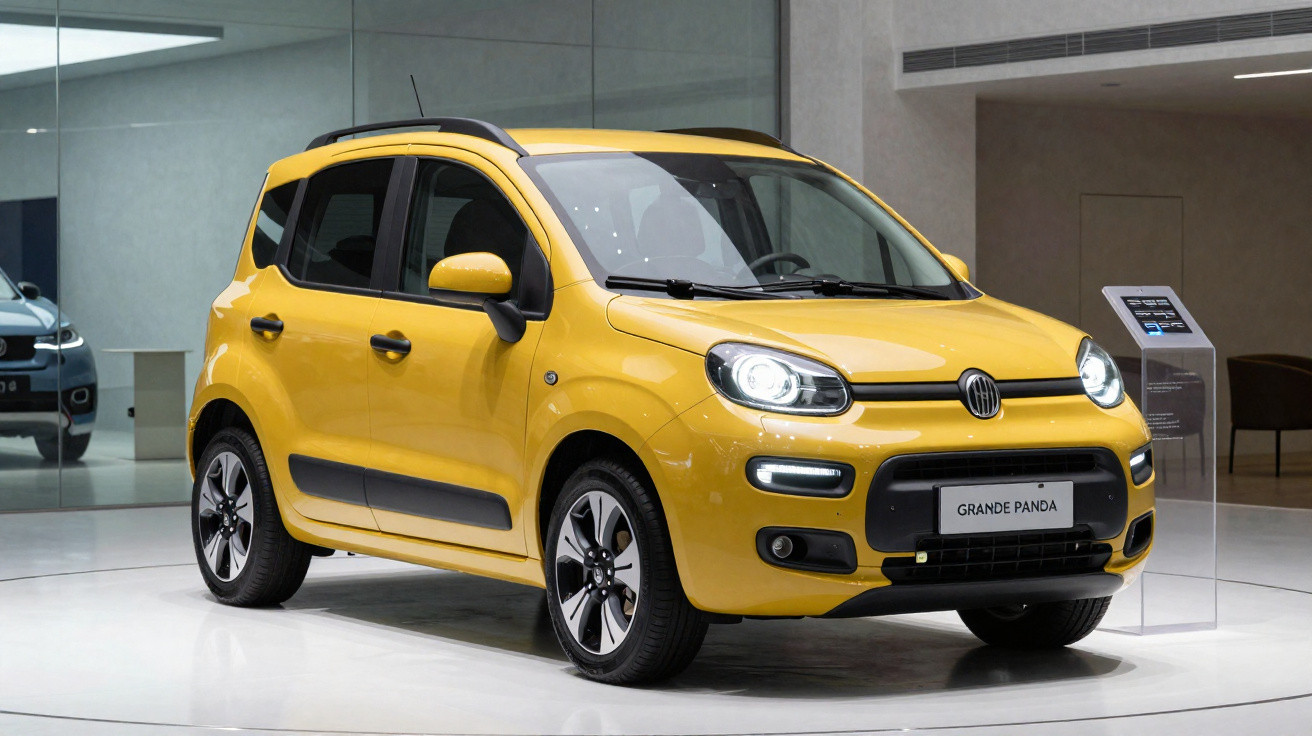
Fiat has taken a step back to win back a large slice of buyers: instead of offering only electric power and hybrids, the Grande Panda is once again available with a straightforward petrol engine. The entry-level model officially starts at 16,900 Euro, aimed squarely at bargain hunters who want a practical car without piles of high-tech extras. But what do you really get for the money – and where are the catches?
Why Fiat is returning to simple petrol engines
Over recent years, Fiat has pushed electrification hard. Many models arrived first as full EVs or as mild-hybrids. In reality, plenty of customers are still choosing affordable combustion cars, especially in the small-car and compact segments.
That is exactly where the petrol-engined Grande Panda fits in. The line-up originally launched with electric and mild-hybrid versions. Now Fiat is adding a pure petrol variant as the cheapest way into the range. In doing so, Fiat is targeting:
- Drivers on a tight budget who want a new car rather than buying used
- Customers who do not want to deal with charging cables, charging time or range calculations
- City dwellers looking for a compact, easy-to-place car with uncomplicated technology
"The Grande Panda with a classic petrol engine is deliberately kept simple – technically, visually and on price."
The engine: a proven three-cylinder instead of a high-tech hybrid
Under the bonnet sits a familiar unit from within the Stellantis group. This small Italian model uses the same 1.2-litre three-cylinder found in several sister cars, such as the Citroën C3.
Power and driving feel
Key engine figures are as follows:
- 3 cylinders, 1.2 litres displacement
- Power: 100 PS
- Torque: 205 Nm
- Gearbox: 6-speed manual
For everyday use, the output is clearly sufficient. The Grande Panda is not a sporty car, but it is well suited to city driving and commuting. The six gears help keep revs and noise reasonably low at typical A-road speeds.
Compared with the 110 PS mild-hybrid, the pure petrol version feels a little more sluggish when accelerating, particularly on the motorway or with a full load. Anyone who regularly drives long distances or plans frequent overtakes will notice that gap.
Fuel consumption and CO₂ figures
On official consumption, the downside of having no electric boost shows up. Fiat states:
| Variant | Power | Consumption (WLTP) | CO₂ emissions |
|---|---|---|---|
| Grande Panda petrol | 100 PS | 5.7 l/100 km | 131 g/km |
| Grande Panda mild-hybrid | 110 PS | 5.1 l/100 km | lower |
In day-to-day driving, the petrol model is likely to sit a bit higher in urban traffic and on short journeys, especially when the engine is often running cold. If you do a lot of A-road driving and shift up early, you can get closer to the WLTP numbers.
With CO₂ emissions of 131 g/km, some markets apply an environmental levy of roughly 1,000 Euro. That pulls the real purchase price closer to the mild-hybrid, which officially starts at 19,400 Euro.
"The base price sounds tempting, but the environmental levy makes the gap to the mild-hybrid smaller than you might expect."
Equipment: what the entry-level version actually includes
The cheapest Grande Panda is called “Pop”. The philosophy is obvious: as much car as you need, as few extras as possible.
Exterior: plain, but not bare
Visually, the entry-level Panda keeps things restrained. There is no fancy wheel design or two-tone styling tricks, but the price point will appeal to many families.
- Free paint in a bold red (Rouge Passione), or white at extra cost
- 16-inch steel wheels without hubcaps
- No chrome and no attention-grabbing design add-ons
That bright red should still give it some presence on the road. If you prefer a subtler look, white is the alternative – there is not much freedom of choice when it comes to colours.
Interior: smartphone instead of a large infotainment system
Inside, Fiat prioritises practicality. The base version does without a central infotainment screen. Instead, the brand provides a smartphone mount in the middle of the dashboard.
Main interior points:
- 10-inch digital instrument display in front of the driver
- Smartphone station in place of a central screen
- Manual air conditioning
- Electric front windows
If you already rely on navigation apps on your phone, you are unlikely to miss a built-in sat-nav. With the handset held in place, key information remains visible, while the instrument display provides driving data.
Safety and driver assistance systems
Despite the entry-level positioning, Fiat does not strip out assistance tech entirely. The “Pop” trim includes several systems that would have been unusual in this class not that long ago:
- Traffic sign recognition
- Rear parking aid with sensors
- Lane-keeping warning
- Autonomous emergency braking
"For an entry-level model, the safety equipment is ahead of what many older used cars offer."
Who the petrol-engined Grande Panda makes sense for
This base version is aimed at a very specific type of customer. Anyone choosing it tends to have clear priorities.
The petrol model is best suited to people who:
- want an affordable new car with a warranty
- mostly drive in town and do short trips
- have no interest in complex hybrid systems or charging infrastructure
- are willing to accept compromises on comfort features and styling
The engine is less ideal for motorway high-speed regulars or high-mileage drivers doing well over 20,000 kilometres a year. In those cases, the slightly higher fuel use becomes more noticeable in the overall budget.
Price trap or a genuine bargain?
With a list price of 16,900 Euro, Fiat is positioning the Grande Panda very aggressively at the bottom end of the market. Add an environmental levy of around 1,000 Euro and the picture becomes more nuanced.
If you are watching every penny, it is worth looking beyond the purchase price and factoring in ongoing costs as well:
- Fuel consumption, particularly in day-to-day commuting
- Insurance grouping
- Depreciation compared with the mild-hybrid version
Resale value, in particular, can make the mild-hybrid more attractive over the longer term. Electrified powertrains often perform better on the used market, as they can typically enter low-emission zones for longer without restrictions.
How practical is it to skip a central screen?
Many prospective buyers notice the missing large screen the moment they look into the cabin. In real-world use, that decision is less dramatic than it appears at first glance.
Most drivers use their own smartphone for navigation, streaming or podcasts anyway. A well-positioned mount with power supply can handle those tasks without any trouble. The key is to use a solid-quality holder so the phone does not become a loose object during heavy braking.
For tech enthusiasts who like big map views, integrated vehicle apps and voice control, the solution will feel more old-fashioned. For purists who simply want to drive, it can actually make day-to-day use simpler.
No fluff conclusion: an honest car with clear compromises
The Fiat Grande Panda with a petrol engine shows how sharply the market is splitting. On one side are expensive, heavily equipped electric cars and plug-in hybrids. On the other are simple, affordable combustion models like this one, which intentionally avoid a fireworks display of technology.
Set your expectations correctly and you get an honest car: an engine with adequate pull, solid safety equipment and a low cost of entry. In return, you have to accept trade-offs in comfort, appearance and ongoing fuel costs. For many buyers in German-speaking markets, that can be exactly the decisive compromise – especially when budgets are tight but a new car is still non-negotiable.
Comments
No comments yet. Be the first to comment!
Leave a Comment