
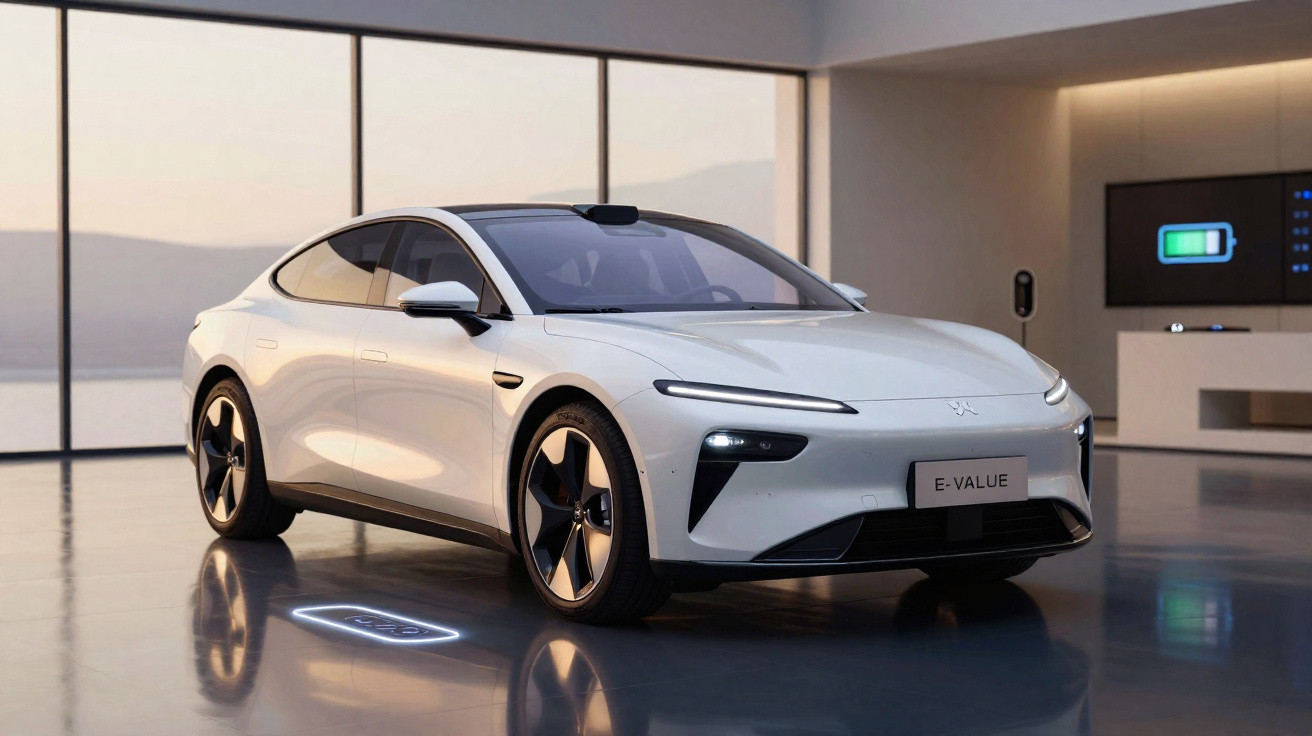
Prices are now dropping so quickly that plenty of buyers feel as if their head is spinning.
Throughout Europe and the United States, pre-owned EVs are spending longer sitting on dealer forecourts, and advertised prices keep edging down month after month. A combination of battery worries, fast-moving technology and political uncertainty is changing what “going electric” really costs.
Used electric values are sinking faster than petrol cars
New figures from European classified sites and dealer groups point to a clear pattern: electric cars are shedding value noticeably quicker than combustion-engined rivals with similar age and mileage.
In several major markets, three‑ to five‑year‑old EVs now depreciate around 40–50% more than comparable petrol models.
This goes beyond the idea that “all used cars are cheaper in 2025”. After the wild Covid-era surge-when supply chain disruption choked new-car supply-second-hand prices have generally cooled. Even so, EV values have dropped far harder than petrol and diesel equivalents.
A widely cited French example illustrates the scale: a Tesla Model 3 purchased new in 2020 for a little over €60,000 is now advertised at roughly €24,000–€25,000-almost a 60% fall in five years. The same story shows up with mass-market models too: early Renault Zoes, Nissan Leafs and VW ID.3s are frequently listed for thousands less than analysts predicted just a few years ago.
Meanwhile, plenty of popular petrol hatchbacks and compact SUVs of the same vintage tend to decline more gently in price, supported by a steady pool of buyers who feel they know exactly what they are getting with a conventional engine-even if it is not the newest generation.
The battery sits at the heart of the value problem
When you strip away the differences between an EV and a combustion car, the battery pack is the defining component-and it drives most of the used-market anxiety.
All lithium-ion batteries lose capacity with age and charging cycles. In many modern cars the decline is gradual, but worries spread faster than the chemistry. For second-hand shoppers, one concern dominates: “How much real range is left, and when will I face a huge bill?”
A replacement pack for a family EV can still run into several thousands in local currency, easily wiping out any fuel savings for a budget‑conscious buyer.
On a brand-new car, that concern is often softened by warranty cover. Battery warranties commonly sit at around eight years or 100,000–160,000 km. With a five-year-old EV, however, that protection can feel uncomfortably close to running out. Buyers may also be unsure about the fine print-particularly what manufacturers consider “normal” degradation.
Even if the practical risk is small, perception matters on the forecourt. Some shoppers simply walk away, while others push for major discounts. That reaction alone can pull values down across the category, including for marques with strong reliability records and clear battery health reporting.
Fast technology cycles make old EVs feel outdated
A second pressure on prices comes from the “smartphone effect”. Electric cars can improve in abrupt leaps. Each new battery generation tends to lift range, charging speeds keep rising as more cars support 150 kW or 250 kW rapid charging, and software updates add driver-assistance functions alongside more capable infotainment.
An EV that is three years old can still be pleasant to drive, yet its specification often appears behind the curve:
- Reduced real-world range compared with the newest version of the same model.
- Slower DC charging, which can make longer journeys more awkward.
- Older infotainment with fewer apps or poorer connectivity.
- Missing hardware that later software upgrades may require.
Because consumers are used to rapid improvements in personal tech, a new EV offering 100 km more range and charging twice as quickly can make an older car feel like yesterday’s device-even if it still easily covers day-to-day driving. This feeds the impression that EVs become “obsolete” faster than petrol cars, where efficiency gains typically arrive more gradually and are less obvious.
Policy swings and charging anxiety weigh on used demand
Government policy is another factor shaping second-hand prices. In various European countries, low-emission zone rules restricting older combustion cars pushed many city drivers towards electric. When those plans are softened, postponed or caught up in legal ambiguity, the urgency to buy an EV drops away-and so does a key source of demand for used examples.
Charging availability creates a similar headwind. Public networks are expanding, but growth is uneven. People living in flats or without off-street parking often worry about queues at rapid chargers or competing for a single kerbside socket. For those households, the possibility of daily inconvenience can outweigh the attraction of lower running costs.
Used‑car buyers are often more risk‑averse than new‑car buyers, and EVs still feel like a jump into the unknown for many households.
Owner anecdotes underline this mindset. Some early adopters say they hesitated before choosing a used EV as their first electric car: the official range looked acceptable, yet they worried about winter performance and degradation. Even owners who were happy with their EV report that neighbours questioned battery longevity when the car was put up for sale.
Where the crash creates real bargains
The sharp fall in values has an upside: in the right circumstances, a used EV can now be genuinely good value. Smaller city cars with modest battery packs often see the deepest discounts-largely because they put off drivers who want one vehicle that can handle every type of trip.
For someone covering around 40–60 km a day, with a driveway and a second petrol or diesel car available for occasional long journeys, a five-year-old EV offering about 200 km of real-world range can be a sensible buy at today’s reduced prices. A lower purchase figure combines with cheaper electricity and limited routine maintenance.
| Profile | Risk with used EV | Potential benefit |
|---|---|---|
| City commuter with home charging | Battery range slowly declining over years | Huge fuel savings, quiet driving, low price |
| Long‑distance family driver, one car | Range anxiety, charging stops on holidays | Savings only if charging network is dense and reliable |
| Occasional driver, low annual mileage | Battery ageing with time rather than use | Very low running costs if purchase price is right |
To counter buyer fears, some dealers now include extended battery cover or formal health checks within the deal. In certain markets, manufacturer-backed approved used EV schemes provide detailed capacity reports, allowing buyers to see exactly how much range has been lost since new.
What buyers should check before betting on a used EV
Anyone considering a used EV at these lower prices can reduce their exposure by carrying out a few practical checks.
Check battery health, not just mileage
Battery condition does not always line up neatly with mileage. Frequent short rapid-charge sessions, prolonged exposure to extreme heat, or leaving a car parked for long periods at 100% charge can be harder on cells than steady commuting. Some manufacturers make it possible for a workshop-or even a dedicated app-to read the state of health as a percentage.
Prospective buyers should request:
- A recent battery health report or diagnostic print-out.
- Details of typical use: city driving, motorway use, long-term storage.
- Proof of software updates that manage battery temperature and charging behaviour.
Look at total cost, not only the sticker price
Set against a similar petrol car, a used EV can cut annual costs by hundreds through cheaper “fuel” and reduced servicing-especially for high-mileage commuters. However, insurance, parking costs and household electricity tariffs can change the sums. A basic spreadsheet helps: include expected electricity or fuel spend, servicing, tyres, plus any likely cost for installing home charging equipment.
The real question is not “Will the car still be worth something in eight years?” but “Will it have already paid for itself in lower running costs?”
What this means for the future EV market
This depreciation gap creates uncomfortable questions for both manufacturers and policymakers. If consumers expect an electric car to lose value faster than a combustion model, some will delay switching-even as governments press ahead with cleaner vehicle targets.
Carmakers are trialling several responses: longer battery warranties, buy-back deals, leasing structures that promise guaranteed future values, and battery packs designed for cell-by-cell repair rather than whole-pack replacement. Some finance providers are also exploring subscription-style approaches in which the battery remains separately owned, effectively turning it into a managed service instead of a fixed asset.
For families and fleet operators, the trend encourages a different way of thinking. Rather than treating a car as a long-term store of value, they may start to view it more like consumer technology-something that delivers savings early on, then is replaced before the most expensive issues become likely.
The downside is straightforward: if steep depreciation persists, early adopters pay a large share of the transition cost. The upside-when evaluated without panic-is that a carefully chosen used EV can offer very low running costs and quiet, clean everyday driving, even if the eventual resale figure ends up being modest.




Comments
No comments yet. Be the first to comment!
Leave a Comment