
After a successful career working largely within the Renault–Nissan Alliance, Vincent Cobée moved to rival PSA (now Stellantis following the recent merger with Fiat Chrysler Automobiles). Just over a year ago, he became Citroën’s Chief Executive Officer (CEO).
Having navigated a chaotic pandemic year, he believes the recovery will be driven by a sharper brand identity and a steady commitment to electrification.
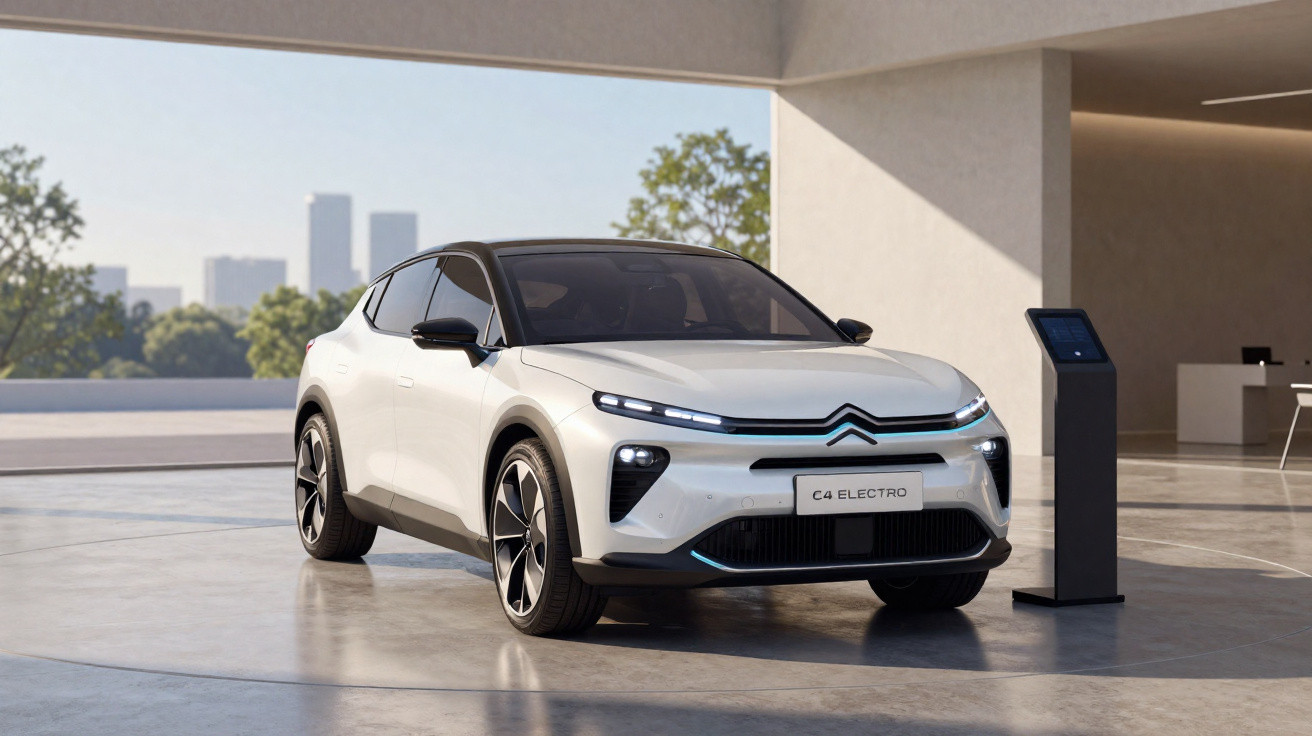
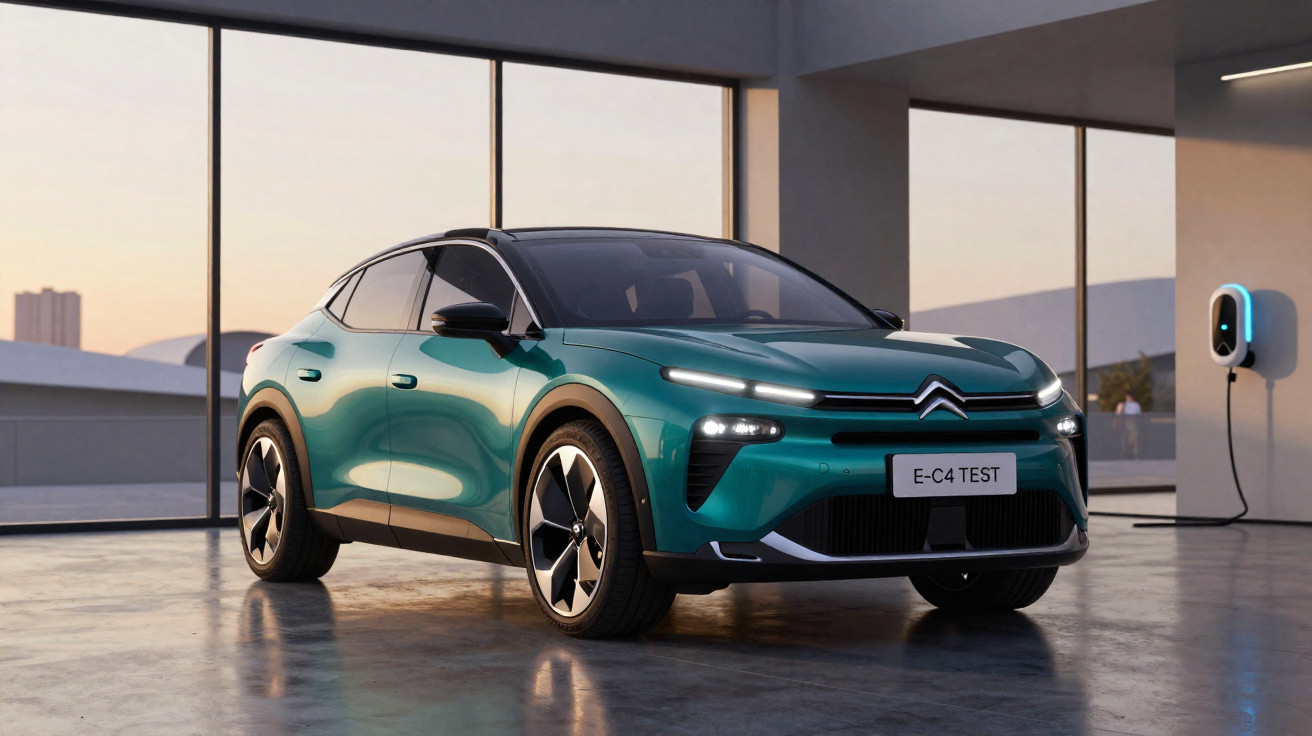
That direction can be seen, for instance, in the newly launched Citroën C4, which he thinks could account for half of the model’s European sales during this new generation.
Citroën within Stellantis
Razão Automóvel (RA) - Stellantis brings together many brands and has now grouped some that cover similar market segments and have comparable positioning. For Citroën, Fiat is a fairly similar “sister” brand… will that force you to adjust the model range?
Vincent Cobée (VC) - The more brands you have inside one group, the more distinct and believable each brand’s message needs to be. That’s an area where Citroën has been strong, and it will become even more consistent.
On the other hand, although I’ve only been with the company for a year and a half, the ability of Groupe PSA (now Stellantis) to balance the economic efficiency of synergies with clear brand differentiation is the best in this industry. And that is not merely my opinion: the figures back it up (it is the automotive group with the highest operating profit margin in the world).
If you take a Peugeot 3008, a Citroën C5 Aircross and an Opel Grandland X, you can tell they are different cars-not only in how they look, but also in the driving feel they deliver. That is the path we must continue on.
RA - Is it much harder to secure financial resources for your brand in board meetings that are now even more crowded, with each CEO trying to get the most from Stellantis Chairman Carlos Tavares?
VC - You’re asking whether I feel I get less attention because there are more people around the table asking for the same thing. Well… more internal competition is a good thing: it keeps everyone sharp and forces us to be extremely consistent about our values. Besides, Carlos Tavares is very clear that the stronger a brand’s results, the more negotiating power it is given.
Pandemic: impact and consequences
RA - The first half of 2020 was very tough for Citroën (sales fell 45%) and then there was a slight recovery towards the end of the year (ending about 25% below 2019). Could you comment on the unusual year that was 2020, and also say whether Citroën is being affected by the chip shortage the industry is facing?
VC - Saying the first half of the year was tough is a huge understatement. If there is anything positive we can take from that period, it is the resilience our Group demonstrated in a chaotic environment. And financial strength, too, because we managed to be the most profitable car manufacturer in the world. We did everything we could to protect employees, brands and customers during a deep pandemic crisis, with the added challenge that we were in the middle of the PSA–FCA merger-something that says a lot about how successful Chairman Carlos Tavares has been.
As for the shortage of electronic components, car makers were hit by some calculations made by Tier 2 and Tier 3 suppliers, who assumed global car sales would be lower than they ultimately were when they allocated production. Fortunately, we withstood the crisis better than some competitors because we were more agile, but I cannot guarantee it will not hurt us at some point.
RA - Covid-19 is reshaping car sales so significantly that will the online sales channel become the rule rather than the exception?
VC - The pandemic clearly accelerated trends that were already emerging, and digitising the purchasing journey is definitely one of them. The same had happened years earlier with banking and travel bookings, although in our case there was more resistance to moving away from an analogue industry because of test drives, touch, the feel of the cabin, and so on.
Online configurators had already reduced the number of models customers considered before making a final decision: half a dozen years ago, consumers visited six dealerships over the whole process; today, on average, they visit no more than two.
“One in every two C4s could be electric in this generation”
RA - Are you targeting a new type of customer for the Citroën C4 with this new crossover philosophy?
VC - Over the past five years, Citroën has gone through a significant repositioning thanks to a new generation of models such as the C3, the Berlingo, the C3 Aircross, the C5 Aircross, the vans, and also new services that have improved our brand’s competitiveness.
It is no secret that demand for SUV and crossover body styles is high, and we are reshaping our offer with that priority in mind. With the new C4, there is a clear step forward in design language, along with a higher driving position, a stronger focus on wellbeing and comfort on board (historically one of Citroën’s core values) and, of course, the freedom to choose between three different powertrains (petrol, Diesel and electric) on the same vehicle platform. I believe Citroën is at its best moment.
RA - You mention innovation as one of the new C4’s attributes, but technically it is very similar to other vehicles we can find in two or three other Stellantis brands…
VC - If we look at the hatchback offer (two-box body styles) in the C-segment, we find cars that are largely alike: low rooflines, sporty looks, multi-purpose characteristics.
Bringing vehicles with a higher driving position (better visibility, more ground clearance, easier access in and out) into the heart of the C-segment is, in my view, a smart solution-especially as we chose to keep an elegant body shape. In a way, it’s the best of both worlds.
RA - Do you think the electric C4 (ë-C4) will be a niche seller, or do you expect its competitive Total Cost of Ownership (TCO) to push electric sales to a larger share than might be anticipated?
VC - We are starting at around 15% of orders for the electric C4, but I am convinced that share will rise year after year until the end of the C4’s life. About a year ago, when Covid-19 had only just begun, buying an electric car was a social statement-essentially an early adopter choice.
Now things are changing (because of tougher new regulations, the rollout of charging infrastructure and the progress of technology) and electric cars are becoming increasingly mainstream. At the same time, they are dropping markedly from price points above 50 thousand euros and are beginning to demand fewer compromises from users in everyday life.
I do not know whether to call it a dream or a forecast, but I think that within five years the electric C4 sales mix could be between 30% and 50% of the model’s total sales in Europe. For that to happen, customers must be able to buy the same vehicle-with the same interior space, boot capacity, and so on-powered by electricity, as one of several different powertrains.
Readiness for electrification
RA - If this accelerated growth in demand (from 15% to 50%) for electric vehicles (EVs) happens in the short term, is Citroën industrially ready to respond?
VC - Two things will evolve during the new C4’s lifecycle that can influence the answer. Charging infrastructure and customer mindset on the one hand (because it is important to understand that 350 km of range is sufficient for 97% of use). The fact that the petrol/Diesel C4 (ICE, internal combustion engine) and the electric version are built on the same assembly line in Madrid gives us a lot of flexibility.
Today there is a sub-assembly line of around 50 metres where the electric version’s chassis is prepared, and then another similar area for the ICE version. We can shift production volume between those two areas without major investment. In other words, the capability to move from 10% to 60% EVs in total output is built into the plant, and it is something that would take only a few weeks, not years.
RA - And are your suppliers ready to respond to that sudden change, if it happens?
VC - Over this C4’s lifecycle we will certainly improve battery attributes through better cell chemistry and the battery’s overall “packaging”.
But what really matters here is that during the lifecycle of this new C4 we will move from an Asian-sourced battery to one supplied by the major joint venture we created with Total/Saft to develop and industrialise battery production in Western Europe. That will bring macroeconomic, political and social benefits, and it will also give us a better understanding of the entire industrial process. So yes-would be my answer.
Goodbye combustion? Not yet
RA - Several countries and OEMs (manufacturers) have already set timelines for the end of the internal-combustion car. When will that happen at Citroën?
VC - This is a very complex topic. The Green Deal set strict rules for 2025 and 2030, and that will affect the production and sales mix through to the end of this decade.
But if an average CO₂ emissions target of 50 g/km is set for 2030, one thing is obvious: 50 is not zero. That means there will still be some space for combustion engines as we enter the next decade, with a blend of EVs, plug-in hybrids, hybrids and mild hybrids. Most likely, by 2030 there will be no pure combustion engines without any level of electrification.
There is another dimension as well, driven by what cities may impose on emissions-banning Diesel engines or even petrol engines between 2030 and 2040. What we say at Citroën today is that any new model we launch now will have an electrified version available on day one.
After that, we will adjust our portfolio to what needs prove to be, with charging infrastructure as the biggest “bottleneck”: when an EV becomes the household’s only car, there must be a widely available and reliable network-even during peak demand-and there must be a profitable business model for energy providers, which is a problem that is still far from solved…
When will Citroën build only electric cars? That is the million-dollar question. From an industrial standpoint, we will be ready to build only electric cars in 2025, and we are supporting that shift with our current and future line-up. But it will not happen that soon.
RA - France is probably the country where the collapse of Diesel is most visible and, although its death has been announced several times, there are signs it may last longer than expected…
VC - The drop in Diesel sales is a factual reality: its market share has gone from 50% to 35% over the last three years in Western Europe. And when we assess what will be required for Diesel engines to comply with Euro7, we see it will cost more to inject all the purification technology than to build an electric car. If it were a patient in hospital, we would say the prognosis is very guarded.
Solid-state batteries, realistically…
RA - Solid-state batteries, expected in the medium-term future, promise to change the “game” with more range, faster charging and lower costs. Does it make sense to invest heavily in lithium-ion chemistry and then throw that investment away?
VC - During my years as Mitsubishi’s Planning Director (2017-19), I held many meetings and spent a lot of time trying to understand the right date for a genuine solid-state battery breakthrough. In 2018, the most optimistic estimate was 2025; now, in 2021, our target is 2028-30. That means in three years we lost four years.
This is a Darwinian path, which means it is great to dream about what life will look like in 10 years, but it is also important not to die along the way. I have no doubt solid-state batteries will deliver benefits in range, weight and packaging, but I do not believe they will be a reality during the lifecycle of this new ë-C4 that we have just launched. Before that, the billions invested in lithium-ion chemistry will be depreciated over 10 or 15 years through current and near- to mid-term EV sales in order to make the market price-competitive.
RA - So is it ultimately convenient for the car industry that next-generation battery chemistry takes a long time to arrive?
VC - Not at all. Conspiracy theories of that kind do not make sense to me because battery development is mainly in the hands of our suppliers. And if there were a cartel protecting lithium-ion batteries by artificially extending that chemistry’s life, there would always be a Nio or a Byton (editor’s note: Chinese start-ups aiming to revolutionise the electric-car market) appearing out of nowhere with that technological innovation.
On the other hand, I believe that when lithium-ion batteries start to be phased out, the cost per kWh will be a little below 100 dollars and solid-state will probably cost around 90 dollars/kWh. So there will be no revolution in cost-only evolution.
Retro was not the chosen path
RA - Volkswagen plans to reinterpret the legendary “camper van”, and Renault recently showed an interesting proposal to revive the R5; both are electric-vehicle projects. Citroën also has the Ami, which brings back some 2 CV genes and, conceptually, takes something from the vintage Ami. Is there an EV-retro trend that will grow further at Citroën?
VC - Over the last 25 years we have seen various neo-retro design exercises, but not really at Citroën. What we are doing with the Ami is to be as creative as possible while staying true to the brand’s philosophy.
The beauty of this brand is that it has a very rich heritage, and we must be very careful in this huge mission of writing some of its pages. It is the most collected brand in the world because it had moments of genius that changed society. It would have been easy to use the 2 CV name for the new Ami (even the way the windows open is quite similar), but we chose not to.
We brought back the name Ami (“friend” in French) because it fits our welcoming spirit and humanitarian dimension. We draw inspiration from our past, but we try to innovate at the same time: it is not normal that, for future urban mobility, people can only choose between public transport and an electric vehicle that costs more than 50 000 euros. People should have the right to individual mobility at an affordable price, at any age.
And that is the Ami’s proposal-not an old-fashioned memory on wheels for no reason other than nostalgia.
RA - Can you make the Ami profitable from the start?
VC - We are trying to make sure the Ami is not costing the company money. The car has become a brand icon and has allowed us to engage with potential customers we had never reached before. It is an incredible vehicle-like not many we have had in the past.
Comments
No comments yet. Be the first to comment!
Leave a Comment