
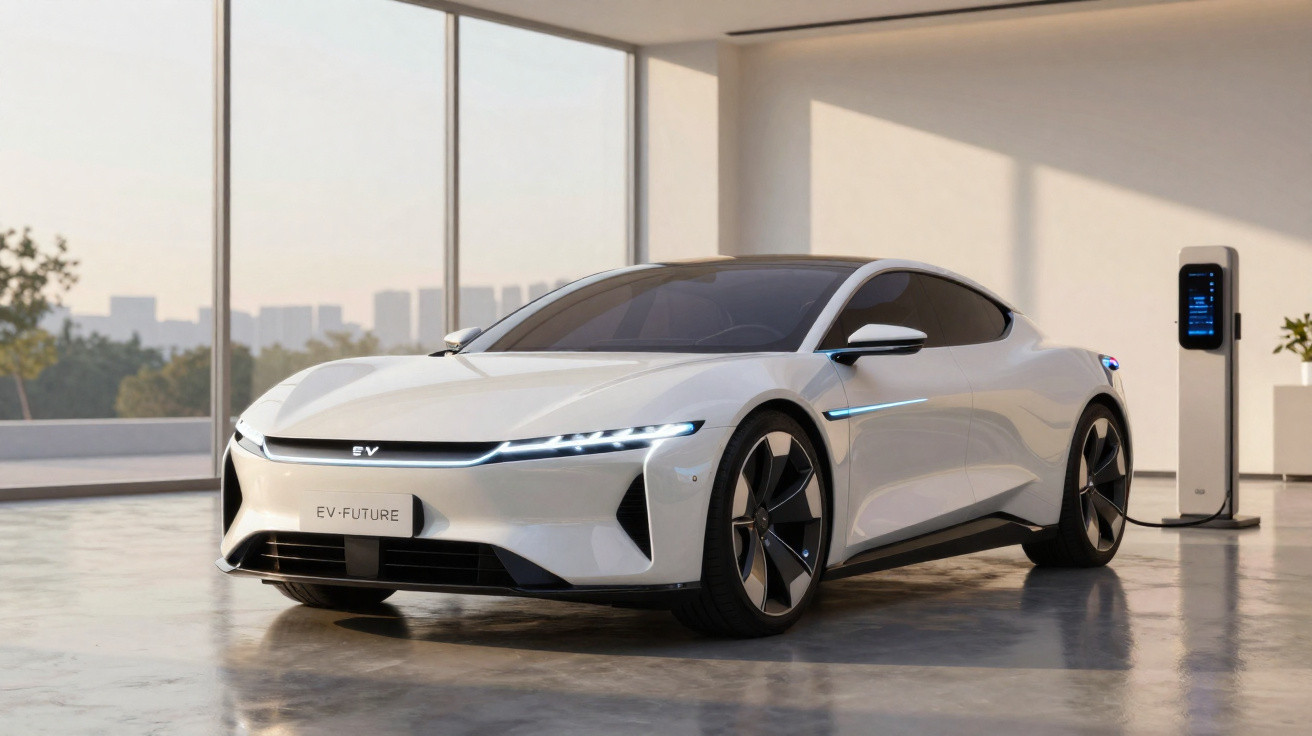
Electric cars are frequently portrayed as a high-stakes technological contest, yet a fresh study points to a more straightforward brake on progress: price.
The researchers report that a cost reduction of only 20 percent could speed up uptake significantly around the world, making electric vehicles the leading option in many markets after 2035.
Rather than blaming reluctance among drivers, the results redirect attention to policy design, charging provision and day-to-day affordability as the main forces shaping the transition.
Costs are shaping EV growth
Across the global passenger-car market, the turning point tended to arrive when electric vehicles edged close enough to the prices of conventional cars for purchasers to make the switch.
Shuai Pan, formerly a postdoctoral researcher at Cornell University, examined this cost trajectory across major regions. The analysis indicates that public subsidies and economies of scale in manufacturing can be decisive in bringing prices down.
The fastest momentum appeared in China, Europe and the United States, where supportive rules, large-scale production and established charging networks have already given electric cars an early advantage.
In lower-income markets, the same price reductions ran into weaker charging coverage and lower purchasing power - a constraint that helps explain why progress remains starkly uneven between regions.
EV rollout isn’t equal
Richer economies tended to move first because they put in place the standards, incentives and charging infrastructure that made buying an electric car feel routine.
China, Europe and the United States now lead sales, as firm targets and manufacturing scale strengthen one another over time. In these places, early spending created a self-reinforcing momentum that continues to gather pace.
In many other areas, conditions are far less favourable. India, South-East Asia and West Africa still contend with sparser charging networks, less robust electricity systems and markedly lower consumer purchasing power.
That mix makes the shift difficult to begin and harder still to maintain. High upfront electric-vehicle prices collide with limited infrastructure, while finance options and local production capacity often trail behind.
Backing from wealthier markets could narrow the gap before it grows. Some countries may even leapfrog straight to cleaner transport without first building extensive petrol-based systems - but only if factories, finance and technical assistance arrive together.
Without that coordination, electric mobility risks appearing global in headline figures while the practical benefits remain concentrated in higher-income regions.
Price still stands in the way
For most people considering an electric vehicle, cost remains the deciding factor. Much of the hurdle sits outside fuel savings, within what researchers describe as non-energy costs - the purchase price, servicing and insurance. Of these, the upfront price matters most.
“Cost remains the most powerful lever,” said Pan. Policies can bring electric vehicle costs down through purchase incentives, larger factory runs, and designs that use fewer materials per unit.
As prices drop, adoption can accelerate quickly enough to change national fuel demand - not merely showroom trends.
However, cost is not the only variable. Even motivated buyers can hesitate if charging availability feels uncertain, particularly in places where public charging is still thin on the ground.
Access to charging is still limited
Meeting rising sales requires charging networks to expand on a vast scale. In the United States alone, projections suggest somewhere between 13 and 30 million chargers may be required by 2030.
The associated investment could be as high as US$97 billion, a level that helps illustrate why lower-income regions find it difficult to keep up.
Europe has started to formalise this expansion, with rules requiring public rapid-charging sites every 60 km along major routes and hydrogen stations every 200 km.
Infrastructure does more than support current drivers - it also shapes future demand. Dependable access lowers the perceived risk of switching, turning an electric car from a gamble into a practical purchase.
Where that access is lacking, uptake slows regardless of how strong the technology is or how supportive policy might be.
Cleaner cars, complicated emissions
As electric vehicles take a larger share of the market, their emissions impact becomes easier to see - and more nuanced.
In the United States, Europe and China, growing EV adoption has already reduced petrol consumption and tailpipe carbon emissions. The quickest improvements have come where strong policy backing was paired with early investment in infrastructure.
In other regions, expanding populations and rising travel demand have continued to push emissions up, even as electric vehicles begin to spread.
Meanwhile, EVs add to electricity demand - though not as dramatically as some critics have suggested.
In a high-adoption U.S. scenario, electric cars account for about 13.5 percent of total electricity use, which researchers describe as manageable. Even so, the transition creates a fresh challenge.
“While EVs reduce emissions from transportation, they can shift emissions to other sectors, particularly electricity generation and hydrogen production, if those systems remain reliant on fossil fuels,” said H. Oliver Gao, a civil and environmental engineering professor at Cornell University.
If electricity is not cleaned up, part of the climate benefit is simply pushed upstream. That makes power generation - not only transport - the next key battleground.
Hydrogen stays dirty
Hydrogen-powered vehicles face a different constraint. Although they have no tailpipe emissions, today’s hydrogen supply chain still relies heavily on fossil fuels.
As a result, rising demand can unintentionally entrench the very emissions the technology is meant to cut.
The cleaner alternative is green hydrogen, created by splitting water using low-carbon electricity - but expanding this route remains expensive and technically challenging.
“Scaling up low-carbon, green hydrogen will be critical to realizing the full emissions benefits of fuel cell vehicles,” Gao said.
In the United States, current roadmaps prioritise high-impact applications, cost reductions and regional production networks. Even with that focus, progress remains difficult, underlining how much of the work sits beyond the vehicle itself.
The EV transition still faces limits
This model does not capture every climate cost, because battery minerals, manufacturing impacts and end-of-life handling largely sit outside its boundaries.
It also frames its high-adoption futures as tests of policy rather than firm forecasts - particularly for hydrogen vehicles, which still face weak market conditions.
Real-world pressures could slow progress before 2030. Trade disputes, cheaper oil and changing subsidy regimes could all delay uptake, even if the longer-term economics keep improving.
These caveats do not overturn the central message, but they warn against assuming electrification will happen automatically or evenly.
The broader takeaway is the need for coordination. Electric vehicles deliver the largest climate benefit when cheaper cars, cleaner electricity, stronger charging networks and targeted support move forward together.
That combination makes electric mobility a credible climate strategy - while also exposing the remaining gaps in cost, infrastructure and equity that will determine how quickly it spreads.


Comments
No comments yet. Be the first to comment!
Leave a Comment