
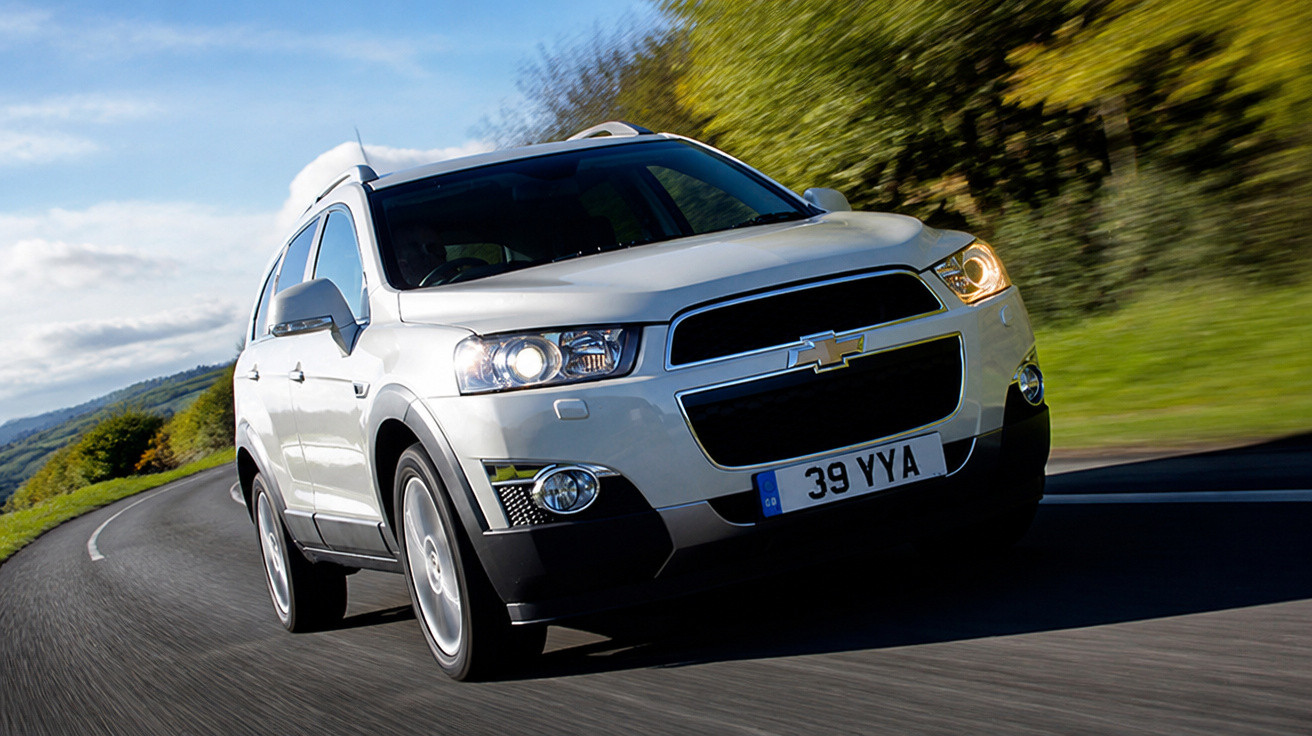
Chevrolet has always had a clear idea of the people it wants to attract: buyers who expect a lot of car for their cash. That is exactly why the first generation Captiva found a willing audience. It was a sizeable SUV - the seven-seat kind - with a keen price tag and styling that was easy enough on the eye. It was never short of imperfections and it certainly didn’t shine as a class leader in any single area, but it did the job well enough and shifted in decent numbers. In fact, it moved more units than its close relation, Vauxhall’s Antara.
A Chevrolet Captiva built around better value
The latest Captiva is not merely improved at the margins; it has taken a sizeable step forward. The biggest change is under the bonnet, where a new 2.2-litre VCDi takes over from the old 148bhp 2.0-litre diesel. Chevrolet offers it in two outputs - 161bhp or 181bhp - and our drive was in the stronger version.
In this higher tune, it pairs that healthy headline figure with 399Nm of torque. Performance improves accordingly: 0–97 km/h now takes 9.3secs, which is close to two seconds quicker than before. It is also cleaner and more economical, with a combined figure of 42.8mpg (6.6L/100km) sitting right where you would expect it to in this class.
2.2-litre VCDi refinement and the new six-speed gearboxes
The new diesel is also simply nicer to live with. The previous unit never won us over with its clatter and roar, whereas this one runs more smoothly and, as you would expect from a diesel, pulls well from low revs.
You do not need to work it hard, either. Both six-speed manual and six-speed automatic gearboxes replace the old five-speed transmissions, so it is content to amble along in the 2,000–3,000rpm range without complaint.
Suspension changes, safety kit, and the Captiva cabin
Chevrolet has also reworked the suspension substantially, fitting stiffer springs intended to tighten up the Captiva’s behaviour on the road. It does help, but there is a downside: the ride is firmer than it ought to be for a car in this category, and the overall driving experience remains more dutiful than engaging.
Safety, however, is not a concern. The Captiva comes with an alphabet soup of driver aids as standard: TCS, BAS, ESC and HAS - traction control, brake assist, stability control and hill-start assist. For many buyers in this market, that reassuring list of abbreviations will matter more than whether the handling is, well, slightly sharper.
There is also plenty to like visually. A huge new grille, a reshaped bonnet and bigger wheels give the Captiva a smart, confident look. It is a pity the interior still feels tainted by flimsy plastics, but storage is respectable, the seats fold away easily, and standard equipment is generous, including Bluetooth and an iPod connection.
Price and rivals: LTZ vs Santa Fe, Freelander and X3
Even so, the Captiva’s traditional appeal has always been value - and this is where things become less clear-cut. The range-topping LTZ we drove costs £30,295. That puts it in the same money as a Freelander and an X3.
Its most natural rival, though, is arguably the Hyundai Santa Fe, and a comparable top-spec version of that comes in at £24,630 - £5,665 less. Perhaps Chevrolet doesn’t understand its audience quite as well as it once did…
Comments
No comments yet. Be the first to comment!
Leave a Comment