
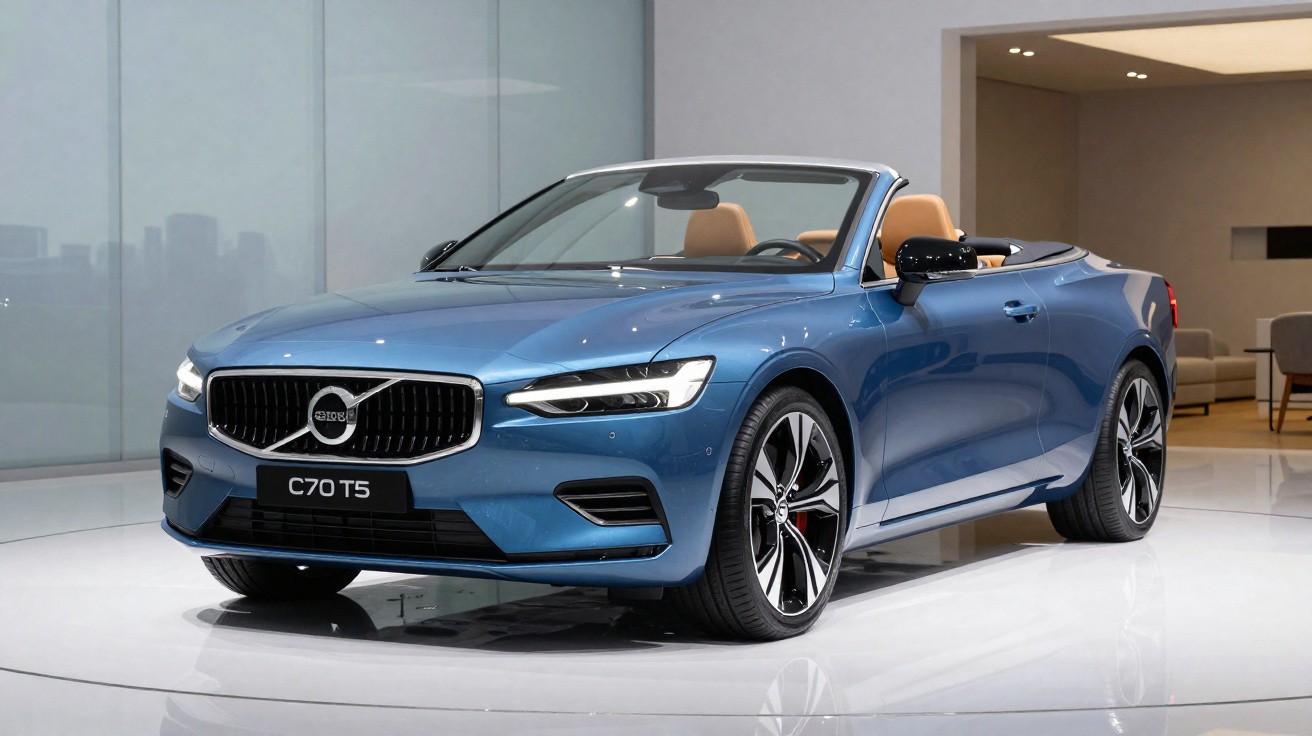
Where the Volvo C70 cabrio T5 sits
The Volvo C70 has been on the scene for years, and you can no longer buy it with a fixed roof. The soft-top version carries on, though, and despite arriving after the coupé it has still been around since 1999. With rivals such as the upcoming CLK and A4 convertibles, the open-top C70 has a tough job on its hands if it is to stay competitive. Safety, styling and performance are traditional Volvo strengths, but they are also headline features for its German competitors - so what, exactly, might persuade buyers to choose the Volvo instead?
Volvo C70 cabrio T5: on the road
As you would hope, it delivers the familiar Volvo virtues: solid construction, very good ergonomics and - in the tested T5 form - plenty of shove. In fact, there can be too much shove, because although Volvo’s turbocharged petrol cars are great fun in a straight line, they often fall apart (sometimes quite literally) when conditions are wet or when you need to deploy the power quickly.
Our test car had barely more than delivery mileage, so it hardly felt reasonable to thrash it - and most owners probably will not, either. Even with the odometer only just into three figures, the engine felt keen, but the chassis struggles with sudden surges of power, particularly once the road starts to twist. On the plus side, the brakes have real bite and the automatic gearbox is impressively smooth.
Cabin, roof operation and day-to-day compromises
Strip away the badges inside and you would immediately know you were in a Volvo - not because it is particularly exciting to look at, but because it is straightforward and easy to use. The disappointment is how much it fidgets over poor surfaces: the scuttle shake is among the worst I have experienced in any convertible. At least, among anything built in roughly the last 20 years.
Raising or lowering the hood is as easy as it gets, with everything handled for you at the press of a button. There are no latches to wrestle with (not in the literal sense, anyway), and with the roof either up or down the noise levels remain perfectly acceptable. At motorway speeds you will want the side windows raised, but that is true of nearly every convertible, so it is hardly a hardship.
Although the roof mechanism is neatly executed, a hard-top alternative is always welcome for extra safety, security and comfort during our long, bleak winters. Volvo does not provide that option, leaving you with a fabric roof that gives very poor rear and rear three-quarter visibility when it is raised - made worse by a rear window that is simply too small.
The boot is also on the tight side, with space taken up by the folded roof. That is to be expected, but some rivals now use systems that recover more luggage room with the roof up - the Volvo does not. The cabin is more accommodating: carrying four people is feasible, provided they are not all six-footers. The seats are genuinely comfortable, though the two-tone leather in our car felt of dubious taste, and the heated seats could really do with an intermediate setting if you do not want to scorch your backside.
With a wave of brand-new prestige convertibles due from almost every maker in this part of the market, it is difficult to see the Volvo maintaining its position for much longer. Taken on its own it is far from a bad car, but the breadth of competition it is about to face will be a very persuasive challenge.
Richard Dredge
Comments
No comments yet. Be the first to comment!
Leave a Comment