
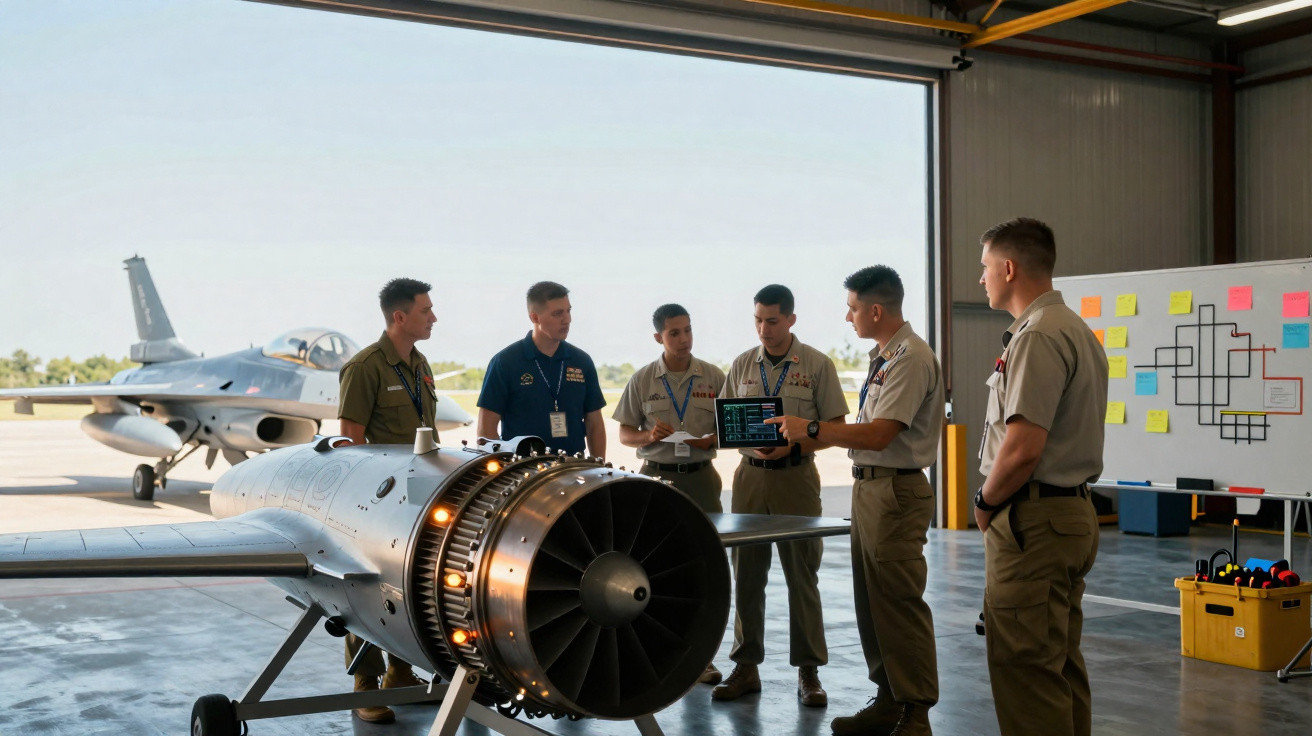
The United States Department of War (DoW) has issued a Request for Information (RFI) aimed at identifying qualified companies able to take part in a future tender for the production and sustainment of engines used by the United States Air Force (USAF) fighter fleet and aircraft operated by international partners.
What the RFI is seeking
The document, titled “Fighter Engine Re-competition: Advanced Propulsion, Technology Insertion, and Industrial Base Expansion”, is intended to gather industry input on innovative propulsion approaches, the insertion of new technologies, and alternatives that can expand the industrial capacity associated with engines fitted to platforms such as the F-15EX and the F-16 Falcon.
The US Government emphasised that this RFI is not a formal request for proposals and should not be interpreted as a promise of any future contract. Instead, it is strictly for market research, information gathering, and the identification of potential suppliers.
Demand outlook and industrial-base pressures
According to the RFI, the USAF is beginning a multi-year engine acquisition effort for its fighter fleet, with projected demand exceeding 180 engines per year through financial year 2034.
This initiative comes against wider concerns over the current industrial base-issues that are also severely affecting the civil aviation market. The sector is grappling with production delays, quality-control problems, and difficulties tied to the obsolescence of critical components, including reduced availability of manufacturers and suppliers for certain materials.
In response, the Pentagon is looking to pursue a new way of acquiring and maintaining engines: moving away from sole reliance on traditional supply models and encouraging industry-led technological evolution. The intent is to deliver greater manufacturing capacity, reinforce the supply chain, and improve the operational availability of combat aircraft.
The five pillars of the future competition
The forthcoming competition is structured around five primary pillars: performance, cost, reliability, support, and production capacity.
On performance, the aim is to procure an engine that increases fighters’ operational capability, raising aircraft availability rates while maintaining financial responsibility.
On cost, the US Government wants to drive down total life-cycle expenditure, prioritising options that ease supply-chain challenges, cut the need for complex maintenance, and deliver higher operational efficiency.
Reliability is also treated as fundamental, with a focus on engines that improve fleet readiness, reduce the workload on maintenance teams, and ensure more aircraft are available for missions when required.
The approach additionally calls for easier maintenance and a more sustainable logistics chain, shortening downtime and ensuring the continuous provision of parts and technical support.
Finally, prospective suppliers will be expected to show they can rapidly expand output during periods of increased demand-preventing industrial bottlenecks and sustaining supply for USAF aircraft programmes and foreign customers.
Engines currently in service
While the RFI does not identify specific engine models, the F-15 Eagle I/II and the F-16 Falcon currently operate with the same powerplants developed by General Electric (F110) and Pratt & Whitney (F100). The planned competition could create room for new technological solutions, with engines that are more efficient, more reliable, and more economical to meet the needs of US combat aviation over the coming decades. The RFI is available via this link.





Comments
No comments yet. Be the first to comment!
Leave a Comment