
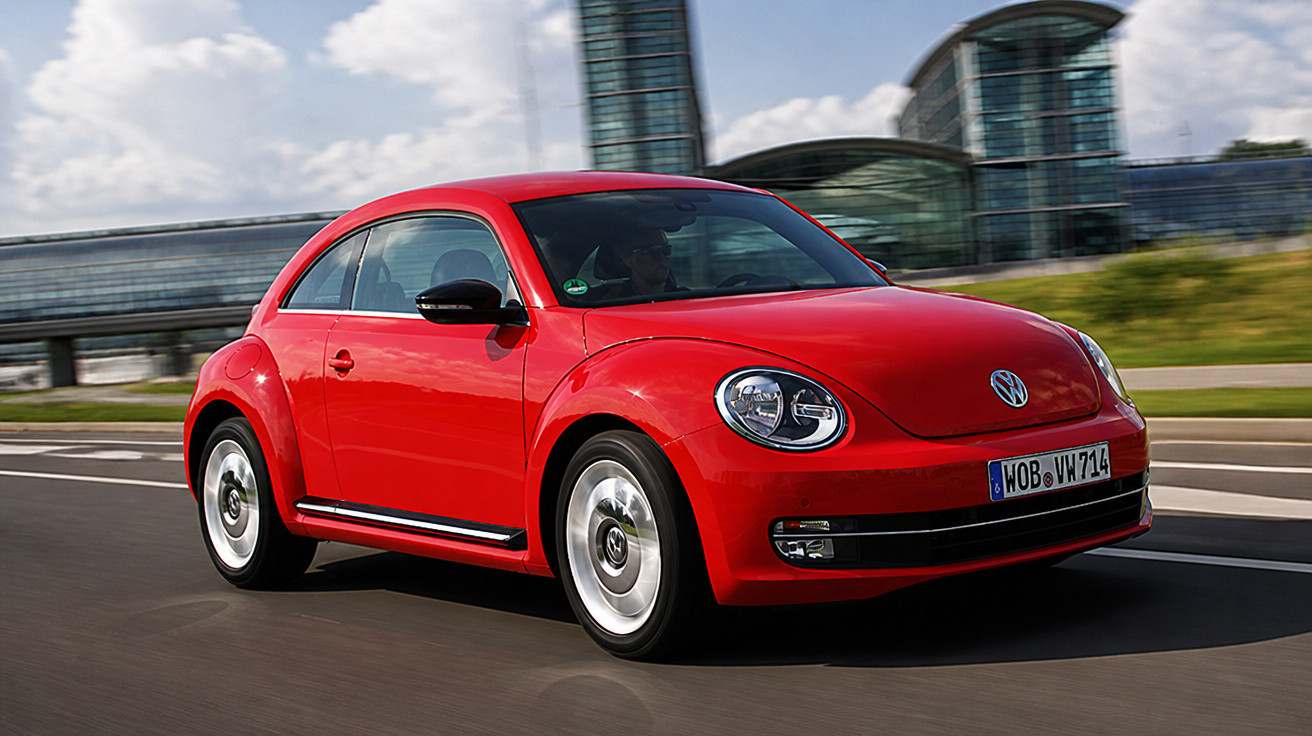
Meet the all-new Volkswagen Beetle.
Before we go any further, a quick naming detour. This is the new Beetle, but the previous model was also marketed as the New Beetle, and “New New Beetle” was never going to fly. Volkswagen’s solution is to call this one The Beetle. And the original? That remains simply Beetle. Right then.
Volkswagen can’t ignore the awkward truth that the outgoing Beetle hangs over this car. It knows many enthusiasts (ourselves included) viewed the last New Beetle as an overcooked piece of retro kitsch: all bubbles and flower vases, with not much depth beneath the styling. That helps explain why, despite shifting over a million cars in 13 years, it never earned much affection. We were even played a film covering 73 years of Beetle history, and the most recent car appeared for only a single second.
Volkswagen Beetle: what VW is trying to fix
VW’s ambition this time is clear: make a sportier Beetle, and back up the still-cute silhouette with proper engineering. The engine line-up is current and broad, ranging from the excellent 1.2-litre TSI through a 1.6-litre diesel, up to the model we drove: the £25,000 2.0-litre TFSI.
Underneath, much of the hardware is familiar from the Golf. Higher-spec Beetles use a Ford Focus-esque multi-link rear suspension arrangement and an electronic differential for the driven axle, while cheaper versions make do with a torsion beam at the rear.
Styling changes and personalisation
The tougher stance isn’t just talk: the shape has been tightened up too. The previous New Beetle’s triple-bubble look has been binned. This car is wider (by 84mm) and longer (by 152mm), yet it’s also lower (by 12mm), giving it a noticeably squatter posture. Volkswagen has also pressed the roofline down and set the windscreen more upright. That not only echoes the original Beetle more convincingly, it also improves rear headroom by a worthwhile margin.
Like a Mini or Fiat 500, it offers plenty of individualisation, including the ability for buyers to ‘name' their own car-meaning you can pick which badge sits on the rear. In the UK, that choice is limited to Beetle, Volkswagen or Turbo, which is about as distinctive as a farmer owning a Labrador. If you want something cooler, you’ll need to lean on your dealer to source the Japanese script. Volkswagen told us it’s technically doable, and those bold Japanese characters look far better than the standard UK options.
Cabin: retro cues, mixed execution
Inside, Volkswagen has sprinkled in some retro references. The car we drove was the flagship ‘Sport', so it came with carbon-fibre-effect trim across the dashboard and neat piano-black plastic along the tops of the doors. Choose ‘Beetle' or ‘Design' trim and you’ll get body-coloured interior plastics instead, which look just as polished. The steering wheel is another highlight: pleasingly thin, in keeping with a car nodding back to the era of wooden-rimmed wheels.
That said, the interior still falls short in several ways. The modern Volkswagen switchgear clashes with the retro elements, and a few nostalgic features are simply poor-most notably the flip-up glovebox. Because the airbag sits behind it, the compartment is extremely shallow, making it close to pointless. Worse, it doesn’t feel particularly robust. More generally, there are too many patches of cheap, hard plastic; anyone expecting typical Volkswagen solidity should probably be looking at a Golf instead.
They should also stick with the Golf if comfort matters. Even on the standard suspension (the optional sports set-up sits 15mm lower and is firmer again), the Beetle fidgeted and skittered over bumps far more than it ought to. Despite sharing the same multi-link rear layout, it didn’t deliver the Golf’s sense of sophistication.
The dynamic picture improves once you start pushing on. In terms of handling, the Beetle has finally caught up with the Golf. It no longer feels like you’re piloting a big blancmange, helped by a wider track both front and rear, which boosts grip and sharpens the initial turn-in. It’s definitely keener than before-still not a hot hatch, and no more capable than a similarly priced Golf, but at least it now responds with some enthusiasm.
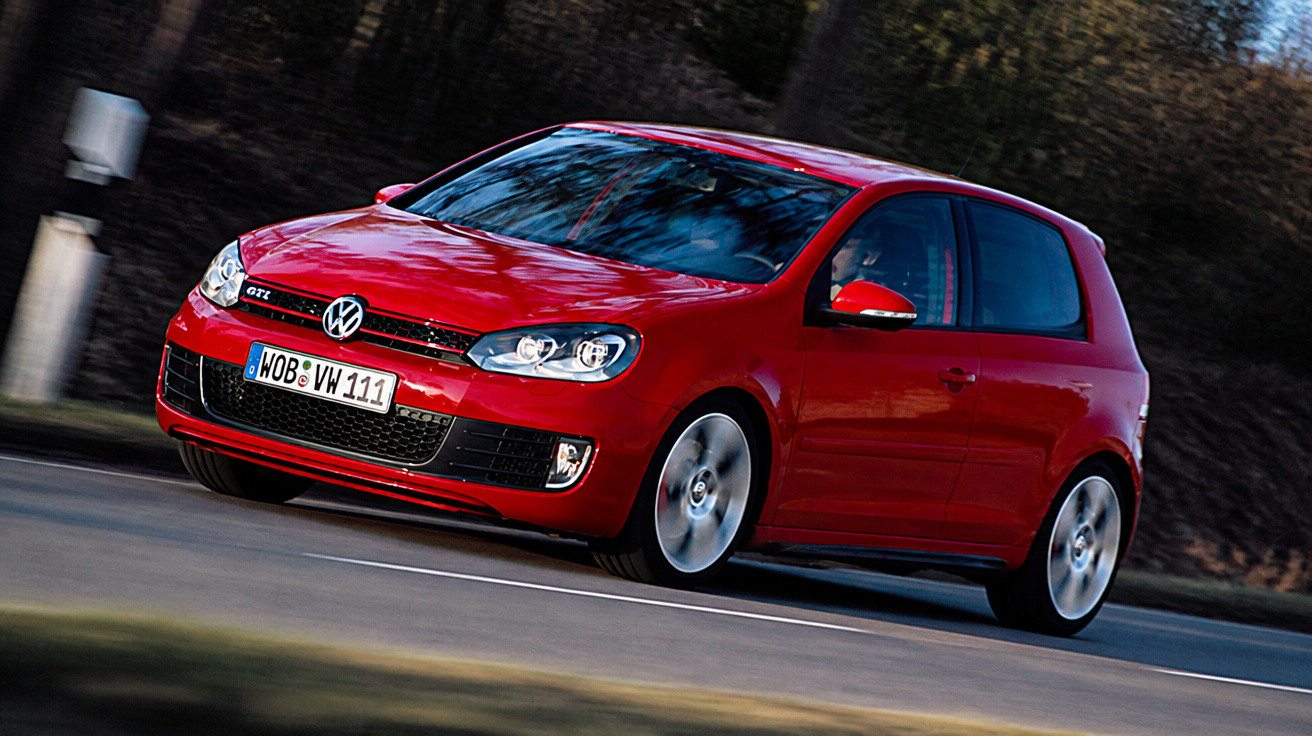
The step forward over the last generation is huge. This Beetle comes across as more sporting and it’s genuinely enjoyable to drive-certainly more entertaining than most Beetle owners are likely to demand. We tried the range-topping 2.0-litre TFSI, shared with the Golf GTI, and it brings plenty of shove. Volkswagen has detuned it for this application-presumably to avoid treading on the halo GTI’s toes-so output here is 197bhp and 206lb ft. Even so, the 0-62mph time is 7.5 seconds (just 0.6 seconds adrift of the GTI) and, paired with the DSG gearbox, you stay right in the turbo’s sweet spot.
One strange omission: the DSG option doesn’t include steering-wheel paddles, so manual shifts are handled via the gearlever, which feels oddly old-fashioned in this context. Volkswagen will also offer a selection of smaller engines, and we suspect they may end up being the smartest choices, balancing performance and price more convincingly.
In the end, The Beetle is plainly an improvement over New Beetle-though that’s hardly a challenge, rather like claiming petrol is better than steam. Where buying the old car could fairly be seen as madness, this one can make a persuasive case. It’s simply more convincing at the cheaper end of the range. At £25,000 the opposition becomes very tough, including from elsewhere within the VW Group itself. As with any Beetle, you’ll choose it for the way it makes you feel, not because it represents the best value for money.
Comments
No comments yet. Be the first to comment!
Leave a Comment