
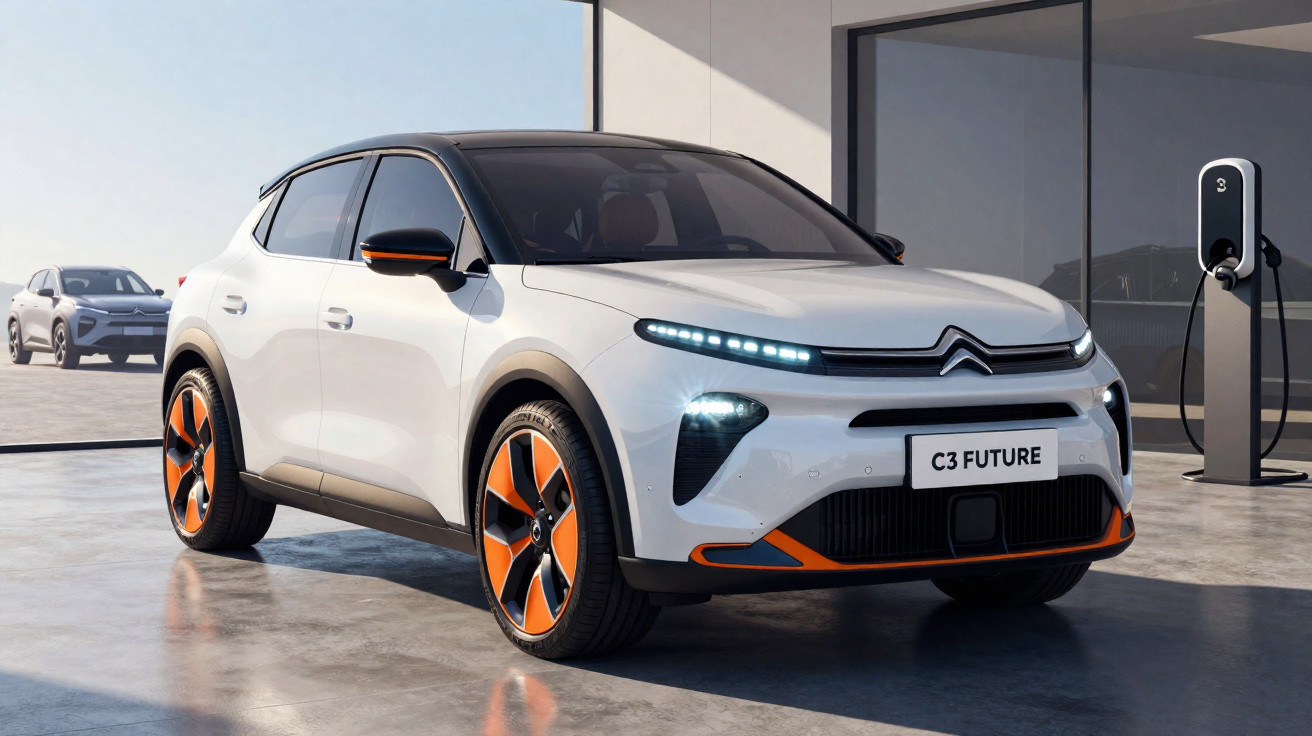
Citroën’s origins have long been tied to the ideas of innovation and accessibility-just think of landmark cars such as the original DS (“frogmouth”) and the 2CV. With a new Chief Executive having taken up the role in February, Thierry Koskas, the French brand wants to redefine its place in the market by leaning back into some of those founding principles.
Citroën refocuses on innovation and accessibility
That shift helps explain why Citroën’s latest models-including the Citroën Ami, the C3 and C3 Aircross, and even the all-electric ë-C3-have been developed to be more comfortable, more practical and, above all, more affordable.
Koskas says the brand is no longer “afraid” of being viewed as a direct rival to Dacia. It is worth recalling that the Romanian manufacturer, well known for keen pricing, ranked among Europe’s 10 best-selling brands in 2023 (up 14.6% compared with 2022).
“We are a popular brand, and that means making cars that are more affordable and simpler, because there really is a need to do so. We have no problem saying that the C3 will compete with Dacia.”
Thierry Koskas, CEO Citroën
Citroën C3 targets the Dacia Sandero
In particular, Koskas points to the Dacia Sandero. After all, it was the second best-selling car in Europe in 2023 and the outright leader among superminis, with 235 893 units (source: Dataforce). Even at the end of its life cycle, the previous-generation Citroën C3 still managed 146 008 units.
Against that backdrop, the new Citroën C3 (petrol and electric) faces a sizeable task if it is to unseat the Sandero. In Portugal, Citroën’s ambition goes further still: the expectation is that the electric ë-C3 will outsell the petrol-powered C3.
The figures behind a growing brand
Since the end of last year, Citroën has already lifted its share of the European market from 3.3% to 4% in the first quarter of this year. The target is to reach a 5% share in Europe (including countries in Eurasia) by 2025.
In April alone, Citroën recorded an 18.5% sales increase (EU+EFTA+UK) compared with the same month last year, according to ACEA data. This came in a market that grew by 12% over the same period.
As a result, Citroën was Stellantis’s second best-selling brand in April, delivering 32 862 vehicles-behind only Peugeot on 50 801 units. That April figure also outpaced Dacia, for example, which last month grew by 12.6%.
Within this context, Citroën’s plans include expanding the availability of the 100% electric versions of the C3 and the C3 Aircross, with the latter only due to go on sale in Portugal this summer. Until then, here is what is already known about the model.
Segment A is not the goal
Unlike some other manufacturers-such as Renault or Volkswagen-Citroën intends to steer clear of the city-car class (Segment A) because of the built-in profitability challenges.
“A city car would have the same production cost as a supermini (Segment B) but we would have to sell it for less.”
Thierry Koskas, CEO Citroën
Following the launch of the electric C3 Aircross, the double chevron brand’s broader “offensive” also includes introducing the second generation of the C5 Aircross and refreshing the C4 and C4 X. In addition, for ranges such as the Berlingo, petrol and Diesel engines will return.
Source: Automotive News

Comments
No comments yet. Be the first to comment!
Leave a Comment