
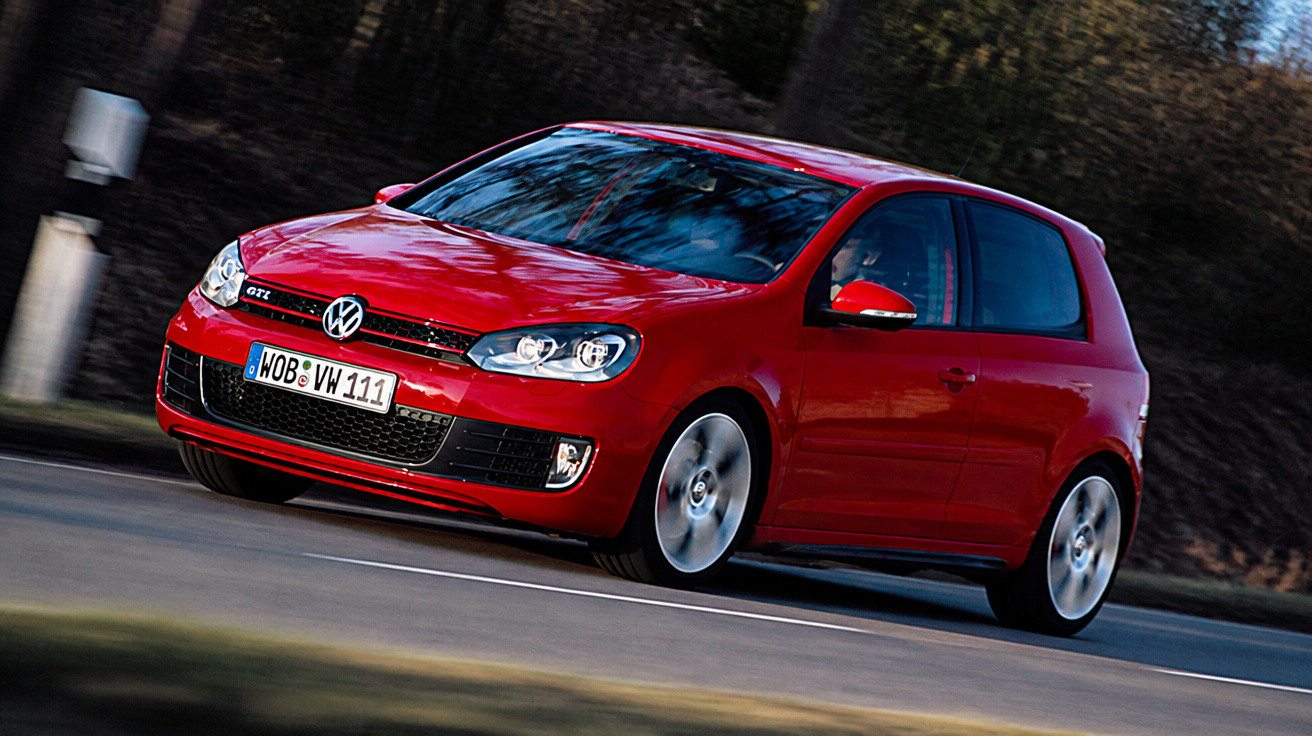
Trying to open a test drive of the new Volkswagen Golf GTI without mentioning the economy feels almost impossible. Annoying, perhaps - but there’s a solid reason it matters here. In fact, it’s time for a proposal. More than that: a fairly brazen claim that the Mark VI Golf GTI is the best car in the world you can buy right now.
"The best" is, of course, an intensely subjective label - but a glance at car sales, interest rates, and Gordon Brown’s increasingly furrowed forehead is enough to confirm that, for the moment, we’re all a bit shafted. And that’s exactly why the Golf GTI suddenly stacks up so convincingly.
Not long ago, the archetype was easy to picture: a mid-thirties trader, a wife who’s pregnant, and a Victorian semi in South West London financed by a maxi-mortgage. He’d happily sling a hefty deposit at a brand-new Porsche 911 Carrera S (black on black), then buy his other half a simple runabout - perhaps a 1.4-litre Volkswagen Polo. That’s not the world we’re in now. These days, the same bloke - assuming he’s still employed - is sat in a hushed, hollow office, fretting about what state school might do to his progeny, and whether they’ll even make it through their early years living under Waterloo Bridge. Or something much like it.
Two-car households are turning into one-car households. And that tends to mean just one thing: Porsches are becoming hot hatches. And for a Porsche owner, the only hot hatch that really passes muster is a Golf GTI.
Why the Volkswagen Golf GTI makes sense right now
This is a car that covers every base - and, more to the point, it covers them better than anything else that tries to do everything, or even just a few of those things. "It" - or, in this case, "it all" - means performance, practicality, tractability, affordability, credibility, reliability, safety, quality, subtlety. And there are surely plenty more "-ities" where it outperforms the competition.
The Mark VI Golf GTI is effectively what you’d get if, in ideological terms, that Porsche and that Polo were put through some sort of stem-cell experiment intended to cure the modern problem of fast cars becoming unaffordable. It’s a hybrid love-child of extravagance and restraint - and, viewed through that lens, it’s basically spot-on.
From Mk V to Mk 6: a subtle step forward in the GTI’s 33rd year
The current moment was set in motion five years ago with the launch of the Mk V GTI, when the motoring world abruptly paid attention. The dreary era of blobby, rolly-polly shopping trolleys with a token turbo was over, replaced by something thoroughly modern yet clearly in conversation with the glory days - back when the first Golf GTI arrived and rewrote the rules of performance car ownership.
Like its forebear, the Mk V was light on its feet, keen, properly rapid, and still relatively attainable. In one clean sweep, the hot hatch was taken away from oily seventeen-year-olds and returned to where it belonged: to the Yuppie - or his new millennial equivalent.
This latest instalment, arriving in what’s now the GTI’s 33rd year, is best understood as an understated evolution of the Mk V - a car that, even now, doesn’t really show any signs of ageing. The revisions do improve the package, but crucially they don’t dilute the elements that made the previous model such a hit.
Mechanically, the engine has been made more compact and is 3kg lighter. In exchange, it’s also cleaner, more fuel-efficient, 10bhp stronger, and it reaches peak torque 100 rpm sooner. None of those changes sound dramatic on their own, but together they sharpen the overall impression. Output is now 207bhp, which gets the GTI to 62mph in 7.2 seconds and on to 148mph - numbers that are, in truth, almost a match for the outgoing car.
Design updates: modern aggression without losing the GTI identity
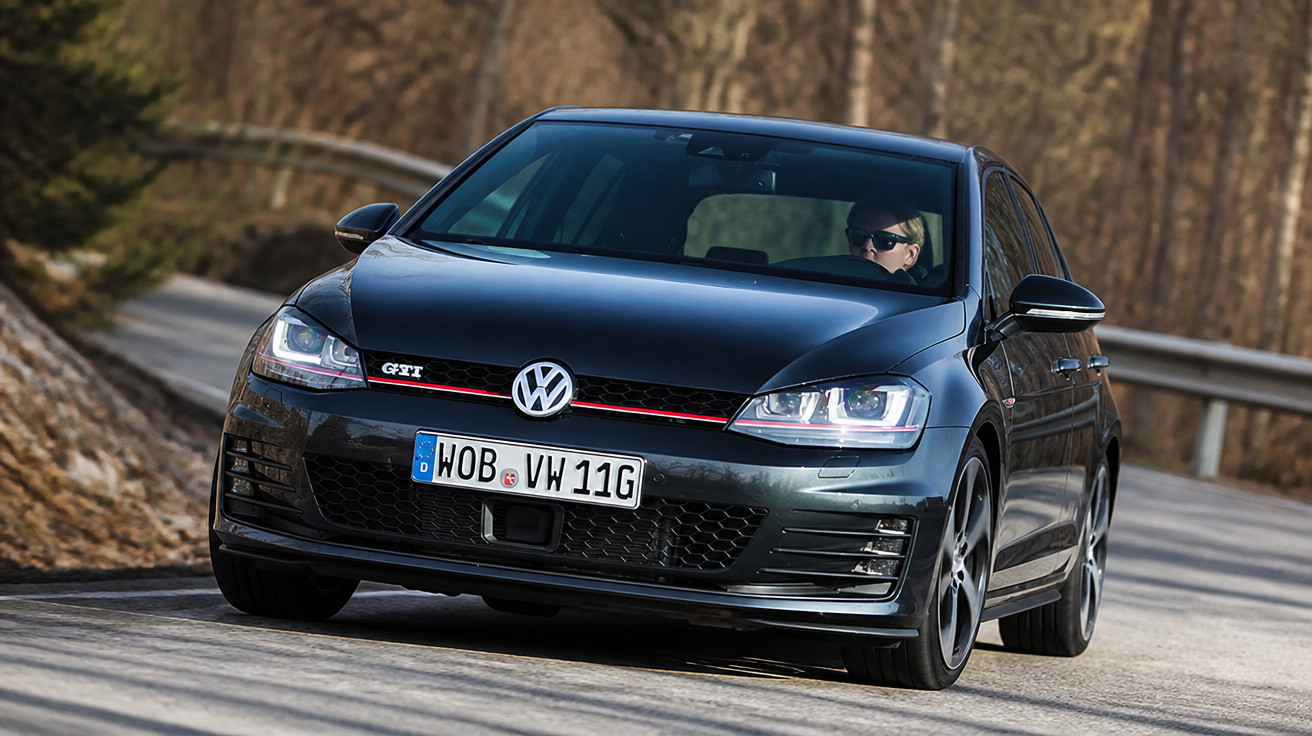
The biggest shifts on the new car are arguably visual. Where the Mk V leaned hard into being a deliberate nod to the Mk 1 - borrowing and amplifying familiar cues - the Mk 6 pushes past that. It keeps the nostalgia, but reshapes it into something more contemporary.
The headlamp lenses have a more geometric look. The grille becomes a simpler, narrow parallel slit, though it still wears the now-signature red trim. The front fog lamps have been shoved as far out into the bumper’s corners as possible to make the car appear wider, and to add a little more aggression and menace along with it.
Down the side, the slightly ungainly skirt from the old car - the one that flicked up into the rear arch - has been binned in favour of a slimmer black trim piece. The result visually tightens the hips, with something of that coke-bottle kink. A card-carrying Volkswagen chap told us there was an aerodynamic reason for it, but even he seemed more interested in how much more poised and agile the car appears from a distance.
Round the back, the Mk 6 pulls off a small triumph of symmetry. The dedicated rear bumper is shaped to line up neatly with the diagonal panel that holds the number plate, and the twin exhausts - positioned only after considerable engineering time and effort - sit right out at the corners, echoing what’s been done with the front fogs.
Overall, the change is understated but obvious: the new GTI is instantly identifiable, and it prompted more than a few double-takes during our test drive in Europe.
That said, and accepting that styling always boils down to personal preference, I have to risk the view that Volkswagen has slightly misjudged one of the GTI’s core principles: its class. It still reads as an expensive, thoroughly Germanic car, but certain details - particularly within the headlamp lenses, the grille, and the new black inserts in the Monza alloys - look a touch aftermarket.
Most buyers with the money and motivation to choose a car like this neither want nor need extra tarting up. Yet the subnormal corner of car butchery that thrives on such add-ons targets the Golf GTI precisely because it’s classic and understated to begin with. I’m probably being prematurely old-fashioned, and styling tends to grow on me, but right now I still prefer the quieter look of the Mk V. For me, that’s what a GTI ought to be.
Interior, comfort and safety: small changes, mixed results
The move from understatement to a hint of overstatement carries through to the cabin. The steering wheel, which was close to ideal in the old car, has been taken a step too far - now a bit too chunky, busy, and fussy.
The gear knob picks up a bright red - or is it orange? - streak to match the contrasting stitching that now seems to be everywhere. There’s also updated door trim that you might not even notice unless you were looking for it.
The tartan cloth seats - such a warmly nostalgic touch in the Mk V - have moved with the times as well. They still look smart and they still nod fairly clearly to Volkswagen’s past, but they also make it clear that, as the years roll on, so must mock-Jock upholstery.
This new generation does, however, bring some worthwhile gains in comfort and safety: improved insulation, knee airbags, and a dash-mounted change-up indicator designed to help you get the best from your economy. Oops. There it is again.
On the road: refinement, confidence and real-world pace
Given that the GTI’s development here is incremental but positive, you’d expect the driving experience to improve in the same measured way - and that’s almost exactly what’s happened.
What was so striking before largely remains so now: the GTI is still a comfortable, refined, premium-feeling hatchback, yet it gives the driver an almost unnatural amount of confidence. The steering stays light, but it’s also decisive and properly communicative - and it manages this with more success than various sister ships at Audi.
The gearchange isn’t quite as short or instantaneous as you might want in a car with performance this readily available, but it is still light, straightforward and direct. Switch the adaptive chassis from Comfort to Sport and the dampers stiffen, the steering gains a pleasing weight, and the whole car seems to cling on like a limpet.
With loads of shove - both from low-down torque and high-end horsepower - the GTI feels brisk in every gear, everywhere. Floor it down an empty straight and it’s difficult to imagine ever needing more acceleration on a real road. Lean on it hard into a quick, tight bend and it rolls only modestly and predictably, remaining composed and stable; traction is helped along by the GTI’s limited slip diff debut.
Call for a heavy stop and it responds with impressive speed and calm, then gets back on the power with lag-less immediacy. All of this happens while you still get a big boot, proper rear seats, and every tick-box convenience expected of modern motoring.
One feature deserves a specific mention: slot it into reverse and the satnav screen becomes your rear parking camera display - the lens itself popping out from behind the VW boot badge, in a move worthy of Cubby Broccoli-era Bond. And why not?
Taken together, it really is Porsche meets Polo - the performance car for our current era. It’s as quick and capable as you’ll ever realistically need on a British or European road, and it’s genuinely easy to live with. And, in relative terms, it’s easier to buy as well.
UK pricing and the inevitable Focus RS comparison
The first right-hand-drive cars are due in May, with prices starting at £22,000 for the three-door. That undercuts Ford’s Focus RS by about £3,000 - and the RS is the car the GTI will inevitably be measured against.
I haven’t driven the RS yet, but I strongly suspect it will be noticeably more capable than the GTI. It’s also likely to be a far more chest-wig experience than the Golf, regardless of its own aftermarket-ish styling details. If today’s VW GTI is the 911, then the RS is probably something closer to a TVR Tuscan. And I know which of those I’d rather be seen in.
Comments
No comments yet. Be the first to comment!
Leave a Comment