
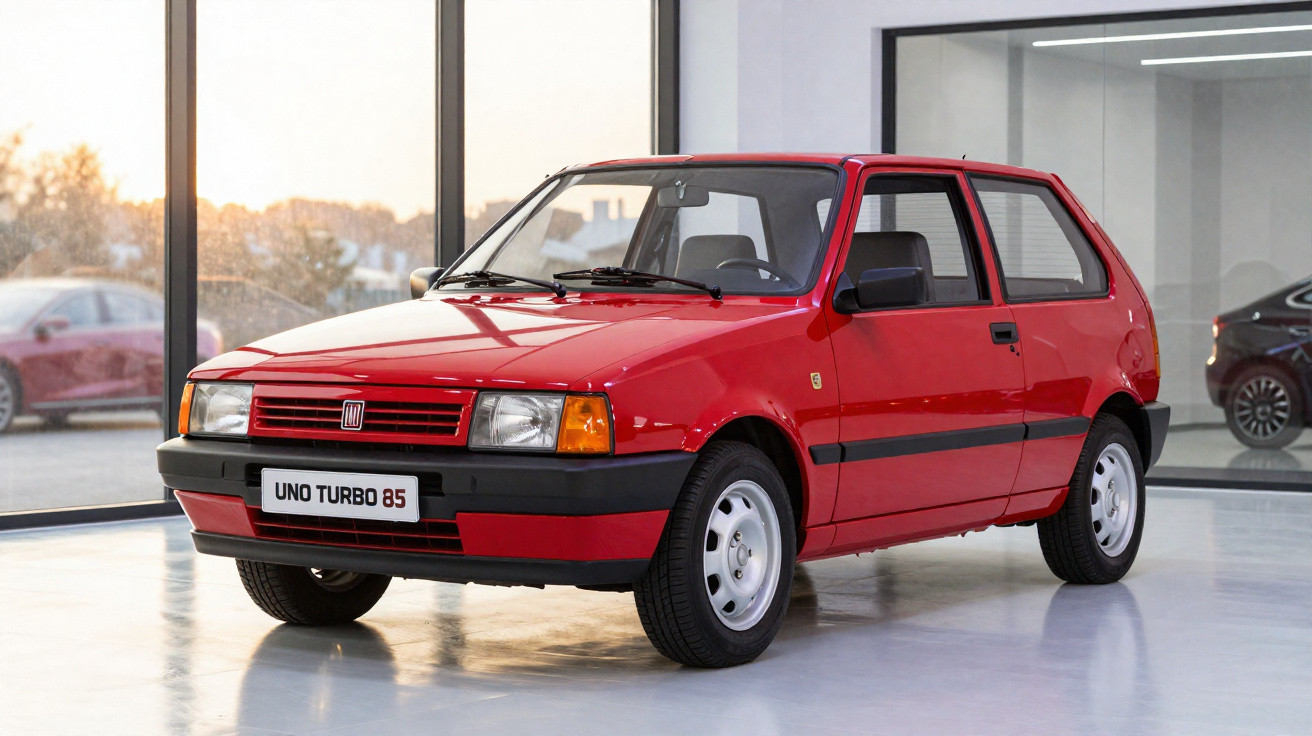
More than 30 years on, do you still remember the supposedly mad 1980s? After a pandemic that kept us indoors, taped off park benches, and even had us going to the beach in surgical masks - and with the very real prospect of chatting to computers in perfectly natural language - I have to admit the 80s no longer feel quite so bonkers.
The “fantastic” 1980s, seen from today
With a bit of distance, and in light of everything that has happened since, “fantastic 80s” feels like the more accurate label. The decade had a different sort of aura about it. Yes, cars belched out more pollution and our idea of ecology was extremely basic - so basic that it included daft stunts like dressing children in plastic bags at carnival to “promote recycling” (I know, because I was one of those children…). Even so, life somehow felt lighter back then.
It was a whirlwind of new things, and the future looked like it was lining up neatly for humanity. Want a quick laugh? The big threat everyone worried about was the year 2000 crash: the moment when, between 31 December and 1 January, every computer was meant to collapse. Hahaha! Nothing collapsed at all - I was there… playing on the computer as if nothing had happened.
And, if we are being honest, that forward momentum has continued. Despite the doom-laden predictions from the usual prophets of disaster, humanity keeps moving steadily towards sustainability - we have never managed to do so much with so few resources.
Fiat Uno Turbo I.E. and the digital dashboard that still impresses
Even so, it feels as though we are harder to impress now than we used to be. Speaking only for myself: I cannot look at a modern car’s fully digital instrument display and feel anything like the awe I still get from the digital dashboards Fiat was building in the 1980s and 1990s.
Take the 1985 Fiat Uno Turbo I.E. instrument cluster. It was a proper technological showcase - the kind of thing you would expect to see in a “car of the future”. The lights, the menus, the options… it all felt as though it had been lifted straight out of a science-fiction film.
“Unfortunately the brakes also felt like a science-fiction film. Because in reality they didn’t stop the car at all, and cornering was a comedy.”
Still, none of that matters next to the sheer amazement I feel when I look at images like the ones that go with this article. And please - do not start telling me about electronic gremlins. Do not ruin perfectly good memories with everyday problems.
The Fiat Tempra belongs in the same conversation too. It is another great example of how a single interior “detail” can define a whole car. It is one of the very few cars I can remember getting into for the first time.
Classic models returning: MINI, Fiat 500, ID. Buzz, Renault 4L and Renault 5
These days, the brands themselves seem to acknowledge just how much that old-school “aura” matters. Over the next few years, we will see plenty of cars return that had already been filed away in the history books.
It began in the 2000s with the MINI and the Fiat 500. More recently we have had the return of the Volkswagen “Bread Loaf” (a.k.a. ID. Buzz), and it will not be long before the Renault 4L and Renault 5 make their comeback too.
One thing is certain: the Fiat Uno Turbo I.E. digital dashboard will always be on my personal list of the coolest things you can find in a car.
“The younger lot don’t say ‘cool’ any more, do they? Even the word ‘cool’ has stopped being cool…”
It does not really matter. For me, not everything in the past is bad, and not everything that turns up in the future will automatically be better. Somewhere in this back-and-forth between past, present and future, we will probably find the best that any of us has to offer. In a world where everyone wants to be disruptive, I find myself valuing continuity more and more - not least because consistency is not something everyone can manage.
Comments
No comments yet. Be the first to comment!
Leave a Comment