
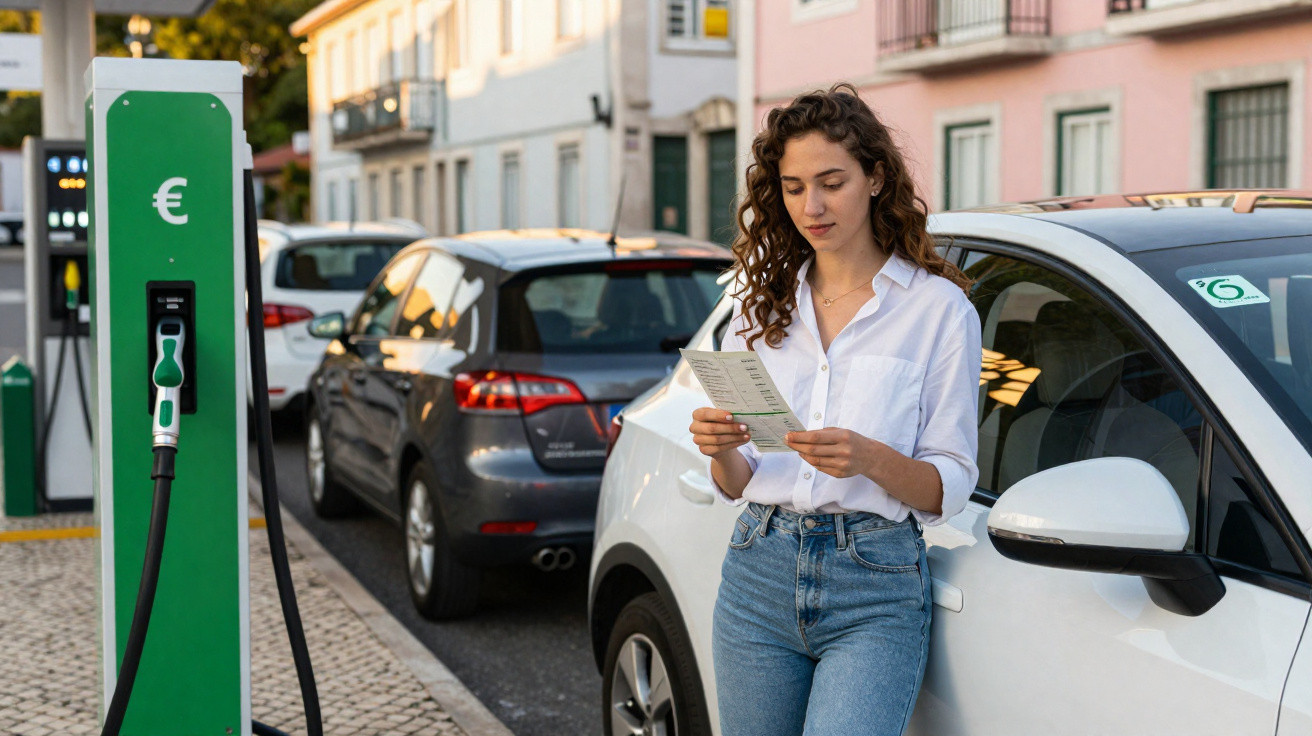
A proposal produced by the Portuguese Renewable Energy Association (APREN) and Deloitte - and already submitted to the Government for assessment - suggests that cars registered before June 2007 should start paying a higher Single Circulation Tax (IUC) from next year.
The study is titled “A new tax policy for Portugal’s energy transition” and sets out a reform of green taxation so that older vehicles are charged more - via IUC - than newer ones. The stated aim is to accelerate renewal of Portugal’s vehicle fleet.
If approved, the measure could generate an average annual increase in IUC revenue of around €150 million.
Higher IUC for pre-June 2007 cars
In straightforward terms, the Deloitte/APREN package proposes adjusting vehicle taxation so that “older, more polluting vehicles pay more than newer ones”. Even so, it also includes exemptions aimed at cars that cover very low annual mileage and at electric vehicles.
Proposed IUC reductions for low-mileage cars
The recommended exemptions include applying IUC reductions to light vehicles that are more than 10 years old:
- Under 3,000 km/year: they would pay 10% of the tax.
- Between 3,000 and 5,000 km/year: they would pay 50% of IUC.
IUC treatment for electric vehicles
The proposal also recommends an IUC exemption for electric vehicles until 2025, after which they would begin paying in stages from 2026 to 2029.
Same ISP for diesel and petrol
The submission to the Government also advises that diesel should be charged the same level of Tax on Petroleum Products (ISP) as petrol.
If introduced, those most affected would, as expected, be owners of diesel-engined cars who - according to Deloitte’s calculations - would end up paying about €237 more per year for fuel.
It is worth recalling that, in 2019, 60% of what consumers paid per litre of diesel at the pump related to taxes. For petrol, that share was higher, at 68%.
With this change, the intention is to align the tax burden between the two fuels. However, APREN notes that this cannot be done “overnight”. In practical terms, this could mean implementing a 50% increase (of the total adjustment required) as early as 2022, and then raising it step by step until reaching 100% in 2030.
It should also be noted that the proposal is limited to equalising ISP on diesel and petrol for private transport. The study says that diesel used for professional purposes must “remain constant”, since there are still “no alternatives”.
Incentives for electric vehicles
Another measure put forward by APREN and Deloitte focuses on encouraging the purchase of 100% electric cars, potentially through the introduction of IRS and IRC deductions between 2022 and 2026. However, the tax benefit would always be conditional on scrapping an internal combustion vehicle, in order to force fleet renewal.


Comments
No comments yet. Be the first to comment!
Leave a Comment