
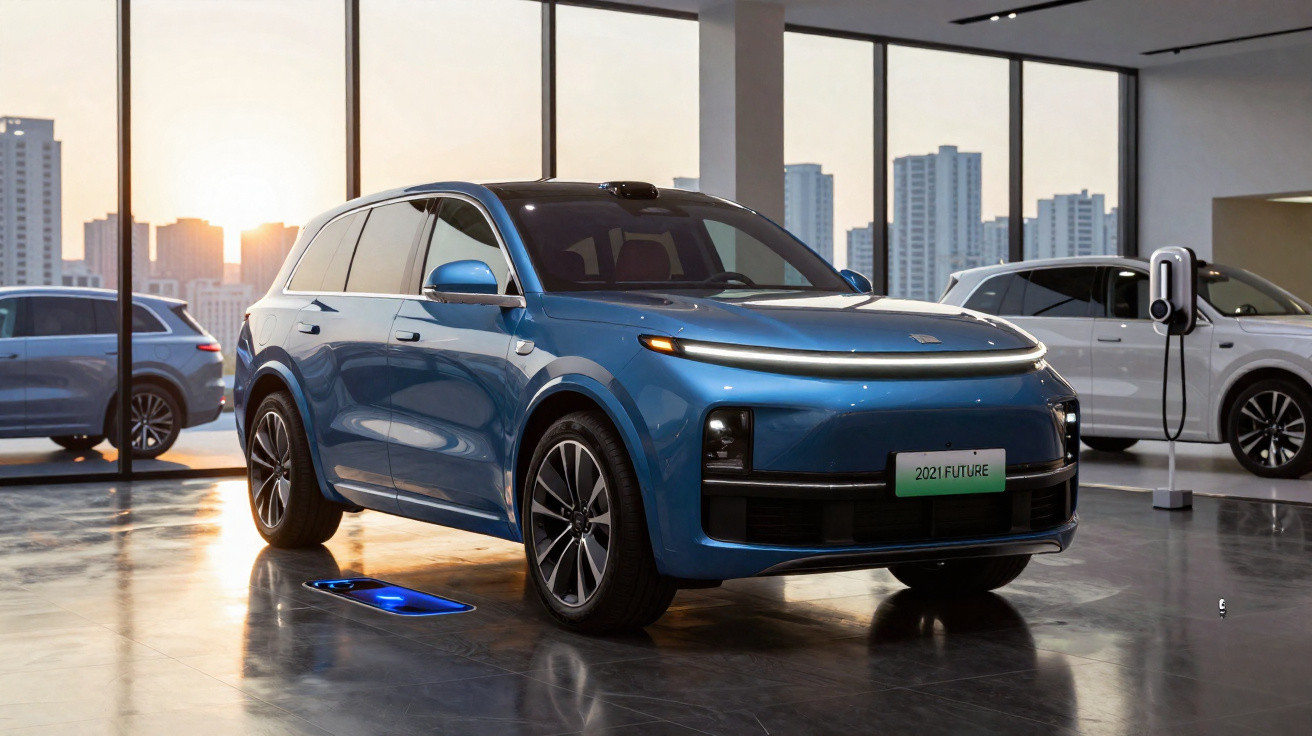
NEW FOR 2021 - it’s that time of year… With 2020, thankfully, fading into the background, we’re heading into 2021 with renewed optimism. The car industry was also hit hard by the covid-19 “bug”, which became one of the main reasons for disruption this year. The effects were felt on several fronts, including the product plans that had been laid down for the year now ending.
Among the many new models we expected to arrive this year, we ended up confirming what became obvious… they didn’t. Some were even unveiled, but because of the pandemic and the chaos it triggered, the sales launch of several of those models was “pushed” into 2021, in the hope of finding calmer seas.
So don’t be surprised to spot cars in this NEW FOR 2021 list that aren’t quite as new as they sound. Even so, 2021 still brings a huge line-up of fresh metal, including brand-new additions to several manufacturers’ ranges.
We’ve split this NEW FOR 2021 special into two parts: this first instalment introduces the headline arrivals for the new year, while the second part will be more focused - like its stars - on performance. Not to be missed…
SUV, CUV, and even more SUV and CUV…
In automotive terms, the decade now ending could fairly be labelled the era of the SUV and CUV (Sport Utility Vehicle and Crossover Utility Vehicle). And those two acronyms look set to keep ruling the roost in the decade ahead, judging by the volume of launches in the pipeline.
Let’s start with one of the key catalysts behind the SUV/crossover boom in Europe, a model that topped sales charts for years across the “old continent”: the Nissan Qashqai. Its third generation should already have been revealed this year, but the pandemic delayed it to 2021. Even so, Nissan has already teased what is one of its most important models of this century.
Staying with Japanese brands, Toyota is preparing to significantly expand its SUV family in 2021 with three distinct proposals - all hybrids: Yaris Cross, Corolla Cross and Highlander.
The first two are crystal-clear in their positioning, while the third - new to Europe but familiar in other markets - becomes the brand’s largest hybrid SUV, sitting above the RAV4.
The number of all-new proposals due in 2021 shows just how far we still are from saturation in this body style.
From the Alfa Romeo Tonale - set to take the place of the Giulietta, which ended production at the close of this year - and built on the same underpinnings as the Jeep Compass; to the Renault Arkana, the brand’s first “SUV-coupé”; via the Hyundai Bayon, a compact SUV positioned below the Kauai; and even the near-certain European arrival of the Volkswagen Nivus, developed in Brazil.
Moving further upmarket, we’ll also see the debut of the Maserati Grecale (sharing its platform with the Alfa Romeo Stelvio), the BMW X8 - effectively an X7 with more dynamic lines - and even Ferrari couldn’t dodge the SUV fever, with the car currently known as Purosangue expected to be revealed at some point during 2021. And this isn’t the end of the story once we combine the SUV format exclusively with electrons - but we’ll get there…
Elsewhere, we’ll meet new generations of familiar models, along with fresh variants of existing names. The Audi Q5 Sportback sets itself apart from the Q5 we already know thanks to its sloping roofline; the second-generation Opel Mokka kicks off a new visual era for the German brand; the new Hyundai Tucson looks set to turn heads with its bold styling; the Jeep Grand Cherokee is (finally) replaced, drawing on the foundations introduced with the Alfa Romeo Stelvio; and the Mitsubishi Outlander - long a sales leader among plug-in hybrids in Europe - will also move into a new generation.
The new “normal”
The SUV/CUV phenomenon appears to be evolving - at least if we look at certain concepts shown in 2020 (which preview production models) and at several cars arriving in 2021, some of which have already been unveiled… and even driven. What’s emerging is a new “breed” of vehicle: they soften traditional SUV cues, yet remain clearly different from conventional body types such as the saloons and hatchbacks that have been with us for decades.
One of the first from this new “breed” to land is the Citroën C4 - a model we’ve already had the chance to drive and which arrives as early as January. It adopts shapes that recall some “SUV-coupés”, but it is, in reality, the third generation of the French brand’s compact family car. A similar approach is expected for the second generation of the DS 4 - interestingly, perhaps the first to hint at this direction with its original generation.
This trend is also very likely to be embraced by the next Renault Mégane. It was previewed by the Mégane eVision concept, which points to an electric crossover due to be revealed in production form towards the end of 2021.
And it’s not just the C-segment (compact family cars) that may change. We may see the same kind of reshaping in the D-segment, traditionally home to executive saloons and estate cars. Once again, Citroën is set to play a leading role by finally revealing the successor to the C5 - another programme that was “pushed” into 2021 - while Ford is close to unveiling the replacement for the Mondeo. It will ditch the saloon format and be offered solely as a crossover - essentially an estate car with “rolled-up trousers” - which has already been spotted undergoing road testing.
As this decade gets under way, this movement could expand to the point of becoming the new “normal” among the market’s best sellers - at least judging by how many brands plan to pursue it - pushing, or at least seeming to push, conventional bodystyles into the history books. Will it really happen?
SUV/CUV + electricity = success?
But the SUV/CUV news for 2021 doesn’t stop there. When you combine the wildly successful SUV/CUV recipe with electric mobility, you may have the ideal formula - not only to improve general acceptance of electric cars, but also to soften the shock of the higher prices that come with fully electric vehicles.
And 2021 will bring a flood of electric SUVs and CUVs. Right at the start we have a handful of likely rivals, expected to occupy very similar market positions: Nissan Ariya, Ford Mustang Mach-E, Tesla Model Y, Skoda Enyaq and, importantly, the Volkswagen ID.4.
It’s hard to overstate how crucial commercial success will be for these models - most of them designed for global reach - because their performance will also influence whether the substantial investments made in electric mobility pay back.
To that group we can add the Audi Q4 e-tron and Q4 e-tron Sportback, revealed so far only as prototypes; the already-teased Mercedes-Benz EQA and, potentially still in 2021, the EQB; the Polestar 3, confirmed as an SUV; a new electric Volvo derived from the XC40 Recharge, due to be shown next March; the Volkswagen ID.5, a more “dynamic” take on the ID.4; the IONIQ 5, the production version of the Hyundai 45; a new electric crossover from Kia; and, finally, the new - and visually controversial - BMW iX.
More electric cars are on the way…
Electric cars won’t be defined only by SUVs and CUVs. Plenty of 2021’s EV launches will come in more “conventional” shapes - or at least lower-slung ones.
Next year we’ll get the definitive versions of the already-previewed CUPRA el-Born and Audi e-tron GT, derived from the familiar ID.3 and Taycan, respectively. BMW will unveil the final production i4 - effectively the electric version of the also-new 4 Series Gran Coupé - as well as an electric variant of the 3 Series. Meanwhile, Mercedes will at last lift the curtain on the EQS, which aims to be for EVs what the S-Class is for the wider car industry.
One of the most anticipated electric cars of 2021, and a contrast to those mentioned above, may be the Dacia Spring. It promises to be the cheapest electric car on the market, “stealing” that title from the Renault Twingo Electric (whose sales also begin in 2021). We still don’t know the price, but it’s expected to sit comfortably below €20,000.
Also new on the electrified front - but using a hydrogen fuel cell - is the second generation of the Toyota Mirai, which for the first time is expected to be sold in Portugal.
Is there still room for conventional cars?
Absolutely. Still, the truth is that new body types keep gaining prominence, and the electrifying transformation the industry is going through could mean that many of the upcoming 2021 launches may also be the final generations in certain model bloodlines.
In the compact family segment, three major cars are set to arrive in 2021: the third-generation Peugeot 308, the first Opel Astra of the PSA era (using the same platform as the 308), and the 11th generation of the Honda Civic - the latter already revealed in North American guise, still as a prototype.
One segment down, a new Skoda Fabia will switch to the same platform as its “cousins” the SEAT Ibiza and Volkswagen Polo, while keeping an estate in the line-up - it will be the only car in its segment to offer that body style.
The standout premium D-segment news will be a new generation of the Mercedes-Benz C-Class, launching with two body styles from the outset - saloon and estate. It’s expected to make a major technology leap and also increase the emphasis on hybrid powertrains. Beyond the usual rivals, the German saloon will face an alternative challenger in the DS 9, the French brand’s flagship model.
Also in that segment - but with a bit more (and controversial) style - BMW will introduce the 4 Series Gran Coupe, the five-door counterpart to the 4 Series Coupé.
And speaking of that car, it will be joined by a 4 Series Cabrio - based on what we’ve been able to find out, the only four-seat convertible due to launch in 2021. Staying with the Bavarian brand and its more emotional bodystyles, the second generation of the 2 Series Coupé will also be revealed. Unlike its 2 Series Gran Coupé sibling, it will remain faithful to rear-wheel drive - the new model’s nickname is “Drift Machine”.
The news from the two arch-rivals doesn’t end there. After early rumours that it might be dropped from the range, BMW is set to launch a second generation of its MPV, the 2 Series Active Tourer. Mercedes-Benz, meanwhile, will create a new T-Class - another MPV, derived from the new generation Citan van - which will share a great deal with the already-revealed new Renault Kangoo.
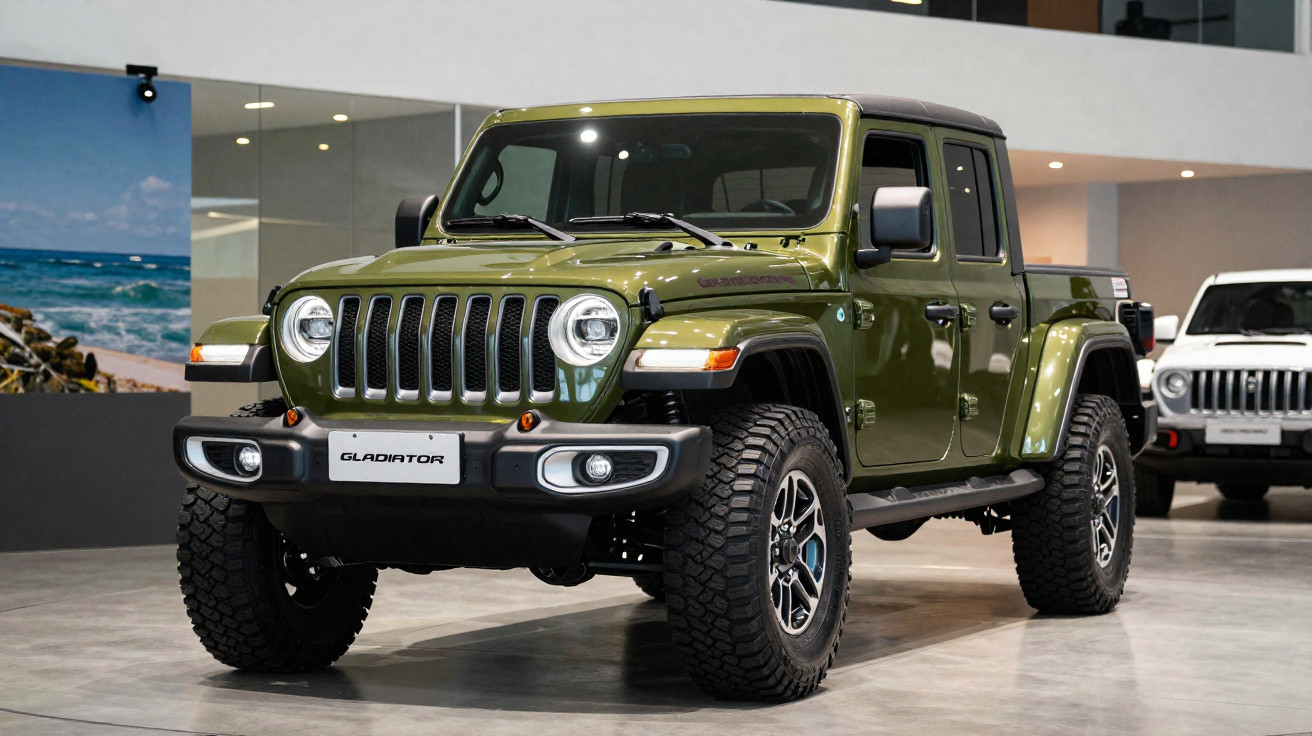
Finally, and no less importantly: will we see the Jeep Gladiator pick-up reach us, after it was promised for 2020? For off-road adventure fans, it could be one of the most appealing ways to escape from a… complicated year.
Coming soon: NEW FOR 2021 - performance models.
Comments
No comments yet. Be the first to comment!
Leave a Comment