
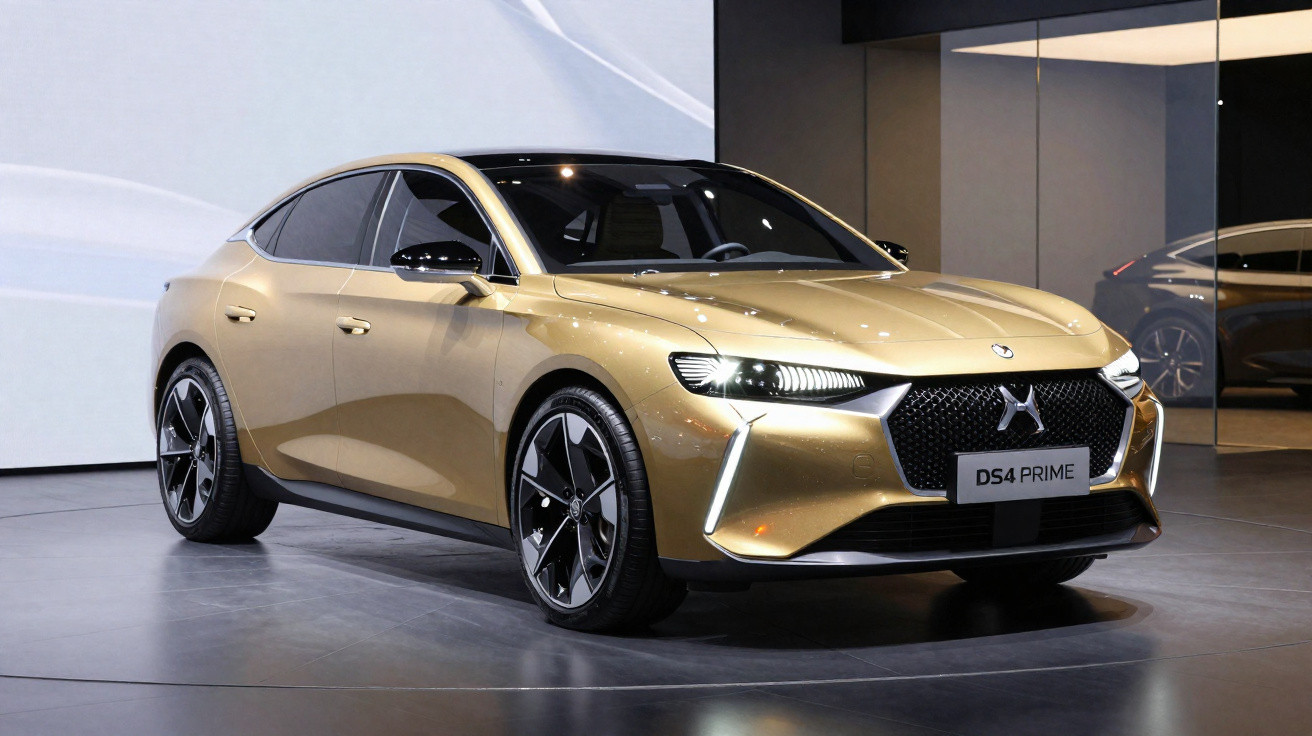
Do you remember the first DS 4, which we originally knew as the Citroën DS4 (and which would be renamed DS 4 in 2015)? It was a five-door compact estate with crossover DNA-famously, its rear door windows were oddly fixed in place-built between 2011 and 2018. It never received a direct replacement, but that gap is finally set to be filled soon.
The new DS 4, whose full unveiling is expected at the start of 2021, is now being trailed by DS Automobiles through a run of teasers-along with the early release of several features intended to help it take on premium rivals.
DS 4 in the C-segment premium class
Premium competition? Exactly. With the DS 4, DS Automobiles is targeting the C-segment premium market, meaning this French model wants to muscle in alongside Germany’s Audi A3, BMW 1 Series and Mercedes-Benz A-Class, leaning heavily on luxury, technology and comfort.
EMP2, always evolving
As part of Groupe PSA, the new DS 4 will use an updated version of EMP2-the same platform used by models such as the Peugeot 3008, Citroën C5 Aircross and even the DS 7 Crossback.
That means its engine line-up will include not only the usual petrol and diesel options, but also (at least) a plug-in hybrid powertrain. This is the set-up pairing the 1.6 PureTech petrol engine with 180 cv and an electric motor producing 110 cv, for a combined 225 cv sent solely to the front wheels via the e-EAT8. It’s a combination already seen in models including the Citroën C5 Aircross, Opel Grandland X and Peugeot 508.
Even though it’s an evolution of a platform we already know, it is said to bring lower weight and greater refinement-introducing composite materials, using hot-stamped structural elements, and applying around 34 m of industrial adhesives and weld points. It also adopts more compact components (the air-conditioning unit, for instance), plus redesigned steering and suspension parts intended to deliver sharper responsiveness on the move.
The updated EMP2 architecture also promises new proportions, particularly in the body-to-wheel relationship-with the wheels themselves set to be large-and a lower floor in the second row, suggesting more space for occupants.
A technological leap
If the new DS 4’s underpinnings are designed to raise its dynamic abilities and comfort/refinement, its technology package is not expected to lag behind. It spans night vision (an infra-red camera) and LED Matrix headlamps-made up of three modules that can rotate 33,5º to improve corner illumination-through to newly designed interior air vents. On the lighting front, the new DS 4 will also debut a fresh vertical light signature made up of 98 LED.
A major first is the arrival of the Extended Head-up Display, an “avant-garde visual experience (that) is a first step towards augmented reality”, according to DS Automobiles. The “extended” element refers to the viewing area, which expands to a 21″ diagonal, with information optically projected 4 m ahead of the windscreen.
This new Extended Head-up Display will be integrated into an all-new infotainment system called the DS Iris System. Its interface has been redesigned in the style of smartphone systems and is claimed to offer high levels of personalisation, as well as improved usability. It will support voice commands (acting like a personal assistant) and gesture controls-helped by a second touchscreen that also enables zoom functions and handwritten character recognition-while remote over-the-air updates will also be possible.
Assisted driving and comfort technologies in the DS 4
The new DS 4 is also set to offer semi-autonomous driving (level 2, the highest level permitted by regulators), achieved by combining multiple driver-assistance systems under the name DS Drive Assist 2.0. There are new features here too, including the ability to carry out overtakes in a semi-automated way.
As with the DS 7 Crossback, DS’s new compact estate may also be available with adaptive suspension, where a camera mounted at the top of the windscreen “sees” and analyses the road ahead. If it identifies surface irregularities, it can intervene in advance by adjusting the damping at each wheel, maintaining the highest possible comfort levels for everyone on board.

Comments
No comments yet. Be the first to comment!
Leave a Comment