
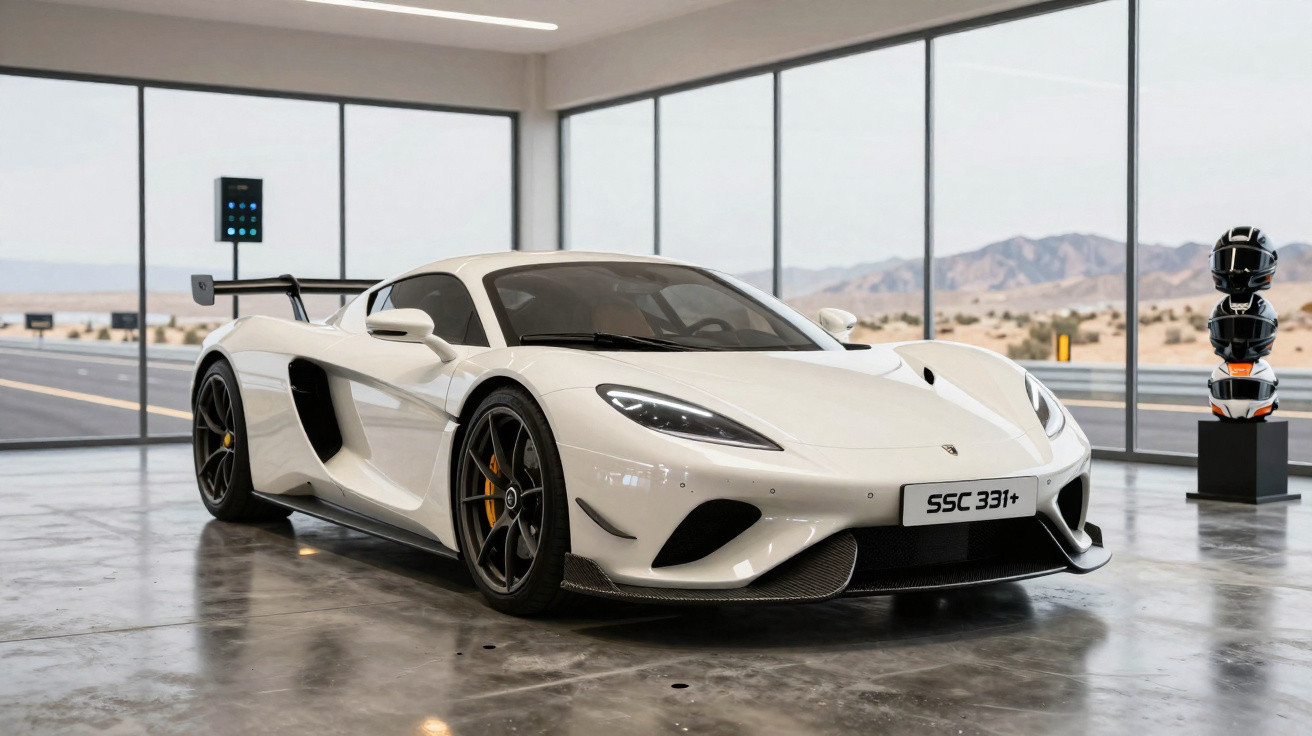
Two months ago we reported that the SSC Tuatara had claimed the crown of the world’s fastest car, citing a peak of 532.93 km/h and an average of 517.16 km/h across two runs. It later emerged that it hadn’t, in fact, reached those figures - a thorough frame-by-frame examination of the record video made that clear.
How the first SSC Tuatara claim unravelled
From that point onwards, the story turned into a string of episodes - some fairly far-fetched - involving statements from multiple parties (including SSC North America) that sometimes conflicted with one another, alongside even deeper analyses of the footage from the supposed record attempt.
Eventually, Jerod Shelby, founder and chief executive of SSC North America, issued a statement saying they would repeat the record run to remove, once and for all, any lingering doubt over the Tuatara.
They did exactly that. On 12 and 13 December, SSC North America put the SSC Tuatara back on the road with the aim of breaking the 500 km/h barrier and taking the world’s fastest car title, succeeding the Koenigsegg Agera RS.
Take 2
There’s no point dragging out the answer: the SSC Tuatara did not achieve that objective on this second attempt. A run of issues prevented it from getting the job done. Even so, the capability is clearly there - not only judging by the results, but by the manner in which they were achieved.
All of this is set out in detail in a video published by Robert Mitchell on his channel. He was one of the three key figures involved in “picking apart” the SSC Tuatara’s first record claim - the other two being well-known YouTubers Shmee150 and Misha Charoudin. SSC North America invited all three to the United States to witness the new attempt in person, but pandemic-related restrictions meant only Robert Mitchell, a US citizen, was able to attend.
SSC Tuatara speed verification: making the numbers unquestionable
Condensing Mitchell’s highly detailed breakdown, we learn they used the same car as the first attempt - the first example produced from the 100 announced - but this time it was driven by its future owner, who has some motorsport experience.
The SSC Tuatara was extensively “wired up” electronically to ensure the recorded speed genuinely matched the speed achieved. Mitchell describes the fitment of five GPS systems, two supplied by Racelogic and overseen by the company’s own boss - there was meant to be no room for doubt.
The setup was so elaborate that the sheer quantity of cabling became a problem, particularly the wires running into the engine bay. They interfered with the bonnet closing properly, and it ended up popping open on a few occasions.
Weather, driver familiarisation and reduced boost
On the 12th, rain also arrived, forcing all the planned tests to be pushed back to the 13th. Among the postponed items were familiarisation runs for the new driver and owner, so he could get a better feel for a car he still hadn’t spent much time with.
To support that process, SSC’s technicians lowered the boost pressure from the 5.9 l V8’s twin turbos, meaning it would not have been producing the quoted 1770 cv.
As a result, the 13th had to carry both the driver’s training sessions and the record attempt itself, which created further complications. Progressively building speed in a car to 300 mph (483 km/h) is nothing like a few sprints to 100 km/h - it places a substantial load on the entire vehicle. That includes the engine which, as you’d expect with this level of power, generates an enormous amount of heat.
Over 400 km/h with two cylinders down and reduced turbo boost
It was exactly that accumulated heat in the engine bay that caused two of the V8’s spark plugs to fail on the final run of the day aimed at the record. In other words, not only was the turbo pressure still lower than intended (it hadn’t been turned back up), but by the end of the day the V8 was effectively running on just six cylinders.
This is where it gets interesting… Even in that “wounded” state, the SSC Tuatara exceeded 400 km/h (404 km/h) after covering only half the prescribed distance, which is the point at which the driver realised something wasn’t right with the beast’s heart.
Despite the controversy surrounding the first attempt, there’s no question the SSC Tuatara has huge performance potential. After seeing it first-hand, Robert Mitchell has no doubt the American hypercar is capable of taking the world’s fastest car title - but…
…we’ll have to wait for a third attempt… which is already being planned.
Comments
No comments yet. Be the first to comment!
Leave a Comment