
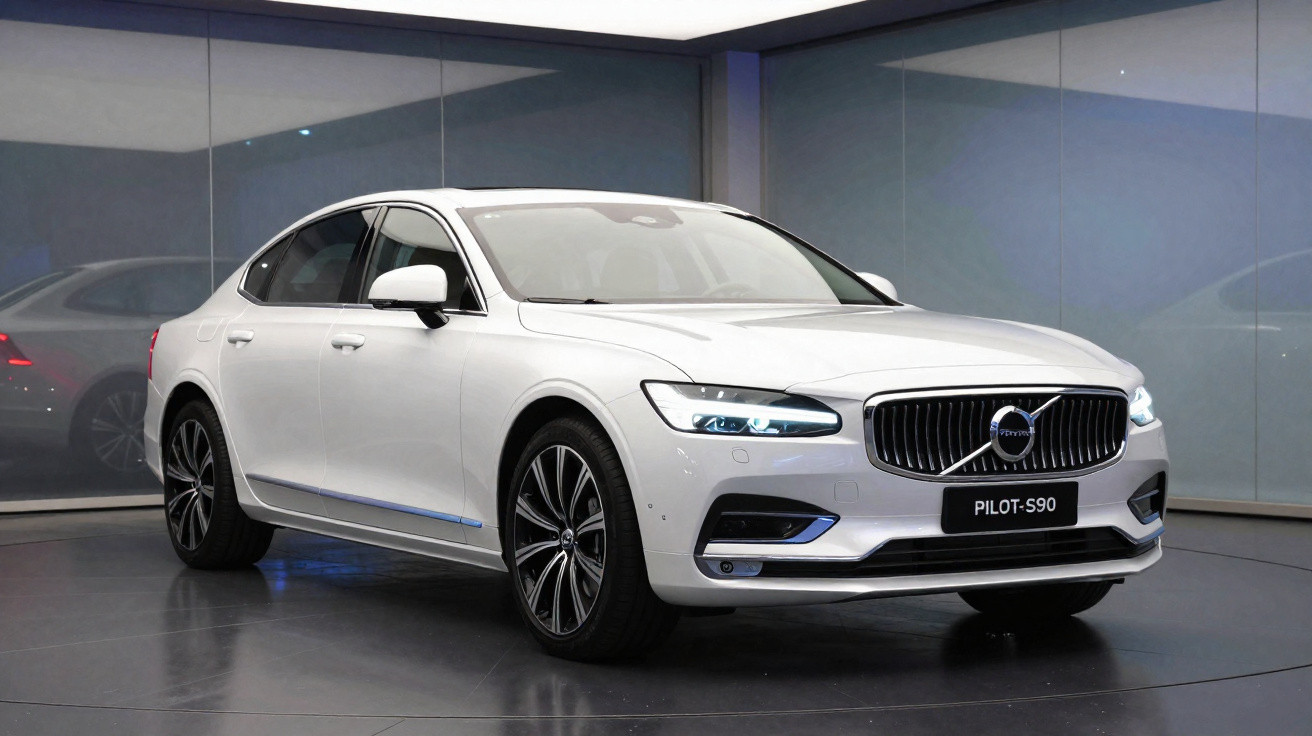
The IIHS (Insurance Institute for Highway Safety), working with MIT’s AgeLab (Massachusetts Institute of Technology), set out to understand how driver-assistance features and semi-autonomous driving influence a driver’s ability to stay attentive.
In other words, they wanted to see whether our growing trust in these systems makes us more or less focused on the act of driving itself. It is always worth repeating that, although these features can deliver a certain degree of automation (level 2 autonomous driving), they do not make a car fully autonomous (level 5) or replace the driver. That is precisely why they are still called… assistants.
Study design: IIHS and MIT AgeLab on driver attention
To investigate this, the IIHS tracked the behaviour of 20 drivers over the course of a month. The researchers compared how participants drove with and without these systems activated, and recorded how often they removed both hands from the steering wheel or took their eyes off the road to use a mobile phone or adjust a control on the vehicle’s centre console.
The 20 participants were split into two groups of 10. One group drove a Range Rover Evoque fitted with ACC, or Adaptive Cruise Control (speed control). As well as maintaining a selected speed, this system can also keep a pre-set distance to the vehicle ahead. The other group drove a Volvo S90 equipped with Pilot Assist (which enables semi-autonomous driving). In addition to ACC, it adds lane-centring: it helps keep the car centred in its lane and can apply steering input when needed.
How behaviour shifted over the month
Indicators of inattention varied significantly between the beginning of the trial-when drivers first received the vehicles (with little or no change compared with driving without the systems)-and the end of the month, as they became more familiar with both the cars and their driver-assistance features.
Differences between ACC and ACC + lane keeping
By the end of the month, the IIHS observed a much higher likelihood of drivers losing focus on driving (removing both hands from the wheel, using a mobile phone, and so on), regardless of which group they were in. However, the strongest effect was seen in the second group: the S90 drivers using level 2 semi-autonomous driving-a capability that is appearing in an increasing number of models.
Evoque drivers, who only had ACC available, not only used it regularly, but were also more likely to glance at their mobile phone-or even use it-than when driving manually. This tendency also increased markedly over time, as drivers became more accustomed to and comfortable with the system. The same pattern was also found in the S90 when its drivers were using ACC only.
The IIHS notes, however, that greater familiarity with ACC did not translate into more frequent texting or other phone use, and therefore did not raise the collision risk beyond the baseline risk that already exists when people do it. This is because, when ACC alone was being used (in either group), the odds of taking both hands off the steering wheel were the same as when driving manually without any assistance.
Once the vehicle is also able to steer to keep the car in its lane, the likelihood of removing both hands from the steering wheel rises sharply. In the same study, the IIHS reports that the presence of the S90’s semi-autonomous driving system meant that only four of the 10 drivers used ACC on its own-and they used it infrequently.
Are there safety benefits to semi-autonomous driving systems?
This research, alongside other studies known to the IIHS, indicates that ACC, or adaptive cruise control, may bring safety benefits that could be even greater than those already demonstrated by forward-collision warning systems with autonomous emergency braking.
However, the findings also show-supported by insurer data drawn from the analysis of accident claim reports-that when you add the car’s ability to hold its position within the lane, the same kind of road-safety benefit does not appear to materialise.
This is also reflected in the widely publicised crashes involving Tesla models and their Autopilot system. Despite the name (“autopilot”), it is likewise a level 2 semi-autonomous driving system, like the others available on the market, and as such it does not make the vehicle fully autonomous.
Comments
No comments yet. Be the first to comment!
Leave a Comment