
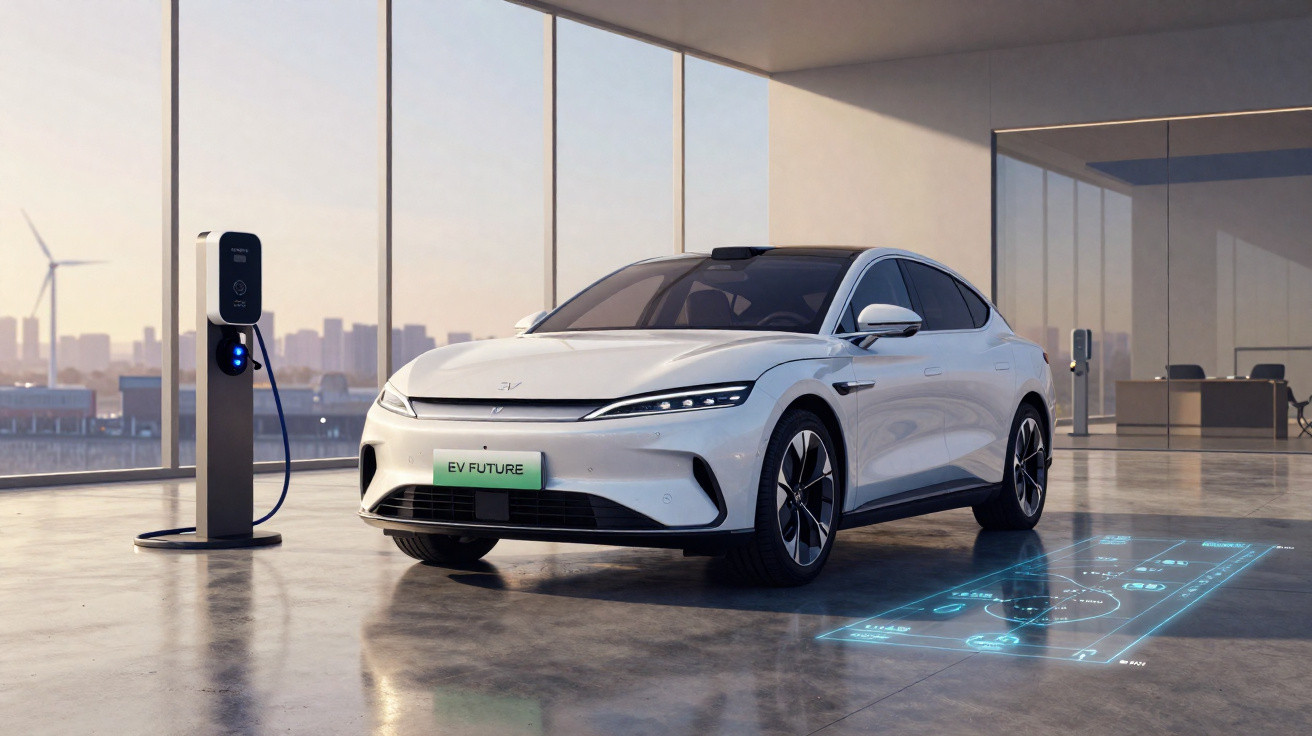
The Council of Ministers approved yesterday, 31 July, a package of legal measures that marks the start of the State reform. Among the various decisions, the Government is highlighting the creation of a new electric mobility regime, which it says will streamline procedures, open up the market and speed up the energy transition.
Key measures in the new electric mobility regime
In the statement released by the Government, the new framework for electric mobility removes the requirement to have contracts with operators. It also introduces charging with direct payment at all public charging points, supports the roll-out of the network across the entire country, and simplifies licensing processes. Lastly, it places emphasis on decarbonisation through clean energy and alignment with the European AFIR Regulation (Alternative Fuels Infrastructure).
Transition timetable and alignment with the State reform
The Government says the new model is “fully aligned with the principles and objectives of the State reform”. On when it will take effect, Gonçalo Matias, Minister Adjunct and for State Reform, referred to a “transitional period until the end of 2026”.
Approval had been on hold since March
It is worth recalling that approval of the new electric mobility regime had been on hold since March, when the public consultation took place. At the time, the sector’s responses were split.
The Electric Vehicle Users Association (UVE) acknowledged it was a “good initiative”, with positive elements for the sector’s development. Even so, it also cautioned that the legal text needed “several improvements before being published”.
“The issue of ‘transparency’, how easily a user can know how much they will pay, the emergence of tariffs that are easy for the user to understand and other problems, are not solved by this draft decree-law. In truth, it merely proposes a different model that restricts choices and removes options from the user. The real problems of electric mobility remain unresolved”, the association warned.
Miio’s chief executive and co-founder, Daniela Simões, also pointed to weaknesses in comments to ECO: despite the effort to “simplify and liberalise”, the new model raises “relevant concerns”, notably the absence of “robust mechanisms for regulation and co-ordination”.
“Without these safeguards, we risk undermining the progress achieved so far in building electric mobility that is accessible, functional and truly user-centred”, she added.
End of Mobi.E as the central pillar
One of the most contentious points of the new regime is the removal of the CEME role (Electricity Retailer for Electric Mobility) and the centralised management of the network, until now ensured by Mobi.E.
Under the new model, Mobility Service Providers are introduced, allowing them to offer services directly to users-such as vehicle charging-and to bill for those services. These providers will also be able to develop their own charging-point networks, without being required to connect to the shared network, as is currently the case.
At the time, the Minister of the Presidency, António Leitão Amaro, described these measures as “an important decision for the present and for the future”.


Comments
No comments yet. Be the first to comment!
Leave a Comment